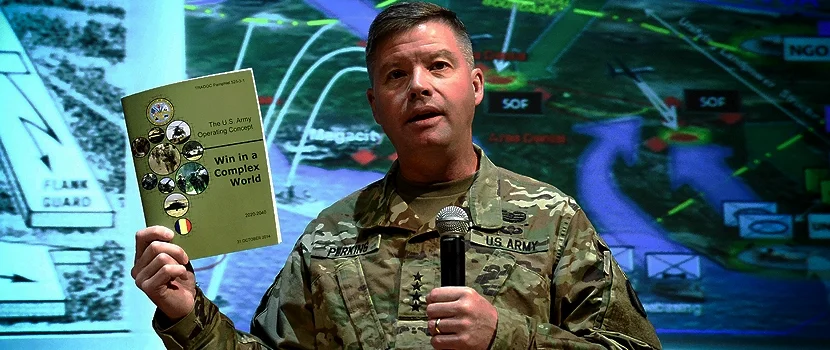
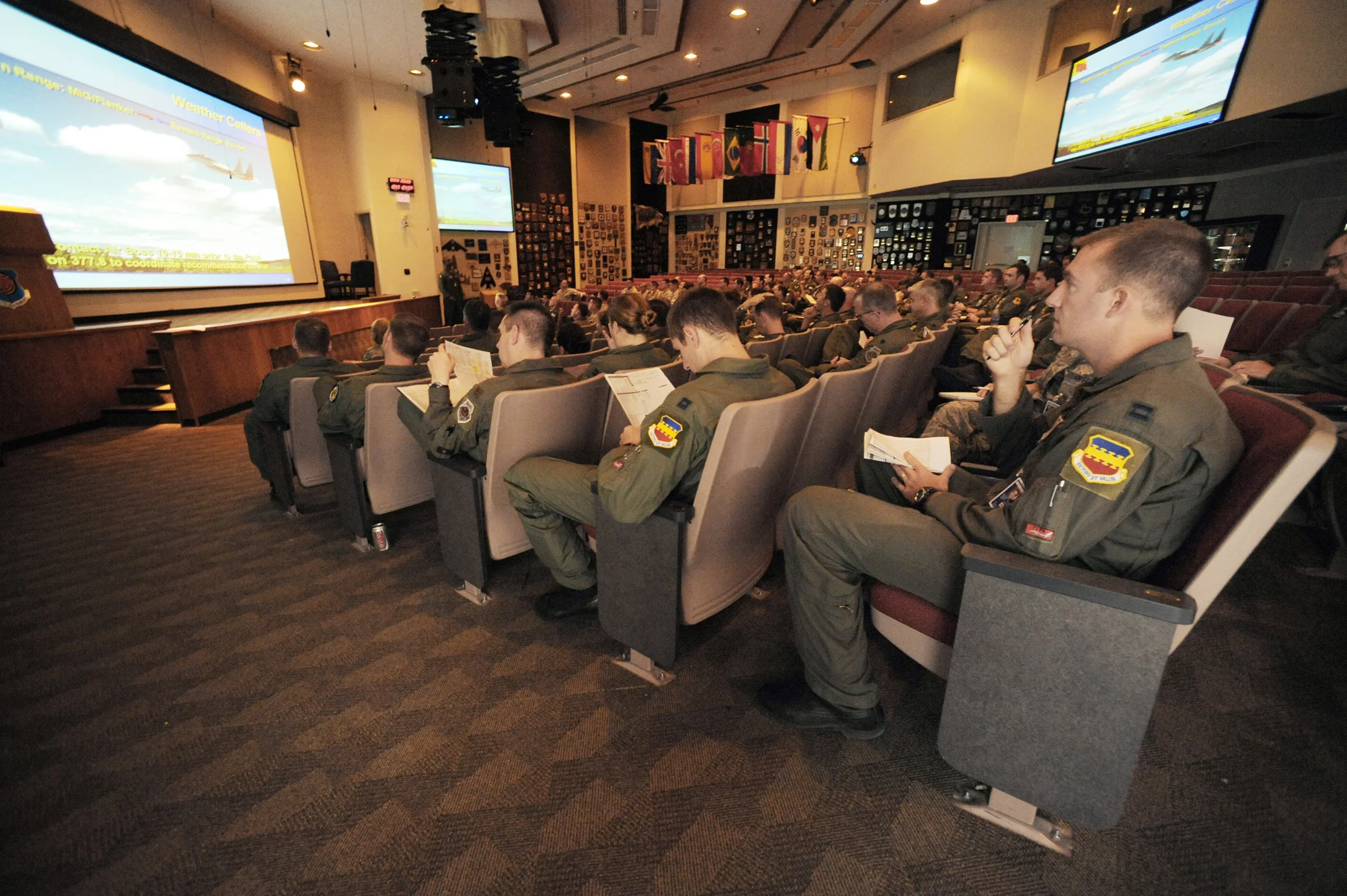
Staff tools are only as good as the person behind the implement. The most exactingly detailed information paper format is useless unless someone wields it with sufficient intellectual curiosity to ask the hard questions and the dedication to find answers to them. The best-planned briefing will fall flat if the presenter is insufficiently empathic to understand the needs and desire of their audience. Marshall McLuhan famously said, "We shape our tools, and then our tools shape us." Staff officers have an obligation to craft their tools while remaining firmly in command of their employment.

Ideas & Knowledge: The New Currency of World Politics
The international system is driven by social and political ideas. Written and oral discourses are the primary indicators of the trajectory of ideas. These ideas based on historical experiences accumulate over a period of time and provide a perspective on reality. The appeal of that perspective depends upon the credibility of the idea in the eyes of the wider global audience. To seek credibility for their idea, actors lay claim to ‘superior knowledge,’ by virtue of which their actions can be perceived as the most rational ones in the given circumstances.
#Reviewing "The Sun Also Rises" and "The Road Back From Broken"
We are locked in with Jake; we know his thoughts and feelings, or at least we know as much as Hemingway lets us know. Jake's inability to connect with those around him is as emotional as it is physical, and the first-person narrative allows the reader to experience some measure of that isolation. Fitz, however, is not alone in his head with the reader. His failing connections with those around him are not completely severed lifelines. The third-person omniscient perspective allows Morgan to explore not just Fitz's feelings but how his injuries affect those around him, those trying to help him, and those who depend on him. The shift in perspective from one to the other underscores a shift in our own perspective on the injuries of war since Hemingway's own experience: no one should have to travel the road alone.
Islamic State 2016 and America’s Underperformance on the Twitter Battlefield
The United States has spent far more time agonizing over counter-messaging strategy than engaging meaningfully to exploit the Islamic State’s weaknesses on social media. Whether counter-messaging is capable of delivering results or not, the analysis reveals the United States missed opportunities to exploit Islamic State losses.
#Monday Musings: Harold R. Winton
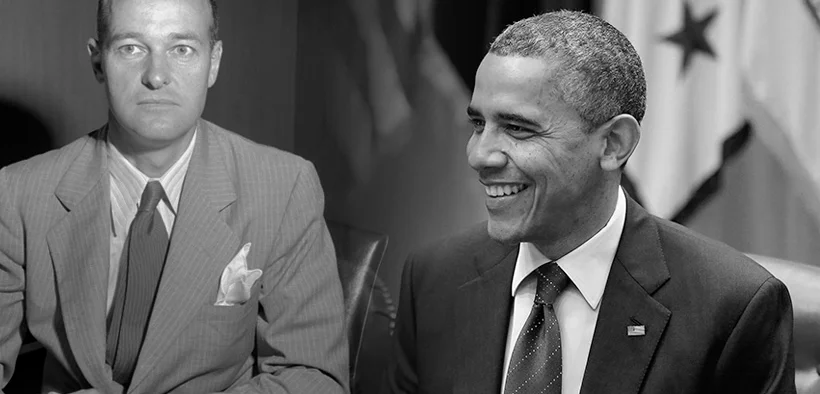
Keen for a Strategy? George Kennan's Realism Is Alive and Well
...the contemporary strategic environment is undergoing a profound transition in its polarity. Obama has been placed under serious pressure to form a grand strategy that allows the U.S. to manipulate events with at will. However, a look to Kennan’s writings reveals a sense of déjà vu when reflecting on Obama’s policies.
Coaching 2.0: Developing Winning Leaders for a Complex World
Coach, Counsel, Mentor. Every leader uses these developmental methods...or do they? These principal methods are the cornerstone of leadership development used by all the military services. However, we are only trained to implement two of them. This is a problem because, in the military, we grow our own leaders.
#Reviewing Naval Cooperation
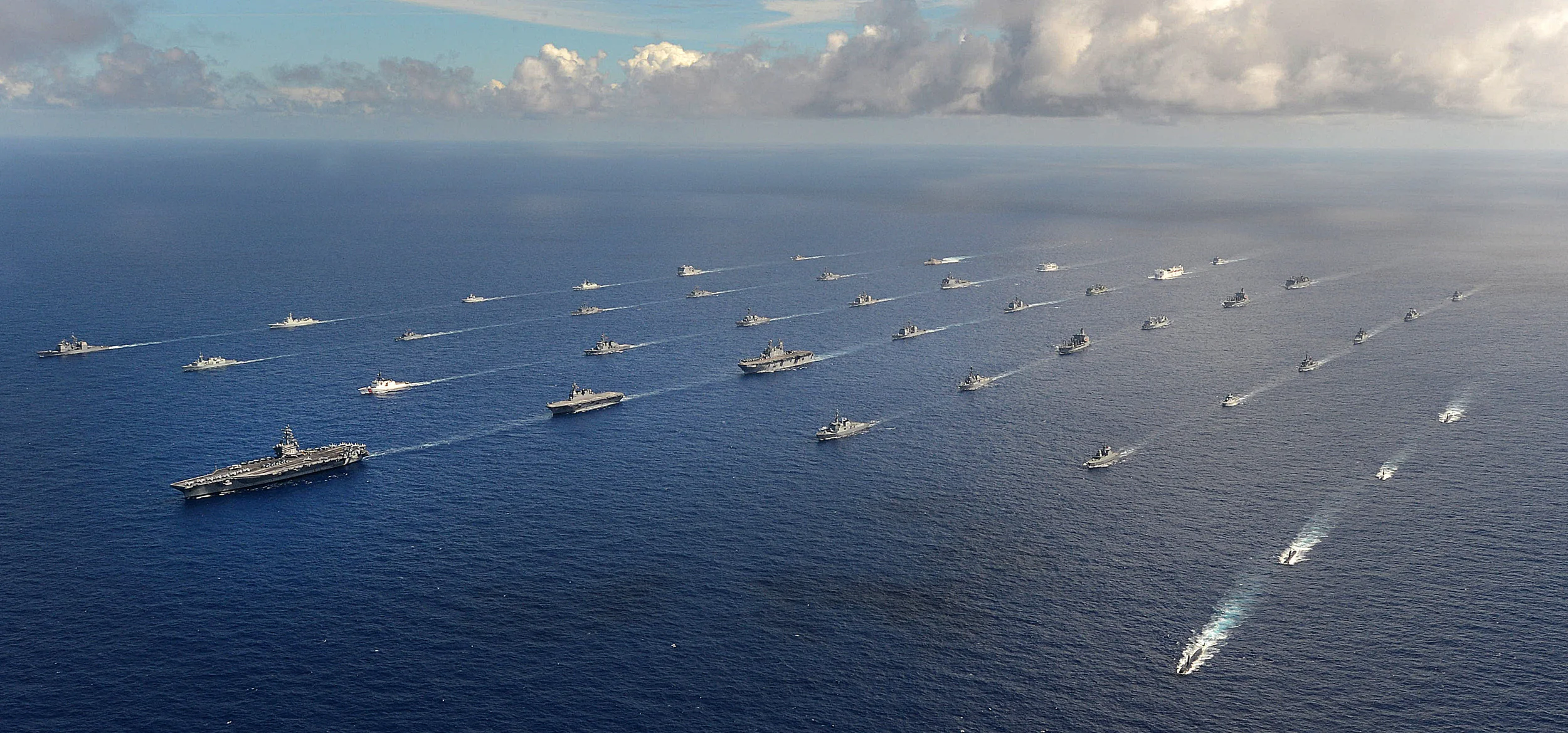
Throughout much of history, the world’s oceans and seas belonged to no one, yet everyone. For that reason, nations that depend on the sea for trade, as a source of food, and more recently, as a source of minerals, have cooperated to some extent. Naval Cooperation is a compilation of USNI Proceedings articles written over the last ten years discussing a range of topics related to cooperation.
The Roles Women Play
It has been some time now since the husband and wife team of Syed Farook and Tashfeen Malik committed their act of terrorism in San Bernardino, California–a story that has popped back up in the news because of the FBI court case requiring Apple to unlock the couple’s iPhone. In the aftermath, as a way to determine a motive, investigators initially focused on a garbled message on Facebook left by Malik. The message purported to claim an allegiance to Islamic State (IS) leader Abu Bakr al Baghdadi. This led many in the media–and armchair analysts online–to confirm that the attack was at least inspired by IS. But digging deeper into the lives of Farook and Malik revealed a more al Qaeda-style ideology. The fact that Malik was involved in the shootings suggests more al Qaeda than Islamic State. Why? Because of the roles women play in each organization.
#Monday Musings: Joe Byerly
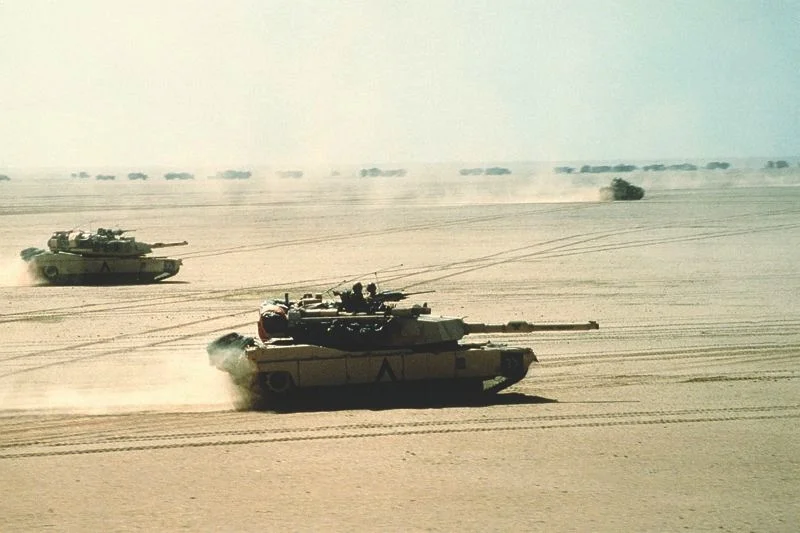
Eagle Troop at the Battle of 73 Easting
The Battle of 73 Easting (a north-south grid line on the map) was one of many fights in Desert Storm. Each of those battles was different. Individual and unit experiences in the same battle often vary widely. The tactics that Army units use to fight future battles will vary considerably from those employed in Desert Storm. Harbingers of future armed conflict such as Russia’s invasion of Ukraine, ISIS’s establishment of a terrorist proto-state and growing transnational reach, Iran’s pursuit of long range ballistic missiles, Syria’s use of chemical weapons and barrel bombs to commit mass murder against its citizens, the Taliban’s evolving insurgency in Afghanistan and Pakistan, North Korea’s growing nuclear arsenal and that regime’s erratic behavior all indicate that Army forces must be prepared to fight and win against a wide range of enemies, in complex environments, and under a broad range of conditions.
#Reviewing Success and Failure in Limited War
In the Information Institution Approach, Bakich gives critical importance to whether or not key decision makers have access to multi-sourced information and whether the information institutions themselves have the ability to communicate laterally. When information is multi-sourced and there is good coordination across the diplomatic and military lines of effort, Bakich predicts success. When information is stove piped and there is poor coordination, he predicts failure. Where the systems are moderately truncated, Bakich expects various degrees of failure depending on the scope and location within the state’s information institutions.
The Dangers of Drawing Strategic Inference from Tactical Analogy
The Winter War highlights the importance of situating campaign assessment within appropriate historical context to ensure the right conclusions are drawn. It also demonstrates that tactical setbacks, rather than successes, provide the obvious and crude necessity for strategic and operational review and adjustment. The current Western predisposition to analyse ‘successful’ tactical actions to inform the development of strategy is a frustrating example of our failure to understand this. It is all too easy to focus on what has been done well at the tactical level–as in the case of the ‘gallant’ Finns. However, the more difficult intellectual experiment is to review a campaign in its totality–to examine whether tactical actions were linked to a strategy that achieves the political objective and overall victory.
#Monday Musings: John B. Sheldon
Why Should Military Leaders Use Social Media?
How can military leaders institutionalise their use of social media for the variety of ‘raise, train, sustain’ functions that are executed on a daily basis? This is not to say that military organisations don’t have a social media presence; they do. In the Australian context, the Army Facebook page has a following nearly ten times the size of the regular Army. The Twitter feed, while having a smaller presence, at least has established a foothold for the Army in the Twittersphere. But presence is not the same as an institution fully exploiting the potential of social media.
The Business of a Profession
Though the Army has taken positive initial steps by addressing toxic leadership, its methods for assessing and culling its people, as well as the management of superfluous amounts of data, negatively impact trust inside the profession. The very nature and size of the Army as a government service will always require complex management systems. Though it is appropriate to look at similar large enterprises for the best practices to efficiently apply limited resources, the Army’s role as the profession of arms is about effectiveness. Like the historic professions, patients want to get healed; the accused want to be exonerated, and the Army must win the “contest of wills.” Stewards of the profession of arms must constantly assess the efficiency of the institution’ systems and practices and their impact on effectiveness--- all while preserving the trust of not only the American people, but also the Army’s own soldiers, civilians and families.
#Reviewing "Lawfare: Law as a Weapon of War"
The examples presented throughout the book demonstrate not only how successful lawfare has been in the past, but arguably that the United States should continue to apply it throughout its international diplomatic and military strategies...Lawfare is a must read and belongs in the library of strategic thinkers, in and out of the government!
2026: Operation Iranian Freedom
It was predictable. The moment U.S. policymakers signed a nuclear deal with Iran, it made future military action inevitable. What was Iraq in 1991 if not a foreshadowing of this more deadly situation? United Nations Resolution 687 called for Iraq’s leadership to destroy, remove, or render harmless its chemical and biological weapons as well as all ballistic missiles with a range greater than 150 kilometers. That resolution, at least in part, set the stage for the series of events leading to Operation Iraqi Freedom. This newer deal created its eastern brother, Operation Iranian Freedom.
#Monday Musings: B.A. Friedman
“Boots on the Ground” is the Wrong Question for Iraq and ISIS
"Instead of posing the ‘boots on the ground’ question and the military focus it embodies, the question should rather be, “How does the U.S. stabilize Iraq and Syria?” This more refined question shifts thought to the wider array of political, cultural, and economic contexts, and to the long-term implications of the various possible solutions to the threat that ISIS presents. By focusing instead on the politically-charged decision of whether to send in troops, the U.S. instead creates a conversation that is emotionally charged—by two, decade-long wars—and hampers future solutions by drawing implicit lines in the sand."