#Leadership Through Example

#Leadership Through Example

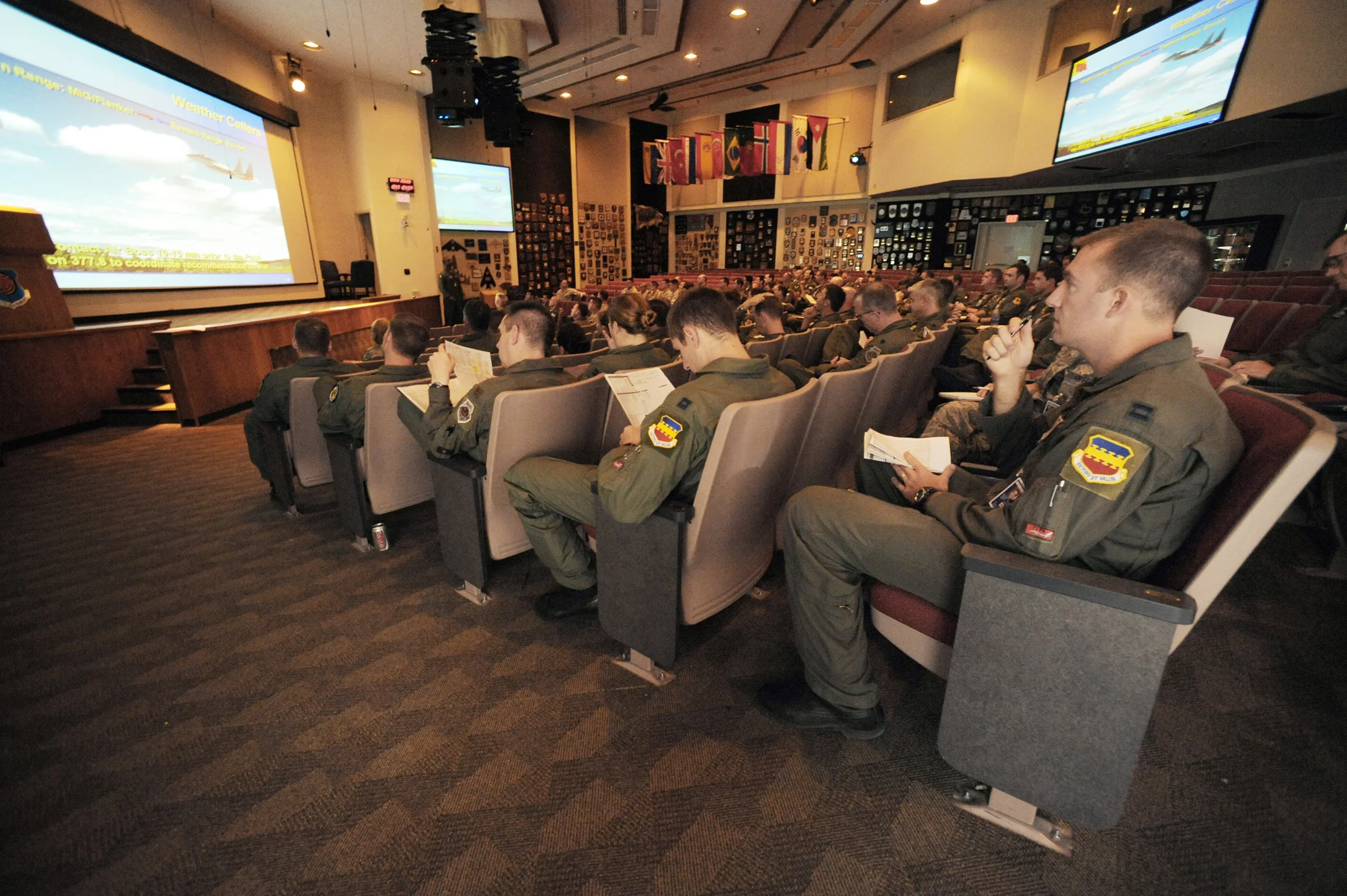
Battalion and squadron commanders have a profound influence across our military.  In the late 1990s, before assuming command of a squadron, I sought advice from then-Colonel Don Holder.  The “free, non-binding advice” he sent me proved invaluable.  Since that time I learned more about command at the battalion level by observing effective commanders in combat and in training.   What follows, printed with his permission, is a revised version of what now Lieutenant General, retired Holder sent me.

#Leadership: The Death of Command and Control

#Leadership: The Death of Command and Control

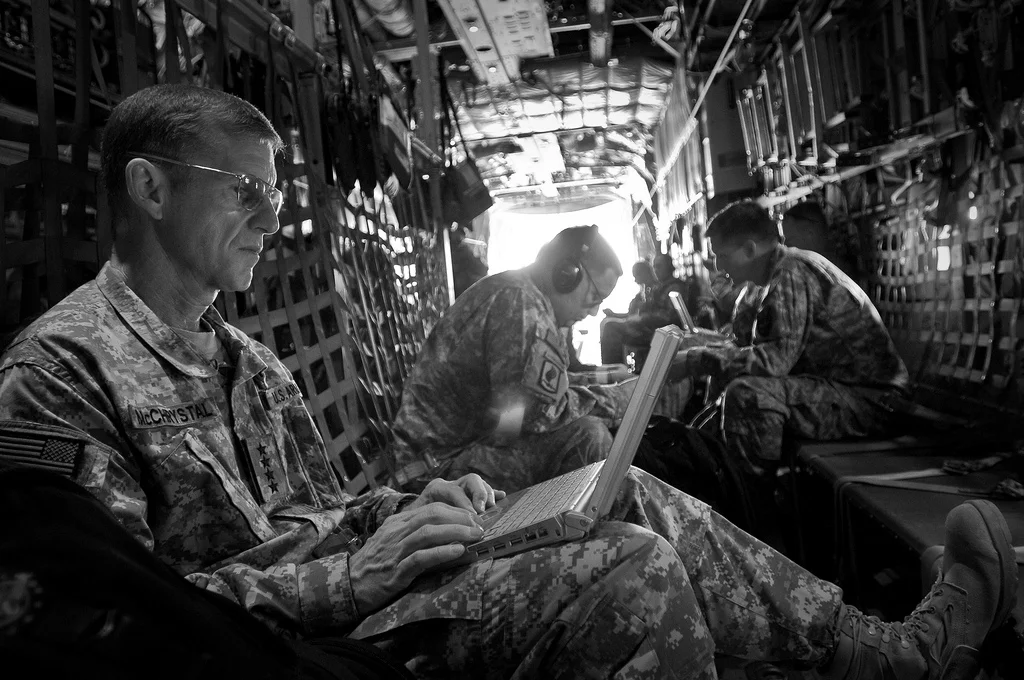
The phrase “command and control” must be dropped from the leader’s lexicon. Words have history and power. The former command and control structures focused information and decision making onto one supposed superman in a rigid hierarchy and expected him to make infallible decisions with omniscient knowledge. These structures are being defeated, bankrupted, and destroyed as we speak. Even when we remove the history of the words, there is power in them and in their implicit directive to centralize information and control. But the defeat of these systems in modern wars does not support the command and control structure. We should replace the phrase with something that reflects a greater understanding of the relationship between leaders and their organization; let’s call this idea of building effective, resilient, winning organizations…leadership.

The Keys to Effective #Leadership

The Keys to Effective #Leadership

Good leadership is learned through experience, observation, study, reflection, and embracing variety in all of its forms. And throughout this journey, leaders also learn that cooperation and collaboration are integral parts of good leadership. Constantly honing the capacity to lead is an ongoing journey and if done right, it is a journey of immense personal satisfaction.

The Heart of #Leadership

The Heart of #Leadership

The heart of leadership, especially within the profession of arms, is summarized with a single word: influence. Influence is the ability to have an effect on the character, development, or behavior of someone or something. As leaders, we must begin by first and foremost understanding this fundamental principle. People can be influenced one of two ways: through mandate leadership or through organic leadership. Understanding these two very different approaches to influence will in large measure determine not only what type of leader we are, but also the effectiveness of our leadership in shaping the behavior of others.

Military #Leadership in the 21st Century

Military #Leadership in the 21st Century

Leadership is simultaneously the least expensive and the most expensive resource our military possesses. Its fiscal cost is minuscule in comparison to the acquisition budgets for high-end equipment, but its cost in terms of time is measured in decades and must be codified in consistent prioritization by our institutions.  In the end, the price of failing to effectively resource the development of leaders can be enormous at both the personal and institutional level.  No matter the domain in which a military service fights, leadership is the key to all successful military efforts. It is a factor that shapes organizational culture in ways that directly affect outcomes and the performance of both military units and their people.

China’s Dredging Strategy in the South China Sea

China’s Dredging Strategy in the South China Sea

Chinese dredging operations add an interesting complication to the debate over sovereignty, control, and conflict in the South China Sea. The Spratly Islands are presently claimed by both China and the Philippines. Each party to the dispute makes claims that are intended to define the interpretation events. However, it is not always the case that these interpretations fit the facts. As part of their efforts to assert their claim to ongoing sovereignty in the area, China is engaging in significant dredging operations there. The Chinese are involved in dredging operations on five different reefs and has created some 2900 acres of land in the Spratlys. This behaviour sits within murky and sometimes undefined legal frameworks but often clashes with Beijing’s official reasoning for their behaviour.

Advocatus Diaboli: #Reviewing Red Team

Advocatus Diaboli: #Reviewing Red Team

Allocating resources to red teaming can be costly, access to necessary information can be frustrating, and the importance of the boss’s support is critical to the success of any alternative analysis team. If the boss does not support the red team, and is not open to the criticism uncovered by its analysis, it can be a fruitless endeavor. Zenko provides a handy roadmap to the mistakes of others as a guide to future organizations.  In an arena where failure results in loss of life or treasure, Red Team will be a critical resource for leaders that want to give their organization the best chance at success.

The Game of #Risk

The Game of #Risk

Through the following short essays, we intend to...[open] a dialog on risk that is long overdue. From doctrine to education, from tactics to strategy, the influence of risk has never been greater, yet receives far less attention that is rightfully necessary. If we are to regain the elusive “winning edge,” it begins with a deeper understanding and dialog on risk. It is time to bring risk out of the shadows and into the light where we can all see it, discuss it, and understand it.

Spain’s Siren Song

Spain’s Siren Song

This tunnel vision, and the misinterpretation of past grand strategic success...has the potential to shape the spectrum of analysis that informs American grand strategic thought today. To face the siren songs of historical mythology and American exceptionalism, the U.S. must first find the mast before it tethers itself to it. Some general agreement about where we are and where we want to go is the first step in the right direction towards a grand strategy firmly connected to reality.

Uniqueness As Flexibility: Refining Strategic Narrative

Uniqueness As Flexibility: Refining Strategic Narrative

"Wars are fought twice: once on the ground and once in the mind. As spin-doctors of the past, the winners over the mind write history by establishing a narrative of past events, solidifying their version of events as much as their victory. Today, the priority of victory on the ground recedes, as victory over the mind proves (almost) sufficient to win. But strategy is still the coordination of ends, ways, and means to achieve victory, whereas strategic narrative—a subset of strategy—is the specific process used to achieve victory over the mind..."

#Reviewing Success and Failure in Limited War

#Reviewing Success and Failure in Limited War

Strategic performance is strongly affected by the state’s information management capabilities. Top policymakers must have the ability to understand the environment in which they are acting (outside information) and how their national security organizations are behaving in that strategic environment (inside information). Strategic risk assessment is based on an understanding of the opponent’s strengths and weaknesses, the challenges and opportunities present in the international environment, and the capability of the state to act in a purposeful way along multiple lines. Without sound outside and inside information, risk assessments will suffer, as will the quality of strategy.

Japan’s Resurgent Foreign Policy Architect: Shinzo Abe

Japan’s Resurgent Foreign Policy Architect: Shinzo Abe

Shinzo Abe’s foreign policy is different from many of his predecessors. He is an out-and-out reformer, both on the international stage and domestically, and his domestic economic success fuels his diplomacy. And in this diplomacy, he has shaken Japan out of a self-imposed security apathy and plotted a more pragmatic national course. Under Abe, Japan is working to make itself ready to take its role in global power politics more seriously and create a meaningful impact promoting world peace and prosperity.

Staff Tools and Their Discontents

Staff Tools and Their Discontents

Staff tools are only as good as the person behind the implement. The most exactingly detailed information paper format is useless unless someone wields it with sufficient intellectual curiosity to ask the hard questions and the dedication to find answers to them. The best-planned briefing will fall flat if the presenter is insufficiently empathic to understand the needs and desire of their audience. Marshall McLuhan famously said, "We shape our tools, and then our tools shape us." Staff officers have an obligation to craft their tools while remaining firmly in command of their employment.

Ideas & Knowledge: The New Currency of World Politics

Ideas & Knowledge: The New Currency of World Politics

The international system is driven by social and political ideas. Written and oral discourses are the primary indicators of the trajectory of ideas. These ideas based on historical experiences accumulate over a period of time and provide a perspective on reality. The appeal of that perspective depends upon the credibility of the idea in the eyes of the wider global audience. To seek credibility for their idea, actors lay claim to ‘superior knowledge,’ by virtue of which their actions can be perceived as the most rational ones in the given circumstances.

#Reviewing "The Sun Also Rises" and "The Road Back From Broken"

#Reviewing "The Sun Also Rises" and "The Road Back From Broken"

We are locked in with Jake; we know his thoughts and feelings, or at least we know as much as Hemingway lets us know. Jake's inability to connect with those around him is as emotional as it is physical, and the first-person narrative allows the reader to experience some measure of that isolation. Fitz, however, is not alone in his head with the reader. His failing connections with those around him are not completely severed lifelines. The third-person omniscient perspective allows Morgan to explore not just Fitz's feelings but how his injuries affect those around him, those trying to help him, and those who depend on him. The shift in perspective from one to the other underscores a shift in our own perspective on the injuries of war since Hemingway's own experience: no one should have to travel the road alone.

Islamic State 2016 and America’s Underperformance on the Twitter Battlefield

Islamic State 2016 and America’s Underperformance on the Twitter Battlefield

The United States has spent far more time agonizing over counter-messaging strategy than engaging meaningfully to exploit the Islamic State’s weaknesses on social media. Whether counter-messaging is capable of delivering results or not, the analysis reveals the United States missed opportunities to exploit Islamic State losses.

Keen for a Strategy? George Kennan's Realism Is Alive and Well

Keen for a Strategy? George Kennan's Realism Is Alive and Well

...the contemporary strategic environment is undergoing a profound transition in its polarity. Obama has been placed under serious pressure to form a grand strategy that allows the U.S. to manipulate events with at will. However, a look to Kennan’s writings reveals a sense of déjà vu when reflecting on Obama’s policies.