Though it seems war will not change its faces in the coming decades, war has a future, and one of its ends is peace. We have still to see whether the end of war comes about via some technological, humanity-ending armageddon or a technology-mediated, people-centered peace. Yet more data points to consider on the terrain of time.
Reconsidering Overseas Force Structure
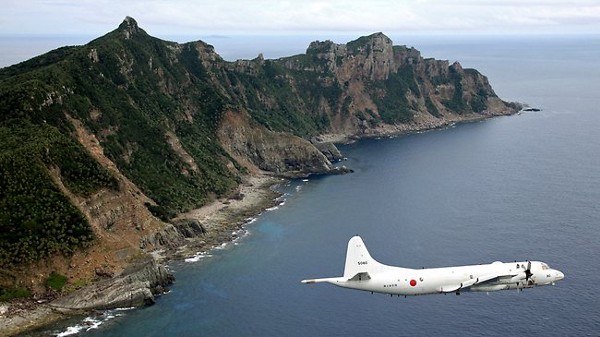
Now may be a good time to reconsider further reductions in U.S. overseas force structure in Europe and Asia. Though not the proximate cause, the events in Ukraine imply a loss in the deterrent ability of the United States. While it may be too late to maintain a large deterrent force in Europe, there may be a lesson for the United States with regards to current and near-term force structure and posture decisions. This is especially true for the U.S. Army. The drawdown of U.S. forces from Europe has been ongoing since the late 1980s as the justification for almost 250,000 U.S. Soldiers no longer existed with the demise of the Soviet Union. The fact that U.S. Soldiers have been permanently assigned overseas points to some key considerations regarding land power.
Embrace the Renaissance for the #FutureOfWar
Developing Diverse Cultural Knowledge
In the Army it is common to hear someone say, “Embrace the suck” to prepare for the rigors of combat. Corollary of our recent wars, however, is that we may need to “Embrace the Renaissance” to prepare for future war. The wars in Iraq and Afghanistan showed that we needed renaissance-like traits in our leaders and formations to inculcate the diverse impact of culture. Ample evidence exists that a lack of cultural understanding led to mistakes from the tactical to the strategic level. Similarly, the future security environment will be driven by a broad array of culturally driven actors while our fiscal constraints will increase our dependency on diverse cultures to advance our interests. These realities of future war necessitate enhanced cultural immersion to broaden and encourage renaissance traits within our military formations. Our ability to adapt and think strategically in this future begins with identifying, developing, and rewarding intellectual curiosity in our leaders while nurturing an organizational culture that embraces diverse cultural exposure and development.
The Army’s view of the future is that a complex and dynamic mix of cultures will contribute to the competitive environment that will challenge U.S. interests.[1] A recent human performance paper published by the Army describes the importance of cultural understanding:
“Cultural understanding is instilled through regional alignment, broad cultural appreciation, professional judgment, and language proficiency. The Army of the future must produce leaders, at every level, who think broadly about the nature of the conflict in which they are engaged. They must have a nuanced appreciation of social context, and an ability to develop strategically appropriate, ethical solutions to complex and often-violent human problems. Future leaders must innovate rapidly on the battlefield. They must have a highly refined sense of cultural empathy and a social intuition for their operational environment.”[2]
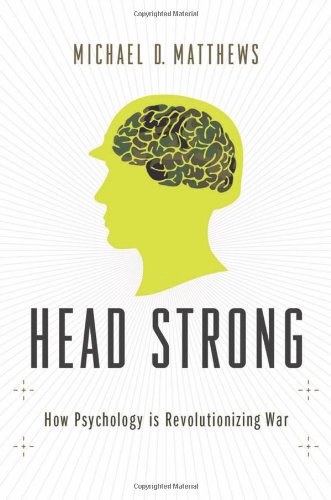
In Head Strong: How Psychology is Revolutionizing War, Michael Matthews agrees with this assessment and explains the increased importance of respecting cultural needs and employing subtle approaches to win future war. He describes the near decisive impact that cultural mistakes will make given immediate and global dissemination of war images.[3]
Major Larry Workman reflected renaissance-like qualities before deploying his company to Afghanistan. His cultural astuteness contrasted well with the ignorance some showed such as urinating on dead Taliban or burning the Koran. He identified religion, politics, sport and food as four pillars of any culture. He ignored sensitivities about religion and politics and embraced both immediately by noting, “We all come from Abraham” when he first met his Afghan counterparts. He eventually built such a rapport that combined Christian and Muslim services were conducted and attended to by local village leaders. He assigned soldiers to learn Polo prior to deployment to better understand the Afghan sport of buzkashi. He set up a soccer team prior to deployment to ensure his soldiers were comfortable building relations on the field of friendly strife.[4]
Renaissance connotes many traits but potentially none more important than culturally astute.
These acts reflect renaissance-like traits that are needed at every level of command. The term “renaissance man” came out of the Renaissance and described a cultured person who was knowledgeable and educated or proficient in a wide range of fields. The description applied to Renaissance figures that performed brilliantly in many different fields such as Leonardo da Vinci. Some might call them polymathic or worldly individuals who have expertise that spans a significant number of different subject areas and are known to draw on complex bodies of knowledge to solve particular problems. They are curious, traveled, intelligent, knowledgeable, artistic, physical, social and confident. Renaissance connotes many traits but potentially none more important than culturally astute.
Renaissance, polymath, and worldly denote cognitive attributes that overcome biases and heuristics in decision-making while negotiating foreign cultures. Patton said, “I have studied the German all my life. I have read the memoirs of his general officers and political leaders. I have even read his philosophers…I have studied in detail the accounts of every damned one of his battles. I know exactly how he will react under any given set of circumstances…Therefore, when the day comes, I’m going whip the hell out of him!”[5] Patton was a renaissance man who knew his enemy and overcame otherwise crippling decision-making biases and heuristics. His intellectual curiosity, driven by innate attributes, exposure, and desire to win filled a reservoir of instinct making him a genius in war.
Intellectual Curiosity
Rapid adaptation in future war requires intellectually curious leaders now to fill their own instinct reservoir. A comprehensive report on the psychology of curiosity defines curiosity as “a form of cognitive induced deprivation that arises from the perception of a gap in knowledge or understanding.”[6] In other words, one must know and accept they don’t know something and have an intense desire to learn about it. Exposure to different environments and reasoned ideas is the first step to magnifying the light of diversity though many lack these opportunities prior to joining the military. Our geographic isolation and relative supremacy may lead to a false sense of American exceptionalism that impedes intellectual curiosity. Our culture may be one of our primary obstacles to intellectual curiosity, mental agility, and cultural understanding.
While more ambiguous than and indirectly contributing to other attributes such as agility, innovation and results, ‘inquisitiveness’ is also important to achieve the results we desire to not be more directly assessed.
Overcoming this obstacle starts with identifying the right innate attributes required in our leaders. In the Army’s manual on leadership, the term ‘inquisitiveness’ is buried within within the discussion about Army leader intellect. While more ambiguous than and indirectly contributing to other attributes such as agility, innovation and results, ‘inquisitiveness’ is also important to achieve the results we desire to not be more directly assessed. For these reasons, a sub-category called ‘Intellectual Curiosity’ should be added to the attribute category ‘Intellect’ in the Army leader model. ‘Intellectual Curiosity’ is a foundational requirement for mental agility, sound judgment, and innovation. It should replace ‘Interpersonal Tact’ that is largely redundant with aspects of ‘Character’ and ‘Presence.’ Intellectual curiosity should describe the level to which one has a desire to invest effort into learning about the unknown.
Awareness, Understanding, and Expertise
The military must then build off the core individual attribute of curiosity by prescribing more precise organizational training and educational requirements for cultural development. Commanders require organizational decisions about what level of effort is required to prepare cultural leaders to execute Phase Zero (shaping) and Phase Four (stability) operations. Our military’s joint doctrine accounts for the importance of culture in operations with the term well integrated into Joint Publication 3–0 Operations. This document, however, uses the terms expertise, awareness and understanding interchangeable in just one paragraph to indicate the level of skill required.[7]
Definitions of terms shouldn’t paralyze execution, but providing a coherent requirement based on the future environment enables subordinate leaders to prioritize requirements and manage risks in a highly requirement-competitive environment. The Chairman of the Joint Chief’s professional military education (PME) guidance introduces and defines another term, cultural ‘knowledge’, as “understanding the distinctive and deeply rooted beliefs, values, ideology, historic traditions, social forms, and behavioral patterns of a group, organization, or society; understanding key cultural differences and their implications for interacting with people from a culture; and understanding those objective conditions that may, over time, cause a culture to evolve.”[8] By this definition, cultural knowledge is a relatively comprehensive level of cultural skill that imbues leaders with the capacity necessary to succeed in a multi-cultural environment. This definition is a perfect target for educating and training most leaders and organizations.
The August 2014 Army Regulation 350–1 “Army Training and Leader Development” defines cultural awareness, understanding, and expertise as the three required levels of individual cultural capability. First, ‘awareness’ is the lowest level of cultural capability that includes fundamentals, self-awareness, and functional knowledge. Second, ‘cultural understanding’ is similar to the Chief’s definition of ‘cultural knowledge’ and “denotes a firm grasp of cross-cultural competence (3C) and a comprehensive level of regional competence. Generalist soldiers at this level are able to accomplish the mission in a specific geographic area.” It further describes, “Cross-cultural competence (3C) does not focus on a single region. It is a general awareness of the cultural concepts of communication, religion, norms, values, beliefs, behaviors, gestures, attitudes, and so forth. Also, 3C involves self-awareness of one’s own culture and the skills to interact effectively with other cultures.” Cultural understanding is the target objective for generalist leaders in the Army. Third, ‘expertise’ denotes sophisticated cultural competence to include strong language skills.
The Army’s current definitions are adequate if the Chairman’s concept of ‘knowledge’ is well integrated with the Army’s concept of ‘understanding.’
Another comprehensive way to define skill level is through Georgetown University’s National Center for Cultural Competence (NCCC). They define cultural awareness as “being cognizant, observant, and conscious of similarities and differences among and between cultural groups.” They call it the “first and foundational element because without it, it is virtually impossible to acquire the attitudes, skills, and knowledge that are essential to cultural competence.”[9] Developed for the domestic health care industry, cultural competence means that organizations and individuals “have the capacity to (1) value diversity, (2) conduct self-assessment, (3) manage the dynamics of difference, (4) acquire and institutionalize cultural knowledge and (5) adapt to diversity and the cultural contexts of the communities they serve.”[10] This definition sets the standard for an organizational culture that embraces culture in every aspect of operations.
The Army’s current definitions are adequate if the Chairman’s concept of ‘knowledge’ is well integrated with the Army’s concept of ‘understanding.’ As defined above, ‘knowledge’ hits the sweet spot of necessary individual skill. The NCCC concept of competence should be incorporated into organizational standards. Current military training and educating goals focus on individual skills and would improve with organizational level objectives. Coming to terms with the definitions sets the bar and starts to provide objective goals of education and training to meet the challenge of future war.
Training and Education
Students taking part in joint professional military education at the Naval War College | https://www.usnwc.edu/Academics/Catalog/RightsideLinks-(1)/2012-2013.aspx
Next, the military must clearly define the requirements and measures necessary to prioritize and assess cultural development. The CJCS’s 2012 Officer Professional Military Education guidance directs that cultural knowledge is only a component of pre-commissioning education and only directs that culture be a factor considered while shaping policies, strategies and campaigns in military education post-commissioning. The Chairman’s six Desired Leader Attributes include leaders with environmental understanding, leaders that anticipate and adapt, leaders that use mission command, leaders who lead transitions, leaders that make ethical decision making, and leaders who use critical thinking.[11] Culture is a contributing factor to each of these attributes though not stated expressly in the guidance. The Chairman’s 30 October 2014 Notice, Joint Training Guidance, does not use the word culture once in the entire document. Of the thirteen high-interest training issues, none of them address culture directly.[12]
The Army only mandates that institutional education programs address cultural awareness training — the foundational element. There are no mandatory steady-state requirements for organizational training of ‘awareness’ or ‘understanding.’ It does not direct ‘awareness’ training within the units nor does the Army mandate that training or education move to the ‘understanding’ level in either operational units or institutions. Any enterprising and audacious commander will exceed this standard but have to do so at the risk of completing other mandatory requirements. Finally, other than language skills, the Army appears to say in AR 350–1 that there is no precise way to measure cultural awareness or understanding. Despite our institution acknowledging the importance of cultural immersion, the message implies that it is a low priority for training and education.
To better clarify and prioritize, cultural awareness must be a pre-commissioning source requirement similar to all other foundational elements of military leadership. Once commissioned, leaders achieve cultural understanding through life-long learning requirements including PME, organization training and operations, and self-development. Officers should reach and validate required levels of defined cultural understanding by the point they depart intermediate level education. Non-commissioned officers should receive awareness training and validation through the rank of E-4 and then achieve validation of understanding prior to promotion to the rank of E-8. Specific regional understanding is the requirement of the aligned or deploying organizations and can be tested locally through individual examination and organizational exercises. Organizational competence requirements integrated into Mission Essential Task List evaluation requirements provides broader unit competence assessments. Specific expertise requirements remain as defined by the Army for advanced skill requirements. Those who achieve skill qualifications might receive an additional skill identifier to provide some minor incentive and acknowledgment.
To achieve these goals, the institution can simply improve on the margins in many areas. Existing PME guidance can be stronger and be better integrated into PME programs. Joint Guidance should require PME to achieve cultural ‘understanding’ or ‘knowledge’ benchmarks. During Joint Military Operations (JMO) and National Security Decision Making (NSDM) trimesters at the Naval War College, culture is not well integrated into the core curriculum. For example, of 24 leaders analyzed in the Leadership sub-course to NSDM, only two were non-western thinking leaders (Indira Gandhi and Deng Xiaoping). In strategy, there are looks at regional economics, sources of conflict, and American interests but no serious look deep into the cultural core of politics, war, religion, family, food or sport. The base material for both JMO and NSDM has extremely few foreign views of operations or strategy. These isolated examples depict broader challenges with determining the total content of professional military education.
The lack of political ideology, philosophical or religious training in most core institutional programs is shocking given the level of influence they bear on foreign and domestic decision-making.
Currently, cultural understanding is too dependent on self-study and should be further emphasized within the PME systems while relegating other, less critical requirements to self-study or operational units. The lack of political ideology, philosophical or religious training in most core institutional programs is shocking given the level of influence they bear on foreign and domestic decision-making. For example, a quick read of Plato’s Republic might enlighten many as to why numerous regimes control the information their people receive. The history of Buddhism, Hinduism, or Confucianism beliefs might reinforce the President’s direction to re-balance to the Pacific. Our PME should be rigorous, enlightening, and less technical. Softer skills should penetrate deeper into beginning institutional education such as experiencing Thucydides, Sun Tzu and Clausewitz before War College where many experience them specifically for the first time.
Foreign Service member exchanges within the schools are very positive, but more can be done to promote deeper cultural integration and understanding in the schools. Despite the presence of a vast array of foreign officers in our PME systems, there is not enough done to create a truly immersed environment. It often appears that they are primarily here to learn from us versus us from them. Mandated fun has always been an effective tool for commanders to build cohesion. There should be more mandated fun in PME to better integrate our foreign resources. Deliberately assigning foreign officer ‘battle buddies’; inviting officers to sponsored cultural events; better integrating foreign officers in seminars; and mandating ‘show and tell’ events by foreign officers improves the effectiveness of an amazing asset already available. Further exposing foreign thought into our relationships and curriculum at every level of the military institution germinates exposure to broader thought.
Operational Immersion
Many operational methods of cultural immersion are in place but marginally executed. Shaping operations, through Theater Security Cooperation Programs, constitute the majority of global military engagement outside of combat zones. Hundreds of combined exercises, subject matter exchanges and missions are conducted annually to increase relations and interoperability. These missions often produce fine training results but often miss opportunities to increase cultural understanding significantly. In one example, an engineer platoon deployed to Northern Thailand to construct a school in partnership with Thai and Singapore military engineers. The platoon lived at the job-site with their military counterparts and within the local village. Over 40 days, a deep level of cultural understanding became a force multiplier. The platoon leadership felt comfortable and deeply integrated with the local community. Two years later, the leadership remains friends through social media with many of those they worked with closely during the project.
A soldier supports members of the Philippine Army as a part of Operation Enduring Freedom-Philippines.
Two months later, this same platoon deployed to the Philippines but lived in a resort isolated from the job site, the community, and their host-nation counterparts. They completed the mission but built no significant relationships. The design of the mission and incorrect criteria led to the loss of opportunity. The project site location created a security challenge and difficulty providing for American level quality of life. This miss-step happened because the wrong objectives were a priority. The priority became building something rather than developing relationships. Had the priority been building relationships, the choice of a different project mitigates the security and comfort issues. Doing this, therefore, enables deeper Filipino cultural understanding in some very young leaders and soldiers.[13] Overly conservative force protection rules often do more harm than good on these missions. Many times, force protection is an excuse to succumb to American comfort desires. If building cultural understanding is an identified priority for these missions, it will change the way they are planned and executed. It will increase the renaissance-like characteristics of those who participate.
While institutional education and unit training operations create domains for cultural immersion, extensive self-study is required to reach the genius expected of our future senior leaders. General Patton likely did a majority of his German studies on his own accord. Similarly, those who aspire to be great in our military will seek out the same individual development. But as the military withdraws back within our borders, the number of foreign assignment opportunities are dwindling and reducing foreign exposure opportunities. The military can, however, inspire an intense quest for knowledge with innovative exposure techniques. One idea to generate enthusiasm is to build from efforts at the military academies and allow our best to travel for an extended period in countries of interest. [14] Not only building renaissance skills, this opportunity rewards their demonstrated intellectual curiosity and sparks intense life-long learning.
The Army’s Military Personal Exchange Program is a long-term personnel exchange between the U.S. and a foreign military and should be expanded to support Security Cooperation and cultural understanding. An Australian engineer officer served in the 65th Engineer Battalion in Hawaii and was instrumental in conveying a different viewpoint. Similarly, a British infantry officer served within the 1st BCT, 10th Mountain in Iraq and provided yet another creative perspective.[15] Due to funding constraints, however, the Australian exchange program ended, and the British exchange was only combat related. These exchanges are expensive due to the duration and overly bureaucratic to execute. Shortening the military exchange to 6 to 12 months as a temporary change of station or extended temporary duty assignment from 12 to 36 as a permanent change of station reduces the costs to the government while still capturing many benefits. Similarly, the general policy of one-for-one should be relaxed to allow for more American officers to work within foreign militaries. Often, the foreign military cannot afford the cost of sending their officers to America.
Executing this program under the umbrella of ‘sister-units’ similar to ‘sister-cities’ by aligning specific American battalions with specific foreign battalions might generate a long-term relationship, momentum, familiarity, and cultural understanding. A fascinating expansion may include a concept similar to exchange programs executed in high school. The exchange of junior officers and noncommissioned officers who have the opportunity to live in the house of a foreign sponsor for three to six months would dramatically enhance cultural immersion and understanding. If all done through the concept of sister units, these programs would gain unit emphasis, momentum, accountability, and spirit. Initiating these programs through our tried and true allies such as the Canadians, Australians and British simplify the obvious concerns of language and force protection until these aspects can be more precisely developed and managed for countries further on fringe of our cultural understanding.
The intent is to spark an interest in junior leaders that will mature as their career progresses.
In the same vein, Foreign Area Officers are inculcated to a region partially through a year-long series of personal travel. That same methodology employed by regionally aligned units can broaden cultural understanding. For example, a junior officer or noncommissioned officer on a three-year assignment to the Pacific might be offered 30 days of permissive temporary duty to travel countries of interest in the Pacific. The intent is to spark an interest in junior leaders that will mature as their career progresses. Many simply do not have the opportunity or means prior to joining the military to become physically exposed beyond our borders. There are few strings attached to this sabbatical other than general guidelines such as 30 days permissive temporary duty, checking-in with the embassy, no uniform or grooming requirements, maintaining accountability with unit, providing summary reports describing culture lessons, and preparing unit cultural training support packages. Not to be confused with Japanese spies in South Asia prior to WWII, these soldiers are on sabbatical experiencing new worlds.
Potentially, two, one-month sabbaticals are authorized in the first ten years of a soldier’s career. In most regions, one might envision that the traveling soldier can experience three or four countries of interest. In the Pacific, for example, a soldier may visit China for a couple weeks followed by days spent in Vietnam, Laos and Cambodia. This abstract concept is likely more easily implemented than in reality, but the concept enables our success in future war and is exciting for our junior leaders who have expressly made known their intense desire for more extensive cultural exchange.[16] Not only do these enlightened concepts enhance our cultural understanding and thereby our decision-making but they also appeal to the self-interest of those we want in an adaptive military. This idea should resonate with senior leaders who had the opportunity to travel Europe with impunity or those who had the opportunity and means to travel on their own.
Conclusion
Doctrine is understandably vague in the particular desired cultural end-state, but more can be done to precisely define terminology and education / training requirements. Solid guidance eliminates ambiguity and encourages the joint community to integrate culture effectively in professional education and training. In an environment with too many directed requirements, focus on culture understanding will not be a priority for non-deploying commanders without top-level focus and accepting risk in areas less essential in future war.
The value or priority we place on these efforts will be a direct reflection of the value we place on shaping and stability operations or winning without fighting. If, as we might expect, we evolve back to a force driven by the two weeks or more of intense combat at a training center, we will be hard pressed to replicate the slowly emerging impact that cultural understanding has on protracted operations. By nature, we will be drawn to the kinetic or dominating fight and forego the humanities that underpin all conflict. Our home-station training and training center operations will never properly replicate the cultural dynamics painfully learned from over a decade of war in Iraq and Afghanistan.
Renaissance-like characteristics spring from intellectual curiosity that must be a recruiting, developing, and assessing focus. Opening the door for foreign exposure and immersion opportunities is essential to overcoming American biases and motivating curiosity. As defined by the Army, gaining cultural expertise is a long process best focused on those such as foreign area officers who operate in the culture daily. But, getting to cultural understanding as defined by the Army or cultural knowledge as in joint doctrine requires opportunity and inspiration. Our military and nation will be far better off if we do more to arouse that renaissance-like intellectual curiosity now. If so, our leaders will have the strategic perspective, mental agility and access to diverse communities of practice to win the future war.
Aaron Reisinger is an officer in the U.S. Army currently attending the Naval War College. The opinions expressed he opinions expressed are his alone and do not reflect those of the U.S. Army, the Department of Defense, or the U.S. Government.
Have a response or an idea for your own article? Follow the logo below, and you too can contribute to The Bridge:
Enjoy what you just read? Please help spread the word to new readers by sharing it on social media.
Notes:
[1] U.S. Army Training and Doctrine Command, Operational Environments to 2028: The Strategic Environment for Unified Land Operations, (Fort Eustis VA: TRADOC G2, August 2012).
[2] U.S. Army, The Human Dimension White Paper A Framework for Optimizing Human Performance, (Fort Leavenworth, KS: Combined Arms Centers, October 2014).
[3] Michael D. Matthews, Head Strong — How Psychology is Revolutionizing War (Oxford: Oxford University Press, 2014).
[4] Larry Workman, MAJ, United States Army, phone conversation on 13 February 2015.
[5] Roger H. Nye, The Patton Mind (West Point Military History, Avery Publishers, 1994)
[6] George Loewenstein, “The Psychology of Curiosity: A Review and Reinterpretation,” Psychological Bulletin 116, no. 1, American Psychological Association, Inc., (1994): 75–78.
[7] Chairman, U.S. Joint Chiefs of Staff, Operations, Joint Publication (JP) 3.0 (Washington, DC: CJCS, 11 August 2011), III-19.
[8] Chairman, U.S. Joint Chiefs of Staff, Instruction 1800.01D: Officer Professional Military Education Policy (Washington, DC: CJCS, 5 September 2012).
[9] National Center for Cultural Competence, Georgetown University,http://www.nccccurricula.info/awareness /
[10] National Center for Cultural Competence, Georgetown University,http://nccc.georgetown.edu/foundations/frameworks.html.
[11] Chairman, U.S. Joint Chiefs of Staff, Instruction for Joint Training Policy for the Armed Forces of the United States (Washington, DC: 25 April 2014).
[12] Chairman, U.S. Joint Chiefs of Staff, Instruction: 2015–2018 Chairman’s Joint Training Guidance (Washington, DC: 30 October 2014).
[13] Examples cited were from the deployment of 2nd platoon, 643rd vertical engineer company, 84th engineer battalion in 2013 to Thailand for Cobra Gold 13 and the Philippines for Balikitan 13.
[14] The academies have numerous requirements for language training and provide many opportunities for spending a semester abroad living with a family and studying in a host country. In my opinion, language training is only marginally useful unless combined with at least 6 months of immersion in a nation speaking that language.
[15] Both are personal experiences of mine while serving at the Operations Officer for the 65th Engineer Battalion and a Transition Team Chief with 1st BCT, 10th Mountain deployed to Kirkuk, Iraq.
[16] In a review of the Army Operating Concept at Fort Leavenworth from Feb 24–26 2015, nearly 100 Army captains participated in The Captain Solarium and recommended in the out-brief to Army Chief of Staff General Odierno that the Army expand cross-cultural understanding.http://www.army.mil/article/143655/Expand_cross_cultural_understanding__captains_tell_the_CSA/
The #FutureOfWar and the Fight for the Strategic Narrative
Stories or narratives are an important construct that unite and sustain human communities. These narratives are a fire around which individuals, nations, and peoples gather. Based on them we celebrate a common history, language, or culture and they have the power to inspire a sense of meaning for life — they provide hope for the future.
Stories provide ideas which Kennedy referred to as “endurance without death.” For as long as narratives form the fabric of human existence, and for as long as war remains a human endeavor, the fight for the strategic narrative during times of conflict becomes imperative. Consequently, any discussion of the future of war must include consideration of how the battleground for ideas can be won through a persuasive story that can inspire action in people and government and thus the military.
‘A man may die, nations may rise and fall, but an idea lives on. Ideas have endurance without death’.
John F. Kennedy
Strategic narratives also help develop the rationale for war efforts. Without them nothing rallies or binds people to a common cause. More importantly, without a strategic narrative, there is no story that provides an alternative voice to those whom we fight. This is evident in the fight against extremist organisations such as ISIL, who has developed a glossy and sensational communications product that creates emotional connections with people and has proven to be a highly effective recruitment tool.
The Importance of the Narrative to Human Existence
When I think of the word “narrative,” I immediately think of those various human civilizations that have passed on their language and culture through storytelling. Australian Aborigines make reference to “The Dreaming” or “Dreamtime,” which has various meanings within different Aboriginal groups. However, it can be summarized as “a complex network of knowledge, faith and practices that derive from stories of creation, and it dominates all spiritual and physical aspects of Aboriginal life.”[1] This network of knowledge has been passed on over thousands of years through generations sharing stories. Or simply through oral histories.
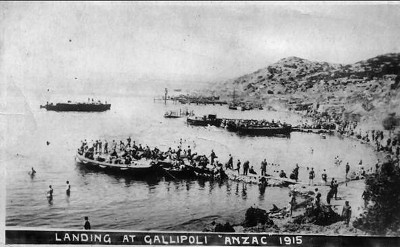
According to one Marine Corps officer, LtCol John M. Sullivan, in an article called ‘Why Gallipoli Matters: Interpreting Different Lessons from History’, “[t]he very word ‘Gallipoli’ conjures up visions of amphibious assault and failure of what might have been.” Gallipoli was indeed a military failure, but that aspect of its narrative has become subsumed by a stronger story about the birth of the Australian nation, an idea that was borne out of the work of Australia’s official war correspondent, C.E.W Bean. This year marks the 100th anniversary of the Gallipoli landings and hence the spiritual birth of Australia, and the dominant narrative will take on an irresistible force with celebrations across the country, which will be spread over the next four years [2]. The facts of the military campaign occupy only a marginal part of the celebrations, reserved only for the military historians or those with a passing curiosity. The details surrounding the events of the 25th April 1915 have been overborne by a greater need for a nation to express its sense of national identity. This highlights that the dry facts are sometimes not as important as the story and the emotions that the narrative conjures in those who engage with it [3].
I wanted to share these examples to highlight the primal nature of stories and their link to human emotion rather than rational human cognition. According to Cody C. Deistraty in ‘The Psychological Comforts of Storytelling’:
‘[s]tories can be a way for humans to feel that we have control over the world. They allow people to see patterns where there is chaos, meaning where there is randomness. Humans are inclined to see narratives where there are none because it can afford meaning to our lives a form existential problem solving.’
Stories also enable an understanding of others and drawing connections with seemingly distant issues.
The Importance of the Strategic Narrative to the Future of War
The importance of narrative, how it powers human emotion, and its relationship to war becomes evident when considered through the frame of Clausewitz’ theory about human emotion within the construct of the ‘paradoxical trinity.’ He said:
“War is more than a true chameleon that slightly adapts its characteristics to the given case. As a total phenomenon its dominant tendencies always make war a paradoxical trinity — composed of primordial violence, hatred, and enmity, which is to be regarded as a blind natural force; of the play of chance and probability within which the creative spirit is free to roam; and of its element of subordination, as an instrument of policy, which makes it subject to reason alone.
The first of these three aspects mainly concerns the people; the second the commander and his army; the third the government. The passions that are to be kindled in war must already be inherent in the people; the scope which the play of courage and talent will enjoy in the realm of probability and chance depends on the particular character of the commander and the army; but the political aims are the business of government alone.
These three tendencies are like three different codes of law, deep-rooted in their subject and yet variable in their relationship to one another. A theory that ignores any one of them or seeks to fix an arbitrary relationship between them would conflict with reality to such an extent that for this reason alone it would be totally useless” (emphasis added) [4].
In his book, The Direction of War, Sir Hew Strachan considers that strategy formation in the 21st century neglects the people, which is a significant oversight because “[t]he people are the audience for war” and they must be factored into strategy formulation and operational planning. Strategic narrative is vital in engaging the people — in persuading the adversary’s potential recruits/supporters to either stay out of the fight or to support our efforts; as well as convincing our own populations to support our military endeavors in pursuit of key national interests [5]. For this reason, a strategic narrative is a means to ensuring that the people, military and government “become three in one in reality as well as in Clausewitzian theory” [6].
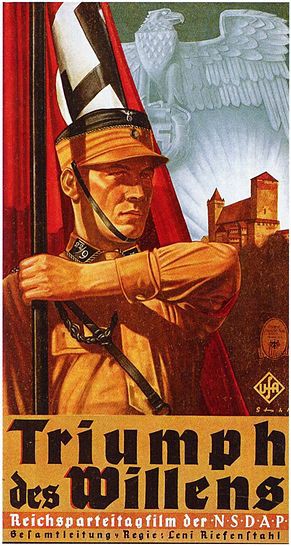
The battle between competing narratives is not new. A battle for ideologies underscored the Second World War. Hitler’s anti-Semitic rhetoric and territorial ambitions were delivered with the pomp and ceremony of rallies and associated symbology. Nazi propaganda films, such asTriumph of Will were aimed at stirring emotion and hitting the German population in the collective ‘feels.’
…they used emotion to convey a message and obtain understanding, rather than dry statistical and bureaucratic language to convince the respective populations of the need to go to war.
On the Allied side of the fight was the seven-part film Why We Fight, which was aimed at emphasising to US servicemen the reasons for US involvement in the war against Germany and Japan, and to unite the nation behind a common cause [7]. These films were effective in that they used emotion to convey a message and obtain understanding, rather than dry statistical and bureaucratic language to convince the respective populations of the need to go to war.
Arguably, it is easier to have a strategic narrative in a total war where there is a clear existential threat to a nation. Limited wars conducted on distant shores are a relatively more difficult to “sell.” For this reason, a strategic narrative is vital in a limited war because there is an ongoing need to keep the people appraised of how the war is unfolding and to maintain their support for the often protracted conflicts that we have so far experienced in the first decade of the 21st century.
A strategic narrative also plays a vital role in providing a protective function (or ‘counter-narrative’) against the story conveyed by the adversary. The large numbers of citizens from many nations, including Australia and the US, going to Syria and Iraq to fight alongside ISIS provides an ongoing reminder of the need to have a ‘counter-narrative’. The difficulties in countering ISIS in this regard is covered off by Simon Cottee’s article in The Atlantic posted here.
A few considerations for how to build an effective strategic narrative, particularly in a counter-insurgency setting, have been discussed by Col. Stephen Liszewski USMC here. Jason Logue, in a previous post on The Bridgealso provided a detailed discussion on how to constructively engage in the fight for the dominant and more persuasive story through the use of appropriate language and having a nested approach to strategic communications.
Preparing Future Leaders
The preparation of future leaders for future warfare that will inevitably involve the fight for the dominant narrative is difficult and will require breaking existing cultural norms. This can be achieved through including the strategic narrative in professional military education; and reacquainting ourselves with strategy formulation.
Professional military education and strategic narratives. When someone mentions the strategic environment, the instant reaction is to start thinking about things like regional military spending, socio-economic and environmental pressures that can widen fissures in the security setting, and pre-existing tensions between countries based on history, etc. However, there is little discussion about the “information environment,” as a subset of the “strategic environment,” wherein competing narratives reside.
This is particularly important when it comes to ‘whole of government’ efforts that direct many elements of national power to a common cause. The fight against ISIL is an example where various elements of national power are engaged, and where a unifying strategic narrative that offers an alternative is imperative. Preparing future leaders to engage in this fight for the dominant narrative is challenging as it requires a change in culture and a broadening of the collective perspective. Perhaps a relatively useful starting point is in professional military education — through war colleges and staff colleges as part of studying strategy; and using a historical study of strategic narratives in past conflicts using Sir Michael Howard’s approach of studying depth, breadth and context.
Reacquainting Ourselves with Strategy
Before an effective and unified strategic narrative can be constructed and deployed as a credible and viable alternative to that offered by the adversary, there is a need to have a strategy that forms the foundation of the narrative. In the fight against ISIL, this seems to be missing. Much of the political oratory regarding actions to be taken against ISIL revolves around mission verbs: “degrade” and “deny” [8]. Arguably, this is not a strategy as it fails to link how military force is to be used to achieve political objectives and is merely declaratory of actions that should be expected in war (i.e., to degrade or deny the enemy). Sir Hew Strachan, in The Direction of War, examined a number of recent conflicts and strongly criticizes national leaders in the United States and Britain for entering into conflicts in Iraq and Afghanistan without a clear strategy.
…it is clear that strategic acquaintance must begin with senior military leadership, who are expected to provide advice on the use of military force to civilian leaders…
Sir Hew discusses the impact of the Cold War in diminishing the capacity for strategic thought and strategic formulation caused by the conflation of strategy with policy due to the specific existential threat that nuclear war posed [9]. Ensuring that future leaders reacquaint themselves with strategy and its formulation is a significant challenge due largely to the need for a cultural shift. It is not for me to detail how this is to be done, but it is clear that strategic acquaintance must begin with senior military leadership, who are expected to provide advice on the use of military force to civilian leaders in nations where civil control of the military is a fundamental tenet of liberal democracy. It will require a serious, objective consideration of recent conflicts and an examination of where we were found wanting in terms of strategy. This may require the help of experts in strategy (such as Sir Hew) to guide military leaders on this path to strategic re-acquaintance.
The current fight for the strategic narrative is not in our favour; as shown by the multitude of willing volunteers answering ISIL’s call. While a topic such as the future of war evokes mental images of technologically advanced platforms, cyber capabilities, and omniscient battlespace awareness, we cannot forget about the enduring human aspect of war. While war remains a human endeavor, and stories/narratives are a way for humans to use emotion to understand complex phenomenon, the battle for the strategic narrative remains vital. If we fail to engage in this fight, the future of war will look very much like the recent past where we win the tactical engagements but lose the war.
Jo Brick is an Australian military officer who has served in Iraq and Afghanistan, an Associate Member of the Military Writers Guild, and is currently writing a thesis on Australian civil-military relations. The opinions expressed are hers alone and do not reflect those of the Australian Defence Force.
Have a response or an idea for your own article? Follow the logo below, and you too can contribute to The Bridge:
Enjoy what you just read? Please help spread the word to new readers by sharing it on social media.
Notes:
[1] See Australian Museum: http://australianmuseum.net.au/indigenous-australia-spirituality
[2] For a sense of the scale of ‘Gallipoli: 100 Years On’ celebrations, seehttp://www.anzaccentenary.gov.au/
[3] See Dr Peter Stanley, ‘Why does Gallipoli mean so much?’ ABC News Online, 25 Apr 08: http://www.abc.net.au/news/2008-04-25/why-does-gallipoli-mean-so-much/2416166 (accessed 03 March 2015).
[4] Carl von Clausewitz, On War. Translated by Michael Howard and Peter Paret, (Princeton: Princeton University Press) 1984, 89.
[5] Hew Strachan, The Direction of War (New York: Cambridge University Press) 2013, 278–281.
[6] Strachan, 281.
[7] Charles Silver, ‘Why We Fight: Frank Capra’s WWII Propaganda Films, MOMA http://www.moma.org/explore/inside_out/2011/06/07/why-we-fight-frank-capras-wwii-propaganda-films/ (accessed 03 March 2015).
[8] See Obama speech:http://www.whitehouse.gov/blog/2014/09/10/president-obama-we-will-degrade-and-ultimately-destroy-isil (accesed 04 March 2015).
[9] Strachan, 16.
Cognitive Training to Achieve Overmatch in the #FutureOfWar
The future of war is hard to predict and we have rarely foreseen the next conflict before it has found us. As we transition out of large-scale counterinsurgency and security force assistance operations towards decisive action operations in our training focus, we must pay special attention to what and how we train in this environment. Some might wishfully think that the Army can return to a Cold War-like era where we have a laser focus on the fundamentals of shoot, move, and communicate within the construct of combined arms maneuver. However, the Army’s experiences over the last ten years, and current projections about the future implore us to seek other models to guide our preparation. The Army’s Training and Doctrine Command (TRADOC) recently published TRADOC Pam 525–3–1, The U.S. Army Operating Concept: Win in a Complex World to help define the future operating environment and challenges.
The Army Operating Concept lays out five characteristics and twenty warfighting challenges that can help guide the Army in its preparations for the future of war.[1] The five characteristics are the increased velocity and momentum of human interactions and events; potential for overmatch; proliferation of weapons of mass destruction; spread of advanced cyberspace and counter-space capabilities; and demographics and operations among populations, in cities, and in complex terrain. A common trend across these characteristics is the complex, massive volume of stimuli soldiers will face, and the decentralized decision making required to gain and maintain the initiative in the future.
In the future, the fog of war will be as much about too much information as it has been defined by the absence of information in the past.
Consider the following: urban terrain presents a plethora of stimuli and distractions to the future warfighter. Information collection assets and digital systems present the decision maker with an abundance of data that needs to be analyzed and synthesized into a shared understanding and future operations. All the while, a thinking and decentralized enemy will demand that the Army presents them with multiple dilemmas using innovative ideas, or else we risk ceding the initiative to our adversaries. An interesting aspect of the scenario above is that there is no mention of the basics as we traditionally view them, “shoot, move, and communicate.” Building adaptive and innovative leaders is the best way to win the next war and this can be accomplished by training the cognitive abilities of our soldiers and leaders.
What are the Critical Cognitive Abilities?
The Army Operating Concept mentions the requirement for advanced cognitive abilities within the context of the Human Domain and decision making, but it does not provide any specifics on what or how the Army should pursue these. Army doctrine does not currently address these issues either, so we should look to the fields of cognitive science and systems theory for specifics. The combined theories of these two fields provide us with a decision making model to help identify advanced cognitive abilities. Cognition begins with gathering information and proceeds to processing information, analyzing and synthesizing a conclusion and/or course of action, and finally executing the selected course of action. This model will form the basis for re-examining the scenarios presented previously.
The plethora of stimuli in urban terrain, and the abundance of data that can be gathered from modern information collection assets, challenge soldiers on the battlefield — all of whom must make life and death decisions. In fact, scientific studies support the fact that information overload often results in a decreased quality of decisions.[2] To help overcome this challenge, we must seek to increase our soldiers’ ability to gather information through the filter of trained perceptiveness. Soldiers who are trained in perceptiveness can use these skills to sift through excessive stimulation and recognize significant cues. This advanced situational awareness can help us identify anomalies and indicators to find the proverbial needle in the haystack.
Perceptiveness will provide us with a heuristic technique to assist us in our decision making.[3]
Once soldiers have collected the relevant information, they must then process and synthesize the information into concepts that can be executed as a course of action. Speed of mental processing and the ability to synthesize data into relevant concepts are desirable skills for anyone, but for a soldier this might mean the difference between life and death. So we must ensure our soldiers have these abilities. These skills are particularly advantageous in an age where the global media scrutinizes the decisions of leaders at every level.[iv] Speed of mental processing and synthesis are abilities traditionally associated with staff officers and NCOs, but all soldiers must seek to increase these abilities to gain and maintain the initiative in the future.
Finally, the future will inevitably present soldiers with an adaptive enemy, unique situations, and complex operating environments. These characteristics will require soldiers to apply trained tactics, techniques, and procedures (TTPs) in foreseen circumstances, while having the ability to modify or invent new TTPs in real time for unforeseen situations. The key to adapting and overcoming these challenges in the future will be to foster a spirit of innovation in our soldiers.
How are we training these Cognitive Abilities Now?
Currently, the Army does not deliberately focus on advanced cognitive abilities in its leader development or collective training efforts, but in the future it must do so to achieve overmatch against our adversaries.
The discussion above highlighted four critical cognitive abilities that the Army must focus on: perceptiveness, speed of mental processing, synthesis, and innovativeness.
The Army has a handful of programs that seek to improve perceptiveness and adaptability, but they are not well known and it is challenging for commanders to get their soldiers into these programs. The biggest challenge the Army will face in seeking to develop these attributes will be to design and integrate training and educational efforts to scale across the entire force.
In the near term, the Army has a few niche programs that commanders can pursue to train and educate our soldiers on these advanced cognitive abilities. A non-exhaustive list of existing programs include Advanced Situational Awareness Training, the Asymmetric Warfare Adaptive Leader Program, Comprehensive Soldier and Family Fitness or resiliency training, the University of Foreign Military and Cultural Studies (UFMCS) or “Red Team” training, and Leader Reaction Courses. Each of these programs directly or indirectly addresses at least one of the four critical cognitive abilities.
Photo Credit: Aniesa Holmes. A role player dressed as an Afghan border security officer helps a student enrolled in the Advanced Situational Awareness Training program observe a village from a distance, Oct. 4, 2013, on Lee Field at Fort Benning, Ga.
The Army’s Advanced Situational Awareness Training program of instruction seeks to increase our soldiers’ ability to identify patterns and therefore anomalies in our environment. This advanced awareness will help soldiers identify pre-event indicators that are significant to mission accomplishment.[v] Contractors originally designed Advanced Situational Awareness Training, but the Army has since incorporated it into various professional military education courses, including the Armor and Infantry Basic Officer Leader Courses.[vi] Many aspects of Advanced Situational Awareness Training continue to focus on overcoming the threat of Improvised Explosive Devices (IEDs), but its program of instruction should be able to be expanded to train perceptiveness more broadly.
The Asymmetric Warfare Group’s Asymmetric Warfare Adaptive Leader Program course promotes critical, creative problem solving to reach innovative solutions to ambiguous situations.[7] This course is an evolution of the Outcomes-Based Training and Education methods that the Army Reconnaissance Course adopted in the mid- to late-2000s. The Asymmetric Warfare Adaptive Leader Program is focused on promoting adaptive leaders and decision making under the principles of mission command. This course guides students through a series of principles and exercises that educate and train soldiers on perceptiveness, synthesis, and innovativeness.
The Army’s Comprehensive Soldier and Family Fitness Program, known primarily for its resiliency training, is designed to help improve human performance across the Army. The Comprehensive Soldier and Family Fitness Program originated out of a desire to promote resiliency and mitigate against potential risks in our soldiers and military families, but the Army has expanded its goals to include all aspects of human performance. The Comprehensive Soldier and Family Fitness Program has established a unique and valuable relationship between soldiers and psychologists. The Comprehensive Soldier and Family Fitness’ cadre of psychologists have a unique insight into cognitive abilities and the broader science that can be harnessed to promote mental processing and other cognitive functions in our formations.
The University of Foreign Military and Cultural Studies (UFMCS), better known throughout the Army as the “Red Team,” is another resource that promotes cognitive abilities. Leaders frequently think Red Team training is primarily for educating and training military intelligence leaders to think like the enemy — an almost natural assumption based on their common name — but the UFMCS offers much more. Anyone who has attended UFMCS training, or a discussion facilitated through their instructional methods, can attest to the power of the tools they use to train divergent and convergent thinking. These thinking tools and instructional methods include mind-mapping, storytelling, asking whys, dot voting, meta-questioning, and circles of voices. These discussion and cognitive tools are valuable for analyzing and synthesizing information to reach conclusions or courses of actions.
Photo Credit: LTC Sonise Lumbaca. Soldiers from the 197th Infantry Brigade participate in an adaptability practical exercise using an obstacle course during the Asymmetric Warfare Group’s Asymmetric Warfare Adaptive Leader Program hosted at Fort Benning, Ga. November 2012.
Finally, many Army installations have Leader Reaction Courses that challenge groups of Soldiers to collectively solve unique problems. These courses are frequently used during initial entry training and are thought of as team building exercises, but they should not be limited to these instances. A Leader Reaction Course trains problem solving techniques by encouraging creative and innovative thinking. Each obstacle forces participants to think out of the box and generate unique solutions. Encouraging our soldiers to think like this will help develop innovative minds for the battlefield.
How can we Train Cognitive Abilities in the Future?
The Army must develop a holistic and integrated approach to developing advanced cognitive abilities within our soldiers, leaders, and units. Currently, the Army has a number of niche programs and courses that provide near term cognitive development as described in the previous section. However, to adequately prepare for the future of war, the Army must develop a more holistic short and long term plan to address these abilities. The Army must develop a system to assess and provide continuous training and educational opportunities throughout a soldier’s career.
To assist commanders in monitoring and tailoring their cognitive training efforts, the Army must develop a method of assessing cognitive abilities in all soldiers and leaders. Cognitive abilities can be assessed and recorded similar to how the Army currently tests enlisted soldiers to determine their General Technical (GT) score.[8] The Army must tailor these assessments to measure the aforementioned critical cognitive abilities. The Army’s Centers of Excellence could further shape these assessments to measure any additional cognitive abilities deemed relevant for soldiers in their respective Branch/MOSs. In addition to a mandatory assessment during a soldier’s accession into the Army, these assessments must recur throughout a soldiers career. This will enable individual soldiers to seek feedback and improve their cognitive abilities, while allowing commanders to assess their unit’s capabilities. The feedback provided by these assessments will help commanders develop comprehensive cognitive training plans that are nested with and enhance their leader development plans.
To improve cognitive abilities throughout the Army, the Army must expand current efforts into comprehensive short and long term training strategies. Two viable short term courses of action are to expand the current training capacity of these programs and/or rapidly spread these initiatives at the unit level through a train-the-trainer methodology. In addition to the initial benefits to the soldier, the train-the-trainer methodology is advantageous because it will provide a subject matter expert within each unit, similar to a master gunner or master fitness trainer. The master cognitive trainer can provide advice to the commander to incorporate cognitive training into existing training exercises and/or design stand-alone educational or training events as desired. These short term courses of action will generate additional resources for cognitive development until long range plans can be developed and employed.
In the long term, cognitive training and education should be developed based on the results of the aforementioned assessment tools and integrated into programs such as Comprehensive Soldier and Family Fitness. Integration with the Comprehensive Soldier and Family Fitness Program will enable harnessing the unique capabilities of psychologists and advanced cognitive sciences. Additionally, optional courses should be offered at installation education centers and on-line to allow soldiers to develop cognitive skills as another aspect of self-development. The integration of assessment tools, expanded classroom and on-line educational opportunities, inclusion of cognitive development within Comprehensive Soldier and Family Fitness, and cognitive training incorporated into unit training and leader development programs have tremendous potential towards achieving overmatch against future adversaries.
Conclusions
The Future of War is hard to predict. However, it is increasingly obvious that the basics of shoot, move, and communicate must be expanded to include cognitive abilities. Perception, speed of mental processing, synthesis, and innovation are the four most critical cognitive abilities. We must develop a system to assess, train, and educate soldiers in these abilities to develop our collective capabilities. As mentioned in the Army Operating Concept, the Army must address advanced cognitive abilities and the Human Dimension to provide overmatch against our potential adversaries. Advanced cognitive abilities must be developed to gain and maintain the initiative in future conflicts.
The author would like to thank Mr. Keith Beurskens and the eleven captains in his small group at Solarium 2015. The thoughts above are reflective of this group’s efforts during a week-long discussion and research endeavor where they studied the Army Operating Concept at Fort Leavenworth, Kansas.
Gary M. Klein is a U.S. Army Officer and member of the Military Writer’s Guild. The views and opinions expressed here are his alone and do not reflect those of the U.S. Army, the Department of Defense, or the U.S. Government.
Have a response or an idea for your own article? Follow the logo below, and you too can contribute to The Bridge:
Enjoy what you just read? Please help spread the word to new readers by sharing it on social media.
Notes:
[1] Department of the Army, TRADOC Pam 535–3–1, The U.S. Army Operating Concept: Win in a Complex World, (Fort Eustis, VA: U.S. Government Printing Office, October 2014), p.11–12 and Appendix B. Pages 11–12 address the likely characteristics of future operating environments while Appendix B lays out the twenty warfighting challenges (aka questions) that will drive development of the future force.
[2] Crystall C. Hall, Lynn Ariss, and Alexander Todorov. “The illusion of knowledge: When more information reduces accuracy and increases confidence,” Organizational Behavior and Human Decision Processes 103 (2007): 277–290.
[3] Heuristic techniques are mental shortcuts that help us make decisions in complex situations that would otherwise require a disadvantageous amount of time to use logic. Heuristics enable us with intuitive thinking as opposed to reflective thinking that encourage us to gather all information before coming to a conclusion.
[4] Joe Byerly, “#Human Element of Leadership,” on The Bridge,https://medium.com/the-bridge/human-element-of-leadership-fc85ff9df13, November 15, 2014, retrieved March 2, 2015.
[5] Harry Evans was the original designer for the Army’s Advanced Situational Awareness Training, see http://www.tacticalintel.com/counter-terrorism.html, retrieved March 2, 2015.
[6] Aniesa Holmes, “ASAT training helps develop critical thinking skills,” in U.S. Army News,http://www.army.mil/article/112916/ASAT_training_helps_develop_critical_thinking_skills/, October 9, 2013, retrieved March 2, 2015.
[7] Susan G. Straus, et. al., Innovative Leader Development: Evaluation of the U.S. Army Asymmetric Warfare Adaptive Leader Program, (Santa Monica, CA: RAND Research Paper, 2014).
[8] The GT score currently assesses soldier’s word knowledge, paragraph comprehension, and arithmetic reasoning:http://www.goarmy.com/learn/understanding-the-asvab.html, retrieved March 2, 2015.
Humble Leaders are the #FutureOfWar
The recent Future of War conference hosted by the New America foundation highlighted the anticipated complexities of future warfare, everything from autonomous platforms to biotechnology. In fact, the sheer volume of predictions was overwhelming, lending new truth to Sir Michael Howard’s oldobservation that the task of military science is “to prevent the doctrines from being too badly wrong.”
Complexity in warfare is not a new characteristic, but the expansion of warfare into new realms suggests an ever-growing list of challenges for military leaders. The growing spectrum of needed competencies exceeds the grasp of even the most talented leaders in our ranks. A new way is needed.
The Future of War is profoundly uncertain; therefore, adding humility to our conception of successful leaders is essential.
A recent Catalyst study suggests one option, which they label inclusive leadership. While this may feel like yet another round of buzzword bingo, a closer look at the components of inclusive leadership reveals characteristics that should be familiar to good leaders in the ranks. Specifically, inclusive leadership calls for leaders to use the skills of their peers and subordinates to bring the maximum amount of talent to bear on the problem. Three of the four characteristics of inclusive leadership have direct analogues in existing military leadership practice: empowerment, courage, and accountability.
But the fourth, humility, seems to fall outside of our accepted leader characteristics. In fact, the word itself has no mention in Army, Air Force, orMarine leader doctrines, and is only cited in passing in the Navy Leader Development Strategy. And while it may be that this is yet another example of Americans not following their own doctrine, many leaders would be hard pressed to remember the last time they heard of humility being celebrated as a military virtue. But humility is an essential response to uncertainty, because it allows leaders to remain open to new ideas and innovative approaches.
Critics of this idea might say that this is old wine in new bottles, as all of the service leader doctrines already contain some variation on the idea of selfless service. But selfless service and humility, although both essential, are profoundly different characteristics and actions. In fact, selfless service can work against an acceptance of uncertainty by encouraging leaders to put trust in ideas that they don’t understand and may even have deep reservations about. Humility, on the other hand, accepts that there may be concepts outside the leader’s grasp while still pushing to find someone who does understand those ideas.
The strongest argument against humility as an essential part of military leader practice is its equation to weakness. But just as all virtues become vices when taken to extremes, so can humility be moderated in a way that makes it effective. For proof of this, we can look to a historical vignette.
At 0400 on June 5th, 1944, GEN Eisenhower gathered his OVERLORD commanders for a decision on whether to launch the Normandy invasion on June 6th. After hearing a possibility of a break in the terrible weather that had postponed the attack by 24 hours, Eisenhower polled his commanders for their views. Finally, as Carlo D’Este describes in Eisenhower in Peace and War:
After everyone had spoken, Eisenhower sat quietly. [Chief of Staff Walter Bedell] Smith remembered the silence lasted for five full minutes…When Ike looked up, he was somber but not troubled. “OK, we’ll go.” With those words, Eisenhower launched the D-Day invasion of Europe, an enterprise without precedent in the history of warfare.
Note what was missing in the vignette above: no bombastic speeches, no cross-examinations, no demands for guarantees. In accepting that he had the best information he was going to have and moving forward on that basis, Eisenhower epitomized the humble leader and gave us a model of how humility can be incorporated with our other martial values to deal with the profound uncertainty of the future.
The author would like to thank the members of the Military Writers Guild for their insights on service leadership doctrine. Any errors remain those of the author alone.
This post is provided by Ray Kimball, an Army strategist and member of The Military Writers Guild. The opinions expressed are his alone and do not reflect those of the U.S. Army, the Department of Defense, or the U.S. Government.
Have a response or an idea for your own article? Follow the logo below, and you too can contribute to The Bridge:
Enjoy what you just read? Please help spread the word to new readers by sharing it on social media.
Preparing for the #FutureOfWar: Don't Forget the Past
As professionals we abandoned the Shako, flame throwers, and battleships for good reason. I’m not a “back to basics” military leader, but there is plenty of utility in not only studying and understanding the past, but in applying the history of war to the future.
Technology enablers change the way we fight, but they do not replace the mastery of our trade or profession if we study, practice, and learn often through painful and monotonous tasks.
In an earlier essay, I discussed using history as a lens to look at current conflict. In that series, Dr. Huw Davies argued that history matters as a means to provide context and can be used for good or evil. I followed up that we can’t allow our collective military history to be a sacred cow, where the legend or myth is unassailable as we examine our future fights. Since last fall, I have continued to recognize that future fights are not uniquely different from past ones. Sure things may be different. For example, the evolution of cyber as a means of disabling hardware may become a terrific enabler. But it is the next step after precision munitions, ISR feeds, and smart weapons that we were the first ones to master and then cope with. Technology enablers change the way we fight, but they do not replace the mastery of our trade or profession if we study, practice, and learn often through painful and monotonous tasks.
A focus on technological forces and hardware has gone awry before in US military history.
Technology is an enabler but not decisive by itself. Precision munitions, digital encrypted communications, UAVs, and night vision are commercially available commodities. No longer do state actors or large mega-power militaries have a monopoly on advanced capability. Our institutions, training, and personnel capacity are our strengths. The US military will maintain unrivaled logistics capacity into the mid-21st century (sorry, China), particularly intra-theater and global airlift. A focus on technological forces and hardware has gone awry before in US military history. I’m not an expert, but I recommend taking a look at the hollow force going into the Pusan perimeter and B.J. Armstrong’s speech on the Nuclear Option. Twenty odd years later, our post-Vietnam force structure was not ready to compete or defeat the Eastern Bloc and Soviet Armies in Europe. It took massive investment in our conventional forces (and strategic nuke forces, not denying that point) and more importantly our training, doctrine, and joint exercise ability.
The infrastructure and requirements of maintaining the field communications networks of the network centric warfare mandated command and control system is killing us….is it really an enabler when it takes so much time and manpower to implement?
Digital networks are cool, until the generators die, the JNN goes down, the air conditioning breaks, and the S-6 section hits an improvised explosive device, or the Battalion Command Sergeant Major has everyone on a police call instead of maintaining the network. Get the idea? We are in need of simple, redundant, and robust networks of digital communications for the future fight. There are basically two pipelines of information flow that need to be defined on the future battlefield. One for logistics and the operational environment, and another for the information battlefield commanders need. The one size fits all approach of previous systems (FBCB2/CPOF/DCGS and the rest of the alphabet soup) doesn't quite meet our needs. The infrastructure and requirements of maintaining the field communications networks of the network centric warfare mandated command and control system is killing us. Combat Training Center observations of many units continue to highlight the struggles of using the every growing number of battlefield systems, and establishing field sites for battalion and above communications is a field problem by itself. As a community we need to ask, is it really an enabler when it takes so much time and manpower to implement?
Education, training, and force structure are our vital foci in preparing for the future fight. The tools of war may change and develop overtime, but these areas are timeless commodities that allow for rapid reaction to crises.
So where do we focus our efforts preparing for the future force? Education, training, and force structure are our vital foci in preparing for the future fight. The tools of war may change and develop overtime, but these areas are timeless commodities that allow for rapid reaction to crises. Allowing for candor and debate to the merits of our strategies prevent repeating the Maginot lines and Task Force Smiths in the future. Professional development is inexpensive in budget constrained times. The generation of leaders grown by Marshall during the inter-war period saw us through World War II into the Cold War era. Flexible, adaptable, and politically savvy, this school of general’s built an Army worthy of the name. We need to focus our digital resources on the systems and processes that generate the highest return on investment on the battlefield. At the same time we cannot continue to become overly tech focused. Our interwar obsession with precision munitions between the Gulf War and Operation Enduring Freedom resulted in us deciding to not bring artillery to Afghanistan, which was quickly corrected.
Our past lessons provide answers when looked at objectively and all highlight the “oh-crap” moments that are easily avoided. In preparation for #futureofwar preserving and re-shaping our Army’s force structure will be critical to winning our nation’s wars. From the ability to mobilize in the Franco-Prussian War to massing forces in Saudi Arabia before Desert Storm, the ability to mass force structure in time and space to dominate land wars is an important component of landpower. The requirements of Operation Enduring Freedom and Operation Iraqi Freedom required the growth of additional Brigade Combat Teams (BCT) and in my own career; I played a small part in creating a surge BCT in 2007–2008. It was ugly, it was painful, and it was very professionally enriching. That unit was sadly stood down last year after three rotations to Afghanistan to be left dormant until needed again. Growing units and institutions takes time, and time is a precious strategic commodity that we may not enjoy in the future. Sensible force structure redesign and growth will not be effective if we can’t rapidly mobilize quickly outside of certain communities such as Marine Expeditionary Units, special operations forces, and the Global Response Force. The days of 96 hour mobilization of an infantry division are a relic of the Cold War, and that presents a problem due to our equipment and digital capacity burdened “light” forces.
It’s not all doom and gloom, we are taking steps in the right direction with BCT manning and equipment changes to adopt tactical cyber units and expertise in our tactical formations. Growing capacity for manned-unmanned teaming in joint operations will be huge battlefield enablers; the AH-64 community with Gray Eagle is setting the stage for future success here. Our expeditionary mindset as an Army is attempting to reverse a decade of the deployment rotational experience, and implement sensible strategically focused units. The Army’s regionally aligned forces are creating a means for units and soldiers to function outside of the comfort zone created over the past decade of the reset-train-deploy cycle.
A thorough study of history and honest self-reflection on our performances are, in my mind, the best preparations for future trials of combat.
General James “Chaos” Mattis has a fitting quote from a viral email on reading, “Thanks to my reading, I have never been caught flat-footed by any situation, never at a loss for how any problem has been addressed (successfully or unsuccessfully) before. It doesn’t give me all the answers, but it lights what is often a dark path ahead”.
The path ahead is dark. Our future conflicts (once Daesh is #destroyed and Russia kept in check) are unknowable, but should not catch anyone completely by surprise. Preparation for an unknown series of variables can be staggering, pushing leaders outside of their comfort zones of experience in the last war. A thorough study of history and honest self-reflection on our performances are, in my mind, the best preparations for future trials of combat. Until an alien horde invades Earth, our conflict is grounded in a battle against fellow men. Humans are creatures of habit and training by known variables, that is if you care to study an adversary’s history, culture, and doctrine.
Mike Denny is an Army National Guard aviation officer and company commander. Formerly, he served as a Field Artillery officer while on active duty. As a civilian, he is an executive management professional and occasional contributor to Task and Purpose, The Bridge, and Red Team Journal. The views expressed are his alone and do not reflect those of the US Army, the Department of Defense, or the US Government.
Have a response or an idea for your own article? Follow the logo below, and you too can contribute to The Bridge:
Enjoy what you just read? Please help spread the word to new readers by sharing it on social media.
The "Islamic State" and the #FutureOfWar
Why They Are a Junior Varsity Team
When asked about the “Islamic State” last year (then referred to as ISIS), President Obama stated that, “if a jayvee team puts on Lakers uniforms that doesn’t make them Kobe Bryant.” After the Islamic State swiftly overtook Mosul and much of western Iraq last summer, media pundits and politicianscriticized the analogy. This essay argues the opposite, President Obama was absolutely correct in referring to the Islamic State as a “JV” team, and how policy makers conceptualize the world order and its threats has enormous implications for the future of war.
In order to conceptualize the future of war, one must understand the strategic setting (or world order). Nearly two decades ago, Barry Posen and Andrew Ross offered competing visions for U.S. national security by offering a typology for U.S. grand strategy, each with a preferred world order[1]. Instead, this essay suggests that grand strategy is not the driver of world order, but rather world order is the driver of grand strategy. Each strategic setting constructs a different type of world, with different centers of political, military, and economic power. The three scenarios in this thought experiment are: bipolarity (two antagonistic superpowers), unipolarity (one superpower) and multipolarity (multiple regional powers). These poles represent a “center of gravity” that strong nation-states generate with the weight of their economic, political and military systems.
…grand strategy is not the driver of world order, but…world order is the driver of grand strategy.
Scenario 1: Bipolar World
Neorealists such as Kenneth Waltz and Robert Art argue that the bipolar world order is the most stable. According to the neorealist literature, bipolarity tends to be the preferred world order from the U.S. security perspective because total war is unlikely between two nuclear-armed states, and only a nuclear-armed state can rise to superpower status. Instead, wars in bipolar worlds are typically proxy wars fought on the edges of hegemonic influence. The proxy wars of the Cold War, most notably the Soviet incursion in Afghanistan and the U.S. incursion into Indochina, are typical of wars fought in a bipolar world. One superpower intervenes abroad, outside their sphere of influence, and the other tries to undercut their actions. If China were to emerge as a peer competitor this century, the U.S.’s ‘Pivot to Asia’ is a logical security strategy, as most of the proxy wars with China are likely to take place in the Pacific theater of operations (but not in China itself).
Conceptualization of a Bipolar Strategic Setting
One characteristic of a bipolar world order is that it gives smaller players on the world stage an alternative to the U.S. for alignment and security assistance. For instance, during the Cold War, Egypt balanced U.S. influence by alternating between Moscow and Washington for political sponsorship, military training, monetary benefits and arms procurement. If China, or even Russia, rises to the level of a peer-competitor, “mercurial allies,” such as the Kingdom of Saudi Arabia (KSA) would be faced with a choice: either align with U.S. interests when seeking security assistance, or seek assistance from the other superpower.
Scenario 2: Unipolar World
The sun never set on the British Empire. (Wikispaces)
In the unipolar world, a single hegemon drives the world order, much like the Roman or British Empires did at their heights. Given the vast economic and military power of the U.S., some analysts suggest the global order for the next several decades will be unipolar. Certainly this was the general consensus after the collapse of the Soviet Union a quarter century ago. In this scenario, strategically speaking, the U.S. will have to resolve a major incongruity in the national political-military culture: distaste for imperial behavior, yet the desire to expand commercial enterprises and protect human rights abroad. Likewise, U.S. strategists will have to face an inherent paradox: every nation-state resents the hegemonic superpower, but every nation-state is seeking to become the hegemonic superpower.
The U.S. will have to resolve a major incongruity in the national political-military culture: distaste for imperial behavior, yet the desire to expand commercial enterprises and protect human rights abroad.
In this scenario, as the unipolar power, the U.S. will be called upon to intervene in regional conflicts. Without a clear national security strategy, U.S. policy makers will pick and choose battles in an ad hoc manner, administration by administration, driven by short-term political agendas. Yet, U.S. actions abroad will have unseen second and third order effects that will endure for decades and even centuries to come.
The realist would argue that as the unipolar power, the U.S. will naturally desire to retain supremacy and contain any potential peer competitors. Therefore, expansion of NATO and security of the Pacific would drive national strategy (consciously or not): NATO to contain a revisionist Russia and military presence in the Pacific to thwart Chinese aggression.
In this scenario, the U.S. can also intervene in smaller regional conflicts at will. But, what kinds of conflicts does the superpower face in a unipolar world? These are the same types of battles faced by the Roman and British Empires, and much like bipolar scenario, they will take place at the edge of the hegemonic influence. So, you can expect the U.S. to become involved in smaller regional conflicts around Russia’s borders, between Turkey and the Middle East, and around the Mediterranean and Pacific Rim.
Scenario 3: Multipolar World
In a multipolar world, there is no single superpower. Interdependence and transnational interests cloud the traditional notion of the “nation-state.” And, without strong nation-states to hold players accountable, there is a very high threat of everything from nuclear proliferation to cyber attacks from rogue organizations. Furthermore, cooperative security arrangements through multinational institutions mean priorities shift and change all over the world, all of the time.
...without strong nation-states to hold players accountable, there is a very high threat of everything from nuclear proliferation to cyber attacks…
A political realist could argue the emergence of the Islamic State today is a direct reflection of the fallout from a lopsided world order. Without Russia and the U.S. aggressively supporting the nation-state system and propping up regional powers, ungoverned spaces are left in a turbulent security vacuum. And, in an ominous foreshadowing of future events, Posen and Ross suggested “the organization of a global information system helps to connect these events by providing strategic intelligence to good guys and bad guys alike; it connects them politically by providing images of one horror after another in the living rooms of the citizens of economically advanced democracies”[ii].
According to Posen and Ross, a multipolar world begets multilateral operations. The U.S.’s contribution to military operations are typically where they have the most significant comparative advantage: aerospace power. Therefore, the future of war in a multipolar world sees the U.S. leading air campaigns against shifting enemies, mainly in failed states. Not only that, the U.S. will aggressively seek to maintain their comparative advantage in aerospace power.
Realists argue the multipolar world is the most chaotic. First, without a strong superpower to support smaller nation-states, smaller players cannot maintain a monopoly on the legitimate use of force. Weak and failed states tend to spew a plethora of competing factions, some with nefarious intentions. Second, the aggressors are unclear. Some factions are supported by regional hegemons, and others are simply trying to fill the power vacuum. Finally, the U.S.’s reliance on aerospace power makes U.S. forces even more vulnerable to asymmetric attacks. The non-state actor is unlikely to strike using conventional methods, so the battlefield is cast with ambiguous players, many of which are supported by regional hegemons.
Conclusion
*Quasi-nuclear denotes states with nuclear aspirations or undeclared nuclear capability
It is difficult to discern which world order is preeminent now, but it is possible the three world orders are not mutually exclusive, nor are they static conditions. Without a doubt, the U.S. has the world’s strongest economic and military systems, which suggests they are the lone superpower. Despite this, the world is actually experiencing many of the consequences derived from a multipolar world order. This is especially prominent in the Middle East, where regional hegemons are not officially nuclear states (although several of them have the capability and will to go nuclear). So, perhaps the best way to conceptualize the world order is unipolarity in locations closest to the U.S. and elements of multipolarity in distant locations with regional hegemons. Despite their differences, unipolarity and multipolarity both suggest that the future of war will be fought on the fringes of U.S. influence, against smaller and more agile adversaries- some of which have the ability to strike the U.S. homeland, many that are getting support from a regional hegemon, and most of which are the excrescence of a failed state. This is exactly why the Islamic State is a “JV” team. At this time, the Islamic State neither has the resources nor the capability to achieve the hegemony that comes with nuclear power and projection; they are simply a satellite of a larger hegemon. The U.S.’s response to the Islamic State typifies the future of war in a multipolar world: broad coalitions and the use of aerospace power against disparate organizations.
…the future of war will be fought on the fringes of U.S. influence, against smaller and more agile adversaries…
The main issue for U.S. policy makers is not from the chaos surrounding terrorist organizations like the Islamic State. Too much time and attention has been placed on this foe while ignoring much more important issues. For instance, global conditions are going to force the Department of Defense to place the primacy on maintaining air superiority, yet many conflicts of the near future will require the techniques of agile, flexible, and rapidly-adaptable fighters. It is very important to have a force structure designed for the threats it will face. Another issue will be how the global balance of power shifts if Iran, the Kingdom of Saudi Arabia, or Israel becomes a declared nuclear state. If just one of these states goes nuclear (officially), it is highly likely to set off an arms race in the Middle East. More importantly, recent incursions into Crimea and Ukraine demonstrate that President Putin is intent on implementing his revisionist agenda. Given that Russia is a nuclear power and the proximity of Ukraine to NATO allies, this is the biggest threat to U.S. security interests. But, even more dramatic and uncertain will be if a non-state actor is to acquire a nuclear weapon. U.S. policy makers will no longer be dealing with a JV team if the Islamic State (or any other terrorist organization) was to obtain a “loose nuke.” To use a sports analogy, it will be the equivalent of a JV high school basketball team having LeBron James in the starting lineup: they are probably going to win a few games against older and more experienced teams.
Diane Maye is a former Air Force officer, defense industry professional, and academic. She is a PhD candidate in Political Science at George Mason University where she studies Iraqi politics. She is a proud associate member of the Military Writers Guild. The views expressed in this article are those of the author alone.
Have a response or an idea for your own article? Follow the logo below, and you too can contribute to The Bridge:
Enjoy what you just read? Please help spread the word to new readers by sharing it on social media.
Notes:
[1] Posen, Barry and Andrew Ross. “Competing Visions for U.S. Grand Strategy” International Security 21:3 (Winter 1996/7): 6.
[2] Ibid, 25.
(Joint) Forces of Change for the #FutureOfWar
Defense in a Complex World from the Point of View of a Corporate Strategist
“Initiative, simultaneity, depth, adaptability, endurance, mobility, innovation”
“Our ability to continue to adapt and respond faster than our adversaries is the greatest challenge we face over the next 30 years.”
The quotes above come not from a Fortune 100 CEO or an esteemed academic, rather they are taken verbatim from the new US Army Operating Concept (AOC) and the Air Force’s new strategic statement “A Call to the Future.” Leaders in today’s ever-changing global landscape are aware of the difficulties that our modern world presents. Their ability to address these challenges will become a key determinant of their future success (or lack thereof). A complex world is not unique to start-ups or established blue-chip companies. In fact, this challenge transcends organizations of all sizes, shapes, and flavors.
The parallels may not be intuitive, but “initiative, simultaneity, depth, adaptability, endurance, mobility, [and] innovation” — words I’m accustomed to hearing from start-up founders in my work as a strategy consultant — are highlighted as key tenets within the AOC.
No organization on earth has faced the global scale of complexity and the multitude of missions as our armed forces in the past fifteen years. Soldiers have solved larger, more nuanced problems than most corporate leaders will face in their lifetime. Commercial executives operating in the same global environment — and less fraught with physical peril — should emulate their approach and maturity of thought.
Yet building a defense paradigm that thrives amidst the pressures of the 21st Century is one of the largest challenges our military has faced. We’ll need examples from history, case studies from private industry, and ultimately trust in our own people to build an organization fit for our time.
The vision statements in AOC and A Call to the Future are impressive frameworks for approaching the unknowable, unpredictable tomorrow, but translating these strategic values into policy and practice will require a herculean effort. Karen Courington does an excellent job outlining Congressional policy, internal service regulations, resources, and culture as the primary levers to deliver transformation in the branches.
I’ll use her framework and apply lessons learned from my work with multinational corporations. Large institutions work in similar ways. They’re governed by the same choices of planning vs. emergence and process vs. people. The commercial and the public sectors share an interest in building the right organization for the 21st century.
Structuring Policy for Adaptation
The structure of today’s Armed Services — like that of most Fortune 500 companies — was invented for a different era. Global stability allowed incumbents to focus on a few main objectives and gradually introduce innovative solutions. Organizations positioned elites to create a central strategy that would unfold with little reassessment.
Our military structure today is no different. Branch headquarters manage logistics and introduce new technologies while the operational units perform dedicated missions under the direction and funding of a separate leadership regime. In corporations, executives plan production with centralized services and leave divisions to distribute in the market.
The model works until an unexpected factor disrupts that relationship
Shocks to an organization expose knowledge gaps, domain conflicts, and ambiguity in decision rights. Amazon caught IBM off-guard with its move to cloud services. The market was lost before Big Blue could muster a response. Microsoft missed the mobile revolution for a similar reason: product groups quarreled over domain and corporate functions failed to fund vital trials and prototypes.
Defense Secretary Ashton Carter outlined IEDs as a prominent example of how this outdated structure fails in complex combat environments. The link between functional and operational units crumbled when the roadside bomb emerged as a threat in Afghanistan and Iraq. Soldiers were left to improvise their vehicles without adequate funding while headquarters scrambled to procure a solution without the requisite field knowledge to test and deploy new capability.
Every organization struggles with blind spots.
Structure determines the magnitude and nature of those strategic omissions. Goldwater-Nichols consolidated responsibility for joint-staffs warfighters without a commensurate share of force development. Many functional companies fail to orient their employees to specific markets and most product-centered firms will have redundancy in operations. No structure is perfect, and tradeoffs have to be evaluated through the organization’s governance structure (Congress, shareholders, overlords, cthulhu, etc.).
Future conversations with Congress should examine a streamlined structure that aligns with a hierarchy of missions rather than a disjointed set of interests between centralized functions and decentralized operations groups. Branches and Commanders should align with common missions to mirror accountability for specific strategic purposes. GE is a great example of a conglomerate simplifying a massive shared services platform under common objectives.
In the absence of an overhauled defense paradigm there are still ways to enable agility. The JIEDDO task force was created as a response to organizational failure that Ash Carter and other’s had outlined. It eliminated bureaucratic ambiguity, eased the task of team coordination, and pooled the funding needed to start the procurement process. How? They created an organization with the right authority and knowledge to solve the problem. The result: faster deployments of life-saving technology.
DoD needs a framework that enables task forces with the funding, capacity, and autonomy needed to tackle emergent issues before they hit fever pitch. JIEDDO, Rapid Equipping Force, and the Intelligence, Surveillance, and Reconnaissance Task Force are great responsive case studies, but these examples should be the modus operandi — not an exception for crisis.
Google proposes that “planning is stupid”. Your best people should respond to change in real-time rather than rely on a broad strategy calculated with segments of yesterday’s information. (This video does a great job explaining this.) At Undercurrent we’ve found that efficient teams have the following characteristics:
- Self-organized: determine how to prioritize and accomplish the work
- Lean: groups of 7 +/-2
- Autonomous: able to do the work without interference or outside approval
- Multidisciplinary: contains the diverse skills, capabilities, authority required to do the work
The early stages of JIEDDO held those characteristics. Teams with the right ingredients, a clear direction, and simple guidelines achieve more than an “optimized procedure” every time.
Regulations Should Enable Collaboration
The growth of Joint Staff and Unified Command appears to be a reaction to the complicated task of matching, sorting, configuring, and shaping force projection with inputs from each of the branches. It’s a really, really complex problem to optimize dozens of staffing and resourcing variables with a rapidly changing set of missions. The AOC introduces modular force design to address this problem. It reduces the computational burden on Combatant Commanders if units can sync without heavy hand-holding.
It’s a really, really complex problem to optimize dozens of staffing and resourcing variables with a rapidly changing set of missions.
Spotify has operated with a modular concept of team design for the past several years experimenting with squads centered around specific features like “Search” and “music quality”. Product teams collaborate when necessary. The networking team needs to be included to discuss data streaming with the audio quality group, for example. Notice that the squads aren’t dedicated to a specific capability like “programmer” or “data scientist”, but rather a specific purpose. Each team is staffed with the capability it needs to build great products. And when multiple teams need to interact to achieve a broader goal they link with respective counterparts and create a new squad to tackle that challenge. Modularity paired with rules of engagement and interaction brings out the true value of this structure. The company has expanded it into 30 countries and generated over $750 million in revenue growth through the past two years using this model.
The catch is that Spotify has well defined domains, product partitions are clear, and integrations between functionalities are linked. Mapping a modular organization with an ambiguous, changing, or yet to be determined mission is a difficult task. Aligning on common purposes, as mentioned above, is the first step to clearing this ambiguity. But there are several best practices that should be addressed in any modular organization.
- Once given a purpose, teams need the autonomy to complete their mission. Micromanaging a small group of experts eliminates any chance for collaboration.
- A common platform (technology, protocols, and regulations) should be established with the input of the respective interests to ease the cost of knowledge transfer.
- Teams should have the power to change course and strategy within a defined “safe-to-try” scope
Imagine a more collaborative, detailed, and democratized “Key West Agreement” within each Area of Operation. Now imagine that interacting with a similar group represented by the relevant Branch Headquarters. Interfacing between the branches is vital for a vision of the future that involves increasingly multi-pronged approaches to the theater. Balance between a defined and an evolving set of operating procedures must be developed in each AOR for modularity to work.
Enabling a Self-Editing Culture
Congressional minders may cringe at the term “self-editing organization” for fear of runaway agencies, but it’s critical that our teams have the autonomy to act in today’s world. Regardless of the macro-organizational structure, if day-to-day operations do not enable our existing workforce to use the fullest extent of their personal expertise and ability — every marginal person added to the system is putting a higher burden on the enterprise.
Formal rhythm and regimen of decision-making has a strong history in our armed forces. Hierarchy still plays a huge role in corporate America and we often see management hesitant to distributing authority. Total chaos and autonomy isn’t the answer to an already complex operating environment, but constructive dissent is vital to an organization that learns and adapts over time. Zappos has been flirting this line through the introduction of Holacracy, a governance platform that manages change through specified roles and decision rights.
Risk levels have to be identified up and down the ranks to give the proper level of autonomy and self-determination of individuals. CRIC in the Navy is a great way for young service members to identify gaps, inefficiencies, and opportunities in the service. Informal social networking is a powerful tool to aggregate information across a massive organization. IBM has developed one of the best employee social networking protocols I’ve seen at a multinational corporation.
Common Challenge, Common Interest
Ash Carter’s nomination as the new Secretary of Defense is a promising signal for the future of how our armed forces will organize. Leadership is one of the core components of successful transformation in any large institution and his viewpoint on how the Pentagon should work is aligned to a progressive notion of how 21st Century organizations will work. It will be incredibly exciting to see his impact unfolding in the coming months.
Equally exciting are the conversations and initiatives spearheaded by groups like CRIC, the Military Writers Forum, and the Defense Entrepreneurs Forum. Organic movements within organizations are often the most powerful. If embedded and endorsed as culturally important they can truly shape how an institution evolves over time.
Corporations and other agencies would be wise to keep an eye on the Pentagon and defense leaders should study responsive companies to gain insight on how they fill gaps in our uncertain world. We’re on the verge of a completely new way of operating super-organizations. A lot of basic questions surrounding job-matching, team-creation, and organic innovation are yet to be answered within our largest institutions.
Let’s learn how to tackle this together.

Michael Cata is a strategist at Undercurrent, a consulting firm focused on helping companies and organizations become more responsive in an uncertain world.
Have a response or an idea for your own article? Follow the logo below, and you too can contribute to The Bridge:
Enjoy what you just read? Please help spread the word to new readers by sharing it on social media.
Notes:
Although the parallels I draw are intended to show that corporations are in some ways analogous to the armed forces, commercial markets do not carry comparable weight to the effort required to maintain national security. Military strategy is not my area of expertise, and I welcome your feedback.
Leading with the Lights Out
A mid-level Lieutenant Colonel is watching a full-motion video feed from a stealth drone overhead at the Combined Air Operations Center (CAOC). U.S. Soldiers are in a serious firefight, and the Lieutenant Colonel is about to use the information from the feed along with communications from a Joint Terminal Attack Controller on the ground to scramble F-35 fighters to the scene. Before he can give the order, the feed and all communication links go down. “There are troops in contact!” the Lieutenant Colonel yells to no one in particular. “Get that feed back on-line!” As the communications troops begin to work on the equipment, the lights go out. “How can this be happening, now?” the Lieutenant Colonel asks aloud, while silently wondering how to best support the battle and acknowledging that he hasn’t been trained for this.
UCLASS Drone Concept Design (Lockheed Martin)
The future of war is unpredictable, but one thing is certain-there will be friction and fog. As Barry Watts highlights,“Clausewitzian friction is a basic structural feature of combat interactions between opposing polities.”[1] Human decision-making will cause most of this friction in future wars. Military theorists from Sun Tzu to John Boyd have extolled the virtues of making quick accurate decisions and using misdirection and surprise to interrupt an enemy’s ability to do the same. Making complex decisions is difficult under perfect conditions, because an unpredictable enemy always has a vote. “As Moltke remarked to his aides, the enemy always seemed to have three alternatives open to him and he usually chose the fourth.”[2]
Is the U.S. military currently training its future leaders to make decisions in a constrained information environment or is an over-reliance on technology disrupting this critical leadership ability?
Making correct decisions based upon incomplete or false information is nearly impossible. However, the probability that future military leaders will face this daunting task is very high. Is the U.S. military currently training its future leaders to make decisions in a constrained information environment or is an over-reliance on technology disrupting this critical leadership ability?
The incredible asymmetric information advantage the United States currently enjoys will not last. Emerging competitors, both state and non-state, are developing and fielding technologies designed to diminish this critical advantage. Much of the U.S. operational infrastructure relies on the ability to collect, process, and disseminate information allowing decision makers at headquarters and air operations centers to connect with and direct military forces.
WWI Soldiers Laying Wire Along a Line of Communications (BBC)
The military has long passed orders and information along lines of communications. “The problem of commanding and controlling armed forces, and of instituting effective communications with and within them, is as old as war itself.”[3] Now, these military lines of communications run via the mediums of cyber and space networks whose vulnerabilities are exposed daily. English naval theorist Julian Corbett’s thoughts on sea control indirectly apply to the ability to control information and leverage it for advantage in a future fight, but the enemy can also disrupt them. Depending upon the availability and reliability of this information is a serious mistake for future leaders. They need to develop the ability to operate without the current level of situational awareness.
Further, the U.S. military needs to assess if it is effectively producing people that can lead in this environment. A simple analogy (and possible reality) to this disruption in information is the ability to lead with the lights off. When the power goes out, dispersed units will have little to no ability to communicate with their headquarters, and enemy weapons from an electromagnetic pulse to an advanced cyber denial of service attack could make this situation a reality.
Military exercises often make note of this threat and pay lip service to it, but few put it into actual practice. Exercising without communications and detailed plans is considered too risky for the training environment. The reason for this is simple; the current joint American way of battle has become extremely complex. Expert soldiers, sailors, and airmen get it wrong in training even when all systems are operational.
Degrade these systems and often only the most experienced operators are able to work through it. This can create dangerous situations in training, but by not forcing these lessons upon junior military leaders, the U.S. military takes a higher risk in the long term. People start to expect that their systems will work properly, and are temporarily paralyzed when they do not. Thereby imposing self-induced friction.
The U.S. military… must do more to reinforce to young warfighters that their information systems may prove incredibly fragile in future war scenarios.
The U.S. military does incorporate some of these considerations already, but it must do more to reinforce to young warfighters that their information systems may prove incredibly fragile in future war scenarios. It is true that military leaders are adaptable and will likely work around most system failures, but when quick decisions are required the practiced leader will respond much better.
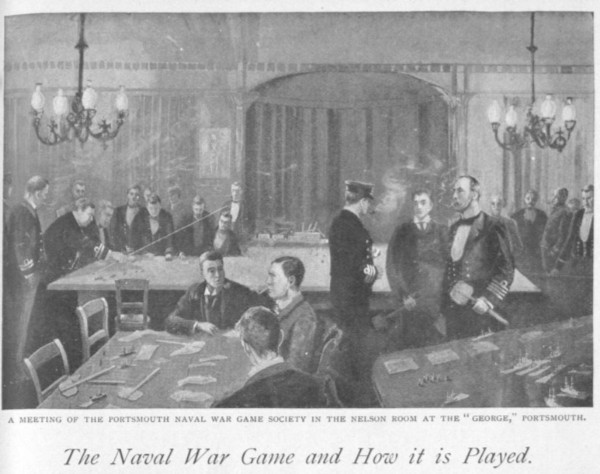
The only way to prepare for this type of environment is to practice in it. Shut off the lights, turn off the computers, cut the Reaper, Link-16, and Blue Force Tracker feeds and then practice the art of command. If it is deemed too risky to do these things during large-scale joint exercises, then the place to start is the professional military education (PME) system.
Advanced simulation tools replicating limited information decision scenarios can help prepare future leaders for these situations. I am not advocating for another useless tabletop exercise. The military needs to build innovative and flexible leaders across all ranks by teaching them how to independently think through difficult problems. There are many ways to do this including a well-rounded strategic education, encouraging red team type analysis, and testing future leaders with high-end war gaming exercises. All of these should focus on making decisions in an information constrained environment. Developing and then practicing this perishable skill is critical.
The U.S. military doesn’t need another technical gadget for enhanced situational awareness, it needs to properly train decision makers.
A battlefield genius. Napoleon commands from atop his horse. (Wikimedia Commons)
Successful past military leaders have demonstrated this ability to make difficult battlefield decisions with limited information. Some call this genius, others coup d’oeil, but all agree that developing it is difficult, yet possible. Noted strategist Harold Winton argues that a strong professional military education system is critical to inculcating this trait in future military strategists, but only if “it is inspired by a genuine search for creative answers to the enduring questions of military art and science, and if it demands that the proposed answers meet the tests of logic and evidence.”[4] The visionary well-educated military strategist must combine history with theory to probabilistically envision war’s future requirements then practice creating advantage in those conditions. The U.S. military doesn’t need another technical gadget for enhanced situational awareness, it needs to properly train decision makers.
Concept of Network Based Operations — Building Situational Awareness on the Battlefield
The U.S. military’s current use of new technologies to aid decision making are laudable, and indeed necessary in some situations, but it seems that too many officers are becoming reliant upon them for the type of insight previously attributed to a military leader. Unfortunately, this is almost required due to the complex characteristics of the American way of war. The U.S. military must begin by training its officers to operate with minimal information, and then encourage them to simplify things at the tactical, operational, and strategic level. Complex operational methods that depend upon high levels of situational awareness present more risk during training and will likely lead to disaster when the lights go out.
Aaron Lapp is a U.S. Air Force officer. The opinions expressed here are his alone and do not reflect those of the U.S. Air Force, the Department of Defense, or the U.S. Government.
Have a response or an idea for your own article? Follow the logo below, and you too can contribute to The Bridge:
Enjoy what you just read? Please help spread the word to new readers by sharing it on social media.
Notes:
[1] Barry D. Watts, Clausewitzian Friction and Future War, McNair Paper 68 (DIANE Publishing, 1996), http://www.clausewitz.com/readings/Watts-Friction3.pdf, v.
[2] Martin Van Creveld, Command in War (Cambridge (Mass.); London: Harvard University Press, 1985), 8.
[3] Van Creveld, Command in War, 1.
[4] Harold R. Winton and David R. Mets, The Challenge of Change: Military Institutions and New Realities, 1918–1941 (Lincoln: University of Nebraska, 2000), xv.
Back to the Future
The Danger of Overconfidence in the #FutureofWar
From Operation Desert Storm to Operation Enduring Freedom, the United States Navy has enjoyed an asymmetric technological advantage over its adversaries.[1] Uncontested command and control dominance allowed American commanders to synchronize efforts across broad theaters and deliver catastrophic effects upon the nation’s enemies. These years of uncontested command and control dominance birthed a generation of commanders who now expect accurate, timely, and actionable information. High levels of situational awareness have become the rule, not the exception. The Navy and its strike groups now stand in danger of becoming victims of their own technological success. An overreliance on highly networked command and control structures has left carrier strike groups unprepared to operate effectively against future near-peer adversaries.
An overreliance on highly networked command and control structures has left carrier strike groups unprepared to operate effectively against future near-peer adversaries.
Data-Links Are Our Achilles’ Heel
Conceptual image shows the inter-relationships between sea, land and air forces in a Network Centric Warfare environment. (via RAAF/BAE Systems Australia)
The concept of Network Centric Warfare (NCW) was birthed from the realization that integrating many of these systems would “create higher [situational] awareness,” for commanders.[2] Forecasting the looming dependence on NCW, the now defunct Office of Force Transformation claimed, “…Forces that are networked together outfight forces that are not.”[3] Merging vast amounts of information together into one common operating picture is the most challenging element in NCW, and tactical data-links serve as the means for accomplishing this task.
The future of strike group warfare is a concept named Naval Integrated Fire Control (NIFC). Recently NIFC was rebranded NIFC-CA, accounting for additional counter air capabilities. NIFC-CA doubles down on data-links, particularly Link-16. A January 2014 United States Naval Institute News article boasted, “Every unit within the carrier strike group — in the air, on the surface, or under water — would be networked through a series of existing and planned data-links so the carrier strike group commander has as clear a picture as possible of the battle-space.”[4] Read Admiral Manazir, Director of Air Warfare added, “We’ll be able to show a common picture to everybody. And now the decision-maker can be in more places than before.” In spite of his enthusiasm for NIFC-CA, Rear Admiral Manazir reveals a serious problem. “We need to have that link capability that the enemy can’t find and then it can’t jam. The links are our Achilles’ heel, and they always have been. And so protection of links is one of our key attributes” (emphasis added). What Rear Admiral Manazir calls a “key attribute,” most professional military education students would instead call a critical vulnerability.
It is unfair to criticize any commander for wanting more of this informational power. But what happens when this information is threatened, degraded, or denied?
Strike group commanders now rely heavily on information shared across data-links, specifically Link-16, to build their situational awareness. This information sharing enables impressive capabilities: rapid decision-making, massing of force, and very quick after-action assessments. It is unfair to criticize any commander for wanting more of this informational power. But what happens when this information is threatened, degraded, or denied? This question is important, because despite ongoing efforts to harden tactical data-links against attack, eliminating the threat is impossible.
Unjustified Overconfidence
Today we know potential adversaries are developing cyber-space and electronic warfare capabilities to neutralize, disrupt and degrade our communications systems. The challenge is in balancing the benefits and advantages derived from using high-tech communications with the vulnerabilities inherent in becoming overly dependent upon them. — Christine Fox, Former Acting Deputy Secretary of Defense.[5]
The message Ms. Fox delivered is clear: we must not allow a fascination with technology to stand in the way of executing basic war-fighting functions. She went on to state that Cold War-era U.S. naval forces planned to lose communication capabilities against the Soviets, then asked what has changed? Why would the Navy not share that concern about other potential adversaries?
At 22:26 GMT, 11 January 2007, China slammed a kill vehicle into one of its dead metrological satellites, proving to the world that they were part of the small but unfortunately growing club of countries that can accomplish the difficult task of hypervelocity interceptions in space. As a signal to the world, this test highlighted both China’s technological prowess and the fact that China will not quietly stand by while the United States tries to expand its influence in the region with new measures such as the US-India nuclear deal. We have analyzed the orbits of the debris from this interception and from that put limits on the properties of the interceptor. We find that not only can China threaten low Earth orbit satellites, but, by mounting the same interceptor on one of its rockets capable of lofting a satellite into geostationary orbit, all of the US communications satellites. (via MIT Science, Technology, and Global Security Working Group)
In 2007 China successfully destroyed a satellite in orbit. In January 2014, the commander of U.S. Air Force Space Command, General William Shelton, stated, “direct attack weapons, like the Chinese anti-satellite system, can destroy our space systems.”[6] He added that the most critical targets are those satellites providing “survivable communications and missile warning.” Clearly, U.S. forces can no longer remain complacent. An enemy attack on Global Positioning System (GPS) satellites would severely affect a strike group’s ability to accomplish the most basic tasks to the most complex.
The portion of the spectrum used for Link-16 communications is the ultra high frequency (UHF) band. UHF communications are line of sight. (via “Understanding Voice and Data Link Networking,” December 2013, Northrup Grumman Public Release 13–2457)
Satellite denial is not the only area for concern. Several nations are now producing aircraft, ground, and naval vessels with advanced electronic attack suites capable of contesting coveted regions of the electromagnetic spectrum. In a complex network of data and sensor sharing, each node is a contributor, and some nodes are more critical than others. In some cases, enemy electronic attack need only attack the right nodes to have debilitating effects across the entire network. China is pursuing broadband jamming and partial band interference of the Link-16 network with that objective in mind.[7] According to Richard Fisher, an expert on China’s military with the International Assessment and Strategy Center, “…taking away Link-16 makes our defensive challenge far more difficult and makes it far more expensive in terms of casualties in any future conflict with China.”[8]
Fortunately, past exercises and experiences serve as a guide for the future.
As Deputy Secretary Fox and General Shelton have pointed out, the threat is real. If we accept that strike group commanders have become overly reliant upon networked command and control structures, and that these networks are vulnerable to attack, then commanders must have a clearer understanding of what operational impacts can be expected. Fortunately, past exercises and experiences serve as a guide for the future.
Back to the Future
“It is widely recognized that a carrier task force cannot provide for its air defense under conditions likely to exist in combat in the Mediterranean.” — Admiral John H. Cassady, Commander-in-Chief U.S. Naval Forces, East Atlantic and Mediterranean, 1956 [9]
Signalman Seaman Adrian Delaney practices his semaphore aboard the amphibious dock landing ship USS Harpers Ferry (LSD 49) during an at-sea training evolution with the Royal Thai Navy tank landing ship Her Thai Majesty’s Ship (HTMS) Prathong (LST 715) during the Thailand phase of exercise Cooperation Afloat Readiness and Training (CARAT). (U.S. Navy photo by Journalist 3rd Class Alicia T. Boatwright)
In 1956, Vice Admiral Cassady recognized that the U.S. Navy’s hope for unchallenged access to operationally significant waters was in jeopardy. A series of exercises, under the name HAYSTACK, demonstrated how effectively Soviet forces could use electronic emissions and direction finding equipment to find and fix American aircraft carriers. As a result, HAYSTACK gave rise to emission control. Initially, strike groups operating under strict emission control conditions struggled to command and control dispersed forces throughout their areas of responsibility.
Faced with greatly diminished electronic command and control capabilities [10], commanders developed creative and exceedingly “low tech” solutions. American sailors relearned the art of semaphore and visual Morse code. Helicopters developed methods for airdropping buoys containing written messages alongside friendly vessels.[11]
For the remainder of the Cold War, carrier strike groups routinely practiced emission control operations, and commanders took considerable pride in their ability to make an aircraft carrier seemingly disappear. In 1986, the RANGER participated in the multinational RIMPAC exercise. Despite the opposing forces’ best efforts to locate it, RANGER went undetected for nearly fourteen days while in transit from California to Hawaii.[12] Making this all the more impressive was the fact that RANGER continued flight operations during the transit.
The similarities between preemptive emission control and anticipated command and control warfare environments are undeniable.
Emission control training continued through the 20th century, though with less sense of urgency after the fall of the Soviet Union. Today, carrier strike groups may practice emission control operations once or twice during a work-up cycle. These events are often heavily scripted and rarely involve night flight operations. Carrier air wings undergoing graduate level training at the Naval Strike and Air Warfare Center only recently began training in a limited GPS and Link-16 degraded environment. Anecdotal feedback from pilots who have participated in these events alludes to significant challenges.[13]
The similarities between preemptive emission control and anticipated command and control warfare environments are undeniable. With small modifications HAYSTACK provides strike group commanders with a solid starting point if they wish to better prepare their sailors for future wars.
Recommendations and Conclusion
“Confidence is contagious; so is overconfidence….” — Vince Lombardi
We must not assume that future conflicts will be fought against adversaries who are incapable of challenging American technological advantages. China has demonstrated the ability to destroy satellites in orbit, and they are actively pursuing electronic attack capabilities to neutralize Link-16. These facts must be understood and accepted by commanders who have dismissed the concept of command by negation while at the same time failing to demand realistic training.
Effective command by negation demands a lucid expression of commander’s intent. Commander’s intent should focus on macro level issues and answer two questions: What is the desired end state? What will success look like?[14] Commander’s intent should not try to answer specific questions of weapons employment and target selection. Subordinates should be empowered and encouraged to use individual initiative towards achieving the stated objective. If strike group commanders and their staffs can relearn the art of operational design, and focus those efforts towards developing effective statements of intent, their forces stand a greater chance of success in a world without Predator feeds, Link-16, satellite communications, Internet Relay Chat, and e-mail. Failure to pursue this goal will only serve to maintain the status quo, which is to say deploying forces will remain unprepared to counter command and control warfare.
If the U.S. believes it remains the preeminent military force in the world, then why wouldn’t its forces train against realistic command and control warfare capabilities, assuming the implied result would be increased competence?
Quartermaster 3rd Class Alex Davis lowers a signal flag aboard the aircraft carrier USS George Washington (CVN 73) during a flag hoist exercise on the ship’s signal bridge. George Washington, the Navy’s only permanently forward deployed aircraft carrier, is underway supporting security and stability in the western Pacific Ocean. (U.S. Navy photo by Mass Communication Specialist Seaman Apprentice Marcos Vazquez)
Additionally, strike group commanders must demand realistic training that mimics a command and control warfare environment. It is not enough to conduct emission control exercises once or twice during pre-deployment training. Afloat training groups should own this training requirement and place greater emphasis on it during strike group training in their Composite Training Unit Exercise and Joint Task Force Exercise.[15] The Naval Strike and Air Warfare Center should consider increasing the frequency and complexity of the degraded environment training it provides to carrier air wings. Individual units must be encouraged to conduct local training sorties without the aid of data-links and secure communications.[16] Focusing on our own capabilities and how we intend to counter command and control warfare will add a layer of complexity, and therefore value, to these training exercises. If the U.S. believes it remains the preeminent military force in the world, then why wouldn’t its forces train against realistic command and control warfare capabilities, assuming the implied result would be increased competence? Ultimately, the units charged with preparing strike groups for deployment will respond to demands from operational commanders. If strike group commanders recognize their unpreparedness and demand a solution, time, money, and resources will be allocated appropriately.
While much of the #FutureOfWar discussion has centered on technological developments and innovation, we should consider whether or not this infatuation has led us down a dangerous path. Have we become so enthralled and dependent upon what is undeniably a critical vulnerability to the extent of rendering us ineffective in its absence? This is an important question to ask because, arguably, the winner of future wars will not simply be the side with the most advanced weapon systems, but likely the side who can deftly shift “back in time.”
Jack Curtis is a graduate of the University of Florida and the Naval War College. The opinions expressed are his alone, and do not reflect those of the U.S. Navy, the Department of Defense, or the U.S. Government.
Have a response or an idea for your own article? Follow the logo below, and you too can contribute to The Bridge:
Enjoy what you just read? Please help spread the word to new readers by sharing it on social media.
Notes:
[1] “Our technological advantage is a key to America’s military dominance.” President Barack Obama, May 2009.
[2] Network-Centric Warfare — Its Origins and Future. Cebrowski and Gartska, 1998.
[3] The Implementation of Network-Centric Warfare Brochure. 2005.
[4] “Inside the Navy’s Next Air War.” USNI News. Majumdar and LaGrone, January 2014.
[5] Transcript of speech delivered April 7, 2014.
[6] “General: Strategic Military Satellites Vulnerable to Attack in Future Space War.” The Washington Free Beacon. Bill Gertz. 2014.
[7] Chinese Aerospace Science and Industry Corporation publication, quoted in Gertz.
[8] Fisher, quoted in Gertz, “Chinese Military Capable of Jamming U.S. Communications System.” The Washington Free Bacon. 2013.
[9] Quoted in Hiding in Plain Sight, The U.S. Navy and Dispersed Operations Under EMCON, 1956–1972. Angevine. 2011.
[10] These diminished C2 capabilities mimic what should be expected during modern command and control warfare.
[11] Angevine, p. 11.
[12] How to Make an Aircraft Carrier Vanish. Associated Press. Norman Black. 1986.
[13] An F/A-18 pilot described the effects as “crushing” during an interview with this author.
[14] “Manage Uncertainty With Commander’s Intent.” Harvard Business Review. Chad Storlie. 2010.
[15] Composite Training Unit Exercise and Joint Task Force Exercise are the final two training events for a strike group.
[16] The United States Air Force is ahead of the Navy in this pursuit. See “Pilot Shuts Off GPS, Other Tools to Train for Future Wars.” Air Force Times. Brian Everstine. 2013.
Preparing Leaders for #TheFutureOfWar
Leveraging Communities of Practice
Recently, we tuned in for New America Foundation’s Future of War conference and watched as the military took some hits for its lack of strategic thinking, inability to work with civilian leadership, and being unable to adapt. None of these charges are new or far off the mark. As former Undersecretary of Defense Michele Flournoy pointed out, we need to reward the behaviors we want. This largely is directed at personnel and how the military develops its leaders.
To prepare for any future war, we need to reassess how we retain, educate, and promote talent. This will help us produce leaders that can think strategically and adapt to ever-changing warfare. Time matters when it comes to preserving and improving our own capabilities and we cannot afford to spend years slowly adapting to an enemy on the battlefield. While major changes to our personnel system may be forthcoming, it will take time to enact them, so we must find other ways to promote, foster, and reward strategic thinking and the peacetime practices that lead to rapid adaptation on the battlefield.
There is a direct correlation between our peacetime education and wartime adaptation. This type of education is not episodic…it is a life-long process.
In Military Adaptation in War with Fear of Change, Williamson Murray argues,
Only the discipline of peacetime intellectual preparation can provide the commanders and those at the sharp end with the means to handle the psychological surprises that war inevitably brings.
There is a direct correlation between our peacetime education and wartime adaptation. This type of education is not episodic, taking place only a few times throughout one’s career; it is a life-long process. Currently, the military is progressing in the institutional and operational domains of leader development — the professional military education and career experiences that make up the triad of individual professional development. And it is coming up short. To fight future wars leaders must be prepared across all three domains. Beyond reading lists, the various military services do very little to assist individuals in their personal study of war and warfare; individuals lack the incentives to deepen their professional knowledge on a continuous and consistent basis. There are no mechanisms like those Flournoy mentioned to reward positive behavior, let alone those that Murray argues are a prerequisite to wartime adaptation.
…the military should foster, support, and reward individual involvement in communities of practice across the profession that support a life-long study of war and warfare.
Instead of trying to develop institutional programs for life-long learning, as some have suggested, the military should foster, support, and reward individual involvement in communities of practice across the profession that support a life-long study of war and warfare. Military leaders should seek out connections with other leaders in their domain or practice to help advance individual development so that they will be prepared to adapt when the time comes.
Groups like the Defense Entrepreneurs Forum and Military Writers Guild are examples of these new professional organizations that offer the promise of strengthening the self-development domain. Although these specific organizations are new to the defense landscape, the ideas behind them are not. Etienne Wegner-Trayner, a leading researcher on communities of practice, defines them as “groups of people who share a concern, a set of problems, or a passion about a topic, and who deepen their knowledge and expertise in this area by interacting on an ongoing basis.”[1] It doesn’t matter if interactions take place online or in person — the key is constant interaction driven by a willingness to participate. These types of networks strengthen the self-development domain in multiple ways. They provide extrinsic motivation for self-study, help individuals develop personal learning networks, and the constant interaction helps develop critical thinking skills.
Historical Precedent for Community-Based Learning
One of the first identifiable communities of practice built on the study of war and warfare began in the summer of 1801 when a small group within the Prussian military came together, and as stated by their bylaws, created an institution:
…to instruct its members through the exchange of ideas in all areas of the art of war, in a manner that would encourage them to seek out truth, that would avoid the difficulties of private study with its tendency to one-sidedness, and that would seem best suited to place theory and practice in its proper relationship.[2]
Meeting of the Reorganization Commission in 1807 by Carl Rochling (Wikimedia Commons)
The Militarische Gesellschaft (Military Society) was founded in Berlin by Gerhard Johann David von Scharnhorst and a few fellow officers to address the issue of a dogmatic adherence to doctrine and lack of professional study among its officer corps.[3] Their members included officers, government officials, and members from the academic community who met over 180 times and ultimately disbanded in 1805 due to mobilization for the Napoleonic Wars. Their weekly meetings consisted of the presentation of professional papers, book reviews, and a discussion of military related topics posed by its members; also, each year they conducted an operational analysis of a past battle.[4] In addition to their weekly discourse, they hosted essay competitions and published a professional journal, Proceedings, for its members.
The society provided a strong intellectual climate that stimulated its members’ thinking and personal development, setting the foundation for great individual and organizational achievement.[5] Its members, who included historic figures such as Carl von Clausewitz, August Neidhart von Gneisenau, and Gerhard Scharnhorst formed the core group of leaders that quickly reformed the Prussian military following its defeat at the hands of Napoleon in 1806.[6] Sixty percent of its 182 members, half of whom joined as junior officers, became generals. Five of the eight Prussian Chiefs of Staff from 1830–1870, as Prussian power grew to dominate Europe, were also members of the Society.[7]
In a similar, if more modern vein, forums like CompanyCommand and PlatoonLeader have provided an online space for company-level leaders in the Army to discuss problems, share tools, and disseminate best practices. They are communities of practice built around small unit leadership. In their book,CompanyCommand: Unleashing the Power of the Army Profession, the founders of the two websites highlight that the online space benefits individual development, “by serving as a switchboard connecting present, future, and past company commanders in ways that improve their professional competence.”[8]
U.S. Marines receive a sand table briefing before a platoon assault exercise on Arta Range, Djibouti, Feb. 10, 2014. (U.S. Air Force photo by Staff Sgt. Erik Cardenas)
The forums also host a reading program called the Professional Reading Challenge, which gives company commanders the ability to blend face-to-face interaction with online discourse. Along with promoting reading, the program encourages members to capture their ideas in writing on the message boards. Recently, the forums added an interactive feature they call The Leader Challenge. Using video interviews of officers from deployments in Afghanistan and Iraq, forum members are presented with a real-life vignette and asked to respond with what they would do if they were in the same scenario. After responding, members are able to read others’ responses and listen to what happened in the original scenario.[9] This process allows leaders to continue to learn from a challenging event which may have taken place four or five years ago. The benefits to members are evidenced by the number of forum participants who came out on the recent Army Brigade and Battalion Commander Selection List.
The Militarische Gesellschaft along with Company Command or Platoon Leader Forums are great examples of how communities of practice assist in the development of its members by encouraging reflection, professional reading, writing, and discourse. As individuals become more active within these communities, they own self-development is strengthened.
Leveraging Communities of Practice for the #FutureOfWar
Communities of practice provide the social incentives required to stay committed to life-long learning. A small-scale study published in 2011 posited that two vital components of self-development are intrinsic and extrinsic motivation. The researcher found that recognition by mentors and peers both online and/or offline supports these motivations. As members of the profession join various communities, the social interaction provided will help them in their personal intellectual preparation to successfully lead and make decisions during the next conflict.
A Meeting of the Portsmouth Naval War Game Society (via Army Group York)
Communities of practice also create opportunities for individuals to develop personal learning networks. The connections made within these groups put individuals into contact with those who they can learn from on a one-on-one basis. Our own experiences validate this argument. For example, while studying at the Naval War College, I relied heavily on a personal learning network built through involvement with the CompanyCommand and Defense Entrepreneurs Forum in developing ideas and for assistance with research and writing.
The constant interaction provided by these communities help individuals develop critical thinking skills. Dr. Antulio J. Echevarria’s essay The Trouble with History, argues that many military professionals focus on the accumulation of knowledge rather than analyzing and evaluating it.[10] Many service members tend to approach reading lists with a check list mentality, instead of using them to rigorously examine concepts and past events. By exploring books and articles and discussing them in a community of practice, individuals are encouraged to move towards a more sophisticated understanding of the material, thus developing the critical thinking skills required of leaders at all levels.
While military professionals used communities of practice for centuries, the career benefits that they provided began disappearing in the Progressive Era. At this time in American history, civil service systems began focusing accession and promotion on Industrial Age mechanisms that were fairer across the personnel pool. This was meant to weed out nepotism and other class- and relationship-based influence.
Military institutions have continued to struggle with how to encourage self-development in leaders, as well as codify this development into a mechanism for career progression.
As the personnel system began to focus more on fairness than effectiveness — thereby diminishing the requirement for leadership to personally develop the leaders that would replace them — the levers used to provide benefit to self-development were removed. Military institutions have continued to struggle with how to encourage self-development in leaders, as well as codify this development into a mechanism for career progression. Our ability to prepare leaders for the development of strategy and to adapt on the battlefield is an outgrowth from these factors.
How do we leverage communities of practice and provide incentives for self-development in today’s military? This is a topic we continue to struggle with — and one we look forward to addressing in this Leadership and the #FutureOfWar series on The Bridge. If you have an idea on what is required in developing leaders for the #FutureOfWar, send us a note or submit your post to our Medium page.
We look forward to the discussion.
Joe Byerly is an armor officer in the U.S. Army . He frequently writes about leadership and leader development on his blog, From the Green Notebook. The opinions expressed are his alone, and do not reflect those of the U.S. Army, the Department of Defense, or the U.S. Government.
Have a response or an idea for your own article? Follow the logo below, and you too can contribute to The Bridge:
Enjoy what you just read? Please help spread the word to new readers by sharing it on social media.
Notes:
[1] Wegner, Etienne, Richard McDermott, and William Snyder. Cultivating Communities of Practice. (Boston: Harvard Business Review Press, 2002), 4.
[2] Charles White, The Enlightened Soldier: Scharnhorst and the Militarische Gesellschaft in Berlin 1801–1805, (New York: Praeger Publishers, 1989), 191.
[3] Ibid., 36.
[4] Ibid., 45.
[5] While correlations between the loss to Napoleon in 1806 and the Militarische Gesellschaft are outside the scope of this article, it is important to address that prior to 1806, the Prussian military culture, organization, strategies, and tactics were all dominated by concepts inherited from Frederick the Great. This rigid adherence to tradition by the majority of the Prussian officer corps negated any of the initial benefits gained by individuals from the military society. It wasn’t until after the Prussian defeat that the society’s members moved into positions of key leadership, thus capitalizing on the relationships and education cultivated and developed prior to the outbreak of war.
[6] Ibid., 207.
[7] Ibid., 49.
[8] Nancy Dixon, Nate Allen, Tony Burgess, Pete Kilner, and Steve Schweitzer,CompanyCommand: Unleashing the Power of the Army Profession, (West Point: Center for the Advancement of Leader Development and Organizational Learning, 2005), 16.
[9] The Company Command website has a thorough explanation of the Leader Challenge at http://companycommand.army.mil/
[10] Echevarria II, Antulio. “The Trouble with History.” Parameters, Summer 1995.http://strategicstudiesinstitute.army.mil/pubs/parameters/articles/05summer/echevarr.pdf (accessed April 11, 2014).
Leadership by Example Requires You to Roll Up Your Sleeves
Jeong Lee’s article “A Case for A Sustainable U.S. Grand Strategy: Retirement without Disengagement for a Superpower” advocates for the United States to adopt the “role of exemplar over that of crusader” to rejuvenate its national strength and to bolster its legitimacy abroad. Lee goes on to encourage a U.S. grand strategy that focuses on homeland security, because “setting one’s house in order does not necessarily mean isolationism.”
However, the argument for a reduced or “retired” role for the United States is not new and is often broached in times of fiscal constraint and more often after completing ‘adventures’ overseas. The failure in most of these arguments is to expect it would be in the interests of the rest of the global community to maintain the peace and rule of law established by America’s engagement. To be a leader in the world, the United States must not “retire” and pass the responsibility entirely onto our partners, but instead roll up our sleeves and work alongside our partners to defend international norms.
In short, the American commitment to new horizons for ‘happiness’ does not die out, it is rejuvenated by each new generation and adapted to their times.
Since the birth of the United States, a key goal of our foreign policy has always been to ensure market access (or free/open markets) and uphold the rule of law to support our economy. In the Declaration of Independence, our forefathers called it “the pursuit of happiness.” In the Monroe Doctrine, it was stated as the “United States [shall] cherish sentiments the most friendly in favor of the liberty and happiness of their fellow men.” Before World War II, the Atlantic Charter phrased it more directly: “all states [shall have equal access] to the trade and to the raw materials of the world which are needed for their economic prosperity.” After World War II, in Secretary of State George C. Marshall’s address at Harvard University in 1947 advocating for theMarshal Plan he reaffirmed that “the United States should do whatever it is able to do to assist in the return of normal economic health in the world, without which there can be no political stability and no assured peace.” In short, the American commitment to new horizons for ‘happiness’ does not die out, it is rejuvenated by each new generation and adapted to their times.
Back in the present, Lee suggests “the United States should first withdraw its military presence from both” the Middle East and East Asia for two different reasons. On the one hand, as Toby Jones argues in his 2011 Atlantic piece“protecting the flow of oil from the Persian Gulf to global markets is far less necessary than it once was” since the world has plenty of oil. This ignores the fact that oil is a globally traded commodity and the U.S. would still be impacted if events reduce oil production anywhere around the globe.
And the other reason for withdrawal? “A continued U.S. military presence may not be necessary because Taiwan, Japan and South Korea are fully capable of defending themselves without U.S. military aid.” Even though reports from East Asia show the contrary with the debate on Taiwan adopting a “porcupine strategy” to raise the cost of a Chinese invasion, Japan is ‘militarizing’ because they want to be able to defend themselves in case the United States is committed on another front, and South Korea has continued to delay taking over wartime leadership. ‘Retiring’ from these regions could lead inevitability to destabilization and by passing the security responsibility to local allies the United States would be interpreted, by friend and foe alike, as retreating.
The world faces many challenges, and if the United States ‘retires’ to our corner, there is little to be shown that others will be able to maintain the peace.
After the removal of U.S. forces from the Middle East and East Asia, Lee argues that “the United States Armed Forces should reorient their focus towards homeland security.” It goes on to say with the cost savings from reduced global military presence “the United States [should] bolster its homeland security apparatuses to counter the threat of terrorism at home. And the U.S. can contain threats posed by non-state actors through multilateral police action with the cooperation of its allies.” There is always an argument for the savings from reducing U.S. global military presence to be used in other areas to benefit the greater good. The reality, however, is our partners and allies are not just asking for more FBI agents in the fight against terrorists — they are asking for even more U.S. military engagement in Iraqand now Libya. The world faces many challenges, and if the United States ‘retires’ to our corner, there is little to be shown that others will be able to maintain the peace.
‘Retirement without Disengagement’, is summarized as a renewed focus on “diplomacy to accommodate [U.S.] admirers as well as its rivals.” Because “the fewer wars the United States fights, the more money and lives it will save. Even better, the fewer wars the United States fights, the more likely the global community will appreciate its restraint and sober humility with which it approaches relations with other nations.” Diplomacy should always be our first option, though there is a difference between fighting less and retiring from the world.
Unfortunately, our near-peers and rising powers have shown they will test how far they can stray from the U.S. backed liberal world order. They are trying to see if they can replace the U.S. system with a world order more in their favor without going to war and risking total economic ruin. The ‘retirement’ case highlights the need for greater focus on diplomacy and a reduced role for the U.S. Armed Forces, but it is suggesting an over-correction; the risk is going too far towards irrelevance while passively hoping that we have been a good enough of an example to others who might pick up the burden of protecting the international order. Our history — and common sense — shows that if we expect others to fight for the pursuit of happiness, we must be there alongside our friends doing the work.
Leo Cruz, is a former U.S. Naval Officer who served in Operation Iraqi Freedom and a Partner with the Truman National Security Project. The views expressed here are the author’s alone and do not reflect those of the U.S. military or the Department of Defense.
Have a response or an idea for your own article? Follow the logo below, and you too can contribute to The Bridge:
Enjoy what you just read? Please help spread the word to new readers by sharing it on social media.
Uploading John Boyd
As our national security environment morphed into an enigmatic state over the past year, I found myself once again invoking John Boyd — the legendary fighter pilot and theorist who “changed the modern military,” as James Fallows once wrote. As I thought through the consequences of misjudging rapid geopolitical change, the fiasco of clear/hold/build, and the challenges of strategic patience, I recalled Boyd’s important advice…don’t just be a reactor, be a shaper.
Mea Culpa or "The law is easy"*
*Conditions Apply
Will Beasley provided a different perspective on the #Professionalism debate in his piece on The Rise and Fall of US Naval #Professionalism. What I found most interesting was his discussion of ‘The Golden Age of Professionalization’ and Wilensky’s five-steps involved in an occupational group attaining the status of ‘profession.’ Beasley’s article was intended to provide a response and another perspective on my previous post ‘The Military #Profession — Lawyers, Ethics and the Profession of Arms’.
I noticed that exception was taken to my comment: ‘The law is easy — ethics is hard.’ I thought I’d clarify my comment to remove any misunderstanding. My comment was meant to be read in its entirety and to convey the point that, at times, the answer to the legal problem is easier when compared to the ethical quandries that accompany it. As Winston Churchill once remarked, and I paraphrase, foreign policy choices (which include decisions about how international law is applied) are often between the dreadful and the truly awful. This is the context I had in mind when I made my comment.
…at times, the answer to the legal problem is easier when compared to the ethical quandries that accompany it.
‘The law is easy-ethics is hard’ refers specifically to the application of the laws relating to the use of force (jus ad bellum), the laws of war (jus in bellum); and national policy in operational contexts. In many respects, the application of the laws of war are guided by national policy, and as a result the ‘answer’ to a particular legal question is given to us by the national command authority or coalition headquarters through rules of engagement or other operational orders that impact on how an operation is to be conducted. The difficulty is where the law or the policy is clear but its application may create a complex ethical dilemma. This is why the law is *relatively* easy and ethics is comparatively harder.
One example that comes to mind is the situation during the Bosnian conflict, involving the Dutch Battalion — Dutchbat — who were ostensibly guarding the enclave of Srebrenica, a United Nations ‘Safe Area’. The Dutchbat was commanded by Lieutenant-Colonel Thom Karremans, who decided to act in accordance within the UN Protection Force (UNPROFOR) mandate and orders from UNHQ. The Dutchbat was in an invidious position of having to morally protect the enclave while lacking the military capability to do so. The chain of events leading to the fall of Srebrenica and ethical dilemmas are discussed in more detail elsewhere [1]. In summary, Karremans made the decision to act in accordance with his legal obligation (comply with superior orders and policy) but resulting in the ethical dilemma of being unable to protect those in the enclave from being rounded up and, as the world later learned, falling victim to genocide. In this case, the law was easy — a clear legal answer was available, but was unhelpful in resolving the complex ethical dilemma that unfolded before Dutchbat and Karremans [3].
I extend my apology for any misunderstanding. I don’t mean to offend my learned friends out there. In a domestic context, the law is definitely hard. But in the international system, which is largely one of nations regulating themselves, law is more about politics than jurisprudence [2] and can sometimes be ‘easier’ when juxtaposed against the ethical dilemmas created in the wake of their application.
The Proprietor of ‘Carl’s Cantina’ is an Australian military officer who has served in Iraq and Afghanistan. The Proprietor is an Associate Member of the Military Writers Guild and is currently writing a thesis on Australian civil-military relations. The opinions expressed are hers alone and do not reflect those of the Australian Defence Force.
Have a response or an idea for your own article? Follow the logo below, and you too can contribute to The Bridge:
Enjoy what you just read? Please help spread the word to new readers by sharing it on social media.
Notes:
[1] See paper by LTCOL P.J. deVin, ‘Srebrenica, the impossible choices of a commander’.
[2] The law as a continuation of politics by other means is a whole topic on its own and frequently discussed over at the Lawfare blog.
[3] If you want to follow the subsequent legal action against the State of the Netherlands brought by Mothers of Srebrenica, a good starting point is here.
A Modern Mobilization Army: A Hypothetical Exercise
Over on twitter, Nathan Finney, aka The Barefoot Strategist, posed this question:
An interesting one. How would you go about doing so?
For the purposes of this little exercise, let’s posit that this is over and above an activated and federalized Guard and Reserve component. Wikipedia tells us there’s just over half a million active duty Soldiers right now, with another slightly more than half a million Guard and Reserve troops, yielding a total force of about 1.1 million. Given that the US Army fielded roughly 8 million soldiers in World War II with only half the national population, finding another million or two warm bodies would seem to be rather easy.
But would it be?
Many who went on to perform distinguished service in World War II would today be laughed out of the recruiter’s office.
The current military aged male population (for my purposes here I’ve rather arbitrarily selected 18–30 years) is very roughly around 30 million. Approximately 75% of that population is disqualified under current enlistment standards, either due to weight or other health issues, criminal history, or lack of education. That gives us a current population of qualified males of about 7.5 million to recruit from. Given the struggle to recruit 80,000–100,000 of this population annually, I do not think it realistic to achieve the additional numbers purely through voluntary recruitment. That leaves either conscription, or a gross lowering of the standards for enlistment. It should be noted that the standards for selective service in World War II, particularly in the last 18 months of the war, were far, far lower than today’s standards for enlistment. Many who went on to perform distinguished service in World War II would today be laughed out of the recruiter’s office.
There exists today virtually no real political support for conscription. Of course, there is no political support for such a massive expansion of the Army, either, so for the purposes of our exercise, I posit that the political support for enlarging the Army can also be seen as supporting a draft.
Another obvious pool of manpower reserves is the Individual Ready Reserves- those service members who have completed their initial obligation for active duty, or regular drills with a reserve component, but have not yet been completely discharged form the service. Every initial enlistment in the Army is for a term of eight years, with the first three or four typically served on active duty, and the remaining four or five in the IRR. Persons in the IRR don’t perform military duties, nor do they receive pay and allowances, but they are by law subject to recall.
While some IRR troops were subjected to recall for Desert Storm, and a handful for Operation Iraqi Freedom, the last major recall of IRR troops was in the early stages of the 1950–1953 Korean War. I’ve mentioned that the Army recruits roughly 80,000–100,000 people a year. That means roughly the same number leave it annually. The greatest number of these are soldiers whose initial obligation is complete, and decline to reenlist. Of this cohort, some will not be suitable for recall. So let’s just go with a working WAG* of 50,000 over the last 5 years available for recall. That gives us a bump of a quarter million, easing the needed numbers via draft or recruiting. Theoretically, these troops have already been trained, but in reality, even after a very short break in service, the training required to again make them effective soldiers is little different than that needed to train a new recruit.
…the existing Army training pipeline would likely prove incapable of surging production throughput to anywhere near the numbers needed.
Speaking of training the troops, the existing Army training pipeline would likely prove incapable of surging production throughput to anywhere near the numbers needed. The initial training of Army troops is generally grouped by functional areas. Infantry and Armor go through training at Ft. Benning, Artillery at Ft. Sill, and support and service support soldiers go to basic training at Ft. Jackson or Ft. Leonard Wood, and then on to their specialized training at the branch school responsible for their career field, such as the Transportation Corps school at Ft. Eustis, Virginia. Further, one of the advantages of having high quality recruits with fairly long terms of enlistment (which means a fairly long term of training results in a decent return on investment) is that you need fewer military occupational specialties. You can spend the time and money to train a fire control repair technician to fix the electronics on both an Abrams, and a Bradley. But if you desperately need to raise an Army quickly, you are almost forced to limit the breadth of any one job’s training. You’d likely have to split that fire control technician into two specialties, one for Abrams, and one for Bradleys. That means the tooth to tail ratio of our expanded army will suffer somewhat. Still, speed is of the essence, and the old rule of fast/good/cheap applies. Pick any two. In this case, it would be fast/good.
Still, the institutional schoolhouses of the Army simply cannot absorb that large an influx of new soldiers. Some skills simply must be taught at the schoolhouse (say, much of the aviation maintenance field) but a greater portion could be taught in other ways.
In World War II, much of the occupational skill training for soldiers was done in units mobilized for the war. And here our current Army has an advantage over our forebears of 1940–1943. The Army of 1940 faced an expansion of eventually some 2400%. There simply wasn’t a large enough trained cadre of people. Finney’s proposed expansion, however, is significantly more modest. The obvious way to leverage the existing troop formations is to use them as the cadre, the nucleus of new units. For instance, each current Brigade Combat Team might be tasked to form an entire division, with each subordinate battalion transforming itself into a BCT (or rather, forming an additional two battalions to flesh out other BCTs activated). Essentially, everybody gets bumped a paygrade. This would likely result in some decline in the quality of leadership capability, but that would be almost inevitable in any expansion on the scale proposed.
Another challenge for our notional expansion is simply equipping the force. As a practical matter, some things cannot be expanded in such a short time. Two years is simply not long enough to ramp up production of things like helicopters, let alone train the aircrew for them. Other major weapon systems would also face shortages. The Army has a goodly number of M1 Abrams and M2/M3 Bradleys in reserve, but not as many as might be needed. Trucks of all types would be in critical supply. That could be augmented with some civilian procurement for many roles, but the authorized equipment for many units would likely have to be changed.
The minutia of equipage, uniforms, boots, packs, and such, should not be an overwhelming obstacle, but ramping up production and maintaining quality would likely be a challenge. Producing enough rifles might be a challenge, at least in the short term. Equipping the force with modern radios would similarly be a challenge in at least the short term.
Finally, merely finding the space to house and train this notional expanded force would be a great challenge. The US has shed much of the vast amounts of training space it acquired in World War II. Reacquiring it would be next to impossible. For one thing, many of those spaces have become developed. Ironically, even though the proposed expansion is a good deal smaller than the size of the Army in World War II, the battlespace a reasonably equipped force today needs to train is vastly greater. More space is required to effectively train a mechanized battalion today than might be needed for an entire World War II division’s maneuver elements.
…could the US vastly expand from it’s current Army of half a million soldiers to two million soldiers in the space of two years? Probably. But it would yield a force of greatly diminished quality.
So, could the US vastly expand from it’s current active Army of half a million soldiers to one million soldiers in the space of two years? Probably. But it would yield a force of greatly diminished quality.[2] Further, absent an existential, immediate threat to the country, there is simply no political support for such an expansion.
Arthur Barie is a former US Army Infantry NCO and Bradley Commander. This post was originally posted at his blog, “Bring the Heat, Bring the Stupid.” The opinions expressed are his alone, and do not reflect those of the U.S. Army, the Department of Defense, or the U.S. Government.
Have a response or an idea for your own article? Follow the logo below, and you too can contribute to The Bridge:
Enjoy what you just read? Please help spread the word to new readers by sharing it on social media.
Notes:
[1] Wild Assed Guess
[2] Though quantity has a quality all its own.
Navigating by Terrain Features
How the Army Sees Itself in History
In land navigation, there are several different ways to negotiate map reading and get from point A to point B. You can use a magnetic azimuth to go from point to point, but that often means that you have to stay on one path the entire time regardless of how difficult the terrain is. It is a very rigid and time consuming approach. Another approach is called navigation by terrain features. The navigator uses their knowledge of map-reading to pick out significant terrain features on their way to and at their destination. Then they follow those terrain features, such as hills, valleys, roads, or buildings, to their destination. This method of navigating can be less stressful and occasionally less accurate but quite often the most successful.
When the Army, and by definition those in it, looks at its history, it tends to reflect on its own significant terrain features, i.e., wars. Even the way that colleges teach U.S. history is done via the idea of wars as a benchmark. To be sure, for a military, war is our Super Bowl. It’s where we try out our doctrine and strategy, refine our procedures, and, hopefully, come out with a win. It is only natural to use war as a significant terrain feature.
It is only natural to use war as a significant terrain feature.
The problem, though, is that history does not stop between wars. Indeed, sometimes what wins wars are the reforms that take place in inter-war periods. While it is sometimes tempting to skip over the boring periods, those often contain gems that can help us relate to our own time. For example, I recently wrote a white paper on the history of my National Guard’s force structure that demonstrated that the most radical changes to force structure happened during periods of peace, not war. These decisions reflected changing threats, technology, and doctrine and shaped the force that we have today.
While doing research, I came across an edition of the now-defunct “Coast Artillery Journal,” of the even more defunct Coast Artillery Corps. This Corps was in existence for barely fifty years from the beginning of the 20th century. The edition of the journal I was reading was from 1922 and was an incredible snapshot of both the Corps and the Army at the time. The post-World War I Army was experiencing both growing and shrinking pains. Growing, from the vast experience the Army had gained from the war, and shrinking, from force structure cuts.
From new technology to book reviews to leadership studies, the journal embraced their cause as a profession and encouraged their officers to write about it. To me, this echoed the present movement to engage military officers to begin writing about their experiences, thoughts, and solutions.
“Of the two hundred and five documents on the official list of War Department publications, not one touches on leadership.”
Of note was an article on leadership, where the author, a lieutenant colonel, notes that “of the two hundred and five documents on the official list of War Department publications, not one touches on leadership.” That is a damning indictment of an organization that calls itself a profession since 1880. We now have enough manuals and publications on leadership to build a small mountain (although we continue to face many of the same perennial challenges in leadership) so it is clear that we are making strides.
Budgets, the ever-present monster to the Department of Defense, were an issue at the time, as the journal included a very innovative piece on how to use a M1903 Springfield rifle on a to-scale terrain model as a miniature direct fire range. It even included such details as a raised platform simulating an aerial observer. This is the kind of adaption that sharing ideas and promoting an innovative culture can bring about.
The journal also ran an editorial on the recent force structure reductions that the Army was facing. In a statement that could have been easily run in “Stars and Stripes” today, the editor writes,
“For my part I think it would be a wise thing if the army went quietly about its business for the next few years, sought every proper means of showing its own inherent worth, both to government and the people, cleaned its house wherever necessary, both in personnel and in customs, and then found itself ready to take advantage of the turn of the tide. And the tide will surely turn.”
The Army of 1922 was not part of a cultural terrain feature yet it warrants studying. If we are going to “turn the tide” of our own political and economic storm, we should not attempt to re-invent the wheel. It might behoove leaders and historians alike to look away from the dramatic terrain features of history and instead examine some of the paths less trodden. As Robert Frost says, “I took the one less traveled by, and that has made all the difference.”
Angry Staff Officer is a first lieutenant in the Army National Guard. He commissioned as an engineer officer after spending time as an enlisted infantryman. He has done one tour in Afghanistan as part of U.S. and Coalition retrograde operations. With a BA and an MA in history, he currently serves as a full-time Army Historian. The opinions expressed are his alone, and do not reflect those of the U.S. Army, the Department of Defense, or the U.S. Government.
Have a response or an idea for your own article? Follow the logo below, and you too can contribute to The Bridge:
Enjoy what you just read? Please help spread the word to new readers by sharing it on social media.
#Profession and 'New Model Army'
In an attempt to procrastinate from writing my thesis, I recently read Adam Roberts’ New Model Army. It is a sci-fi story centred on the narrative of an unnamed protagonist who deserted from the British Army but is now a member of a ‘New Model Army’ (NMA) called ‘Pantegral.’ The Pantegral NMA is an amorphous group organised around democratic ideals (for example, its members vote for courses of tactical action during a battle) and use a wiki for communication and coordination. In a sense it is a ‘crowd sourced’ army based on the equality of its members; all of whom have a vote about how the NMA is run and how battles are fought. The story is set in a dystopian future where secessionist Scotland is at war with the rest of Britain and hires the NMA as its armed force. Here’s an extract from the book that gives a flavour for what NMA is all about:
Lets say our eight thousand men, coordinating themselves via their wikis, voting on a dozen on-the-hoof strategic propositions, utliizing their collective cleverness and experience (instead of suppressing it under the lid of feudal command) — that our eight thousand, because they had drawn on all eight thousand as a tactical resource as well as a fighting force — had thoroughly defeated an army three times our size. Let’s say they had a dozen armoured- and tank-cars; and air support; and bigger guns, and better and more weapons. But let’s say that they were all trained only to do what they were told, and their whole system depending upon the military feudalism of a traditional army, made them markedly less flexible; and that each soldier could only do one thing where we could do many things. Anyway, we beat them.
The underlying assumption in the novel was that the NMA consisted of anyone that wanted to fight and that the wiki was practically a ‘deus ex machina’ that suddenly made the amorphous mass an ‘army’ that had the skills and knowledge to take it to the British and win. On the other hand, the British Army was considered ‘feudal’ and inflexible by comparison; and that these very characteristics were what made it less effective on the battlefield than the NMA.
The book painted an interesting backdrop against which all the articles within the #Profession series can be examined, and enables the extrapolation of the fundamental prerequisites to becoming a ‘profession’. There were three key themes about professionalism that leaped out at me while I was reading the book:
- ‘Fighter’ versus ‘Professional.’
- Professionalism and accountability.
- Pendulum of professionalism.
‘Fighter’ versus ‘Professional’
Mike Denny’s article discusses the issue of when a ‘fighter’ becomes a ‘professional.’ He argues that a soldier’s ability to make autonomous decisions, based on extensive knowledge and experience, is what separates the ‘mere fighter’ from the ‘professional.’ A fighter requires some validation or direction from others to proceed with a course of action, while the professional has the confidence to make a decision on their own that is relevant to their assessment of the situation. Based on this assessment, the NMA does not have any professionals because decisions are made by the ‘hive mind’ in the context where quantity (number of votes) trumps quality of decision. The NMA soldier cannot act alone, despite being able to ‘do many things.’
Dedication to learning the art (and craft?) of war is imperative.
Our Pantegral protagonist also criticises the British Army for being feudal and inflexible. However this ignores the concept of ‘mission command’ that is central to the command and control paradigm of many modern military forces. Originally conceived as an enabler for seizing the intiative versus set piece battles, ‘mission command’ (auftrakstaktik for the purists) relies on professionalism and trust — junior leaders must understand commander’s intent and have the expertise and experience to know when to seize the initiative rather than wait to receive an order to take action[1]. Sometimes, as Denny argued, it might just require breaking some rules! As many of the authors in the #Profession Series pointed out, merely joining the military does not make one a ‘professional;’ in the same way that being able to fix some dodgy plumbing based only on YouTube DIY videos does not entitle you to call yourself a ‘plumber.’ Dedication to learning the art (and craft?) of war is imperative. I doubt that such an ethos exists within a Wikipedia/Google-powered NMA.
In order to have accountability, there must be an identifiable entity that has made a decision and, if necessary, against whom some remedial or punitive action can be taken…
Professionalism and Accountability
Many contributors to the #Professional discussion also highlighted the ethical aspects of professionalism. Dr. Rebecca Johnson discussed the obligation to serve someone other than the people who purport to be part of the profession (no self-licking ice cream cones here) and the need to maintain the trust of ‘the people;’ which implies some measure of accountability to ‘the people.’ In order to have accountability, there must be an identifiable entity that has made a decision and, if necessary, against whom some remedial or punitive action can be taken in relation to the decision made.
The NMA narrator derides the ‘feudal’ nature of the British forces. This attitude seems founded on the hierarchical, rank based and seemingly inflexible command and control structure in conventional military forces. This is subsequently compared with the flat organisational structure of the NMA, where all members are regarded as ‘equals.’ This may be good for fostering a sense of belonging and unity, but does little to enhance professionalism. The flat organisational model of the NMA, coupled with the ‘everyone is equal’ culture results in the diffusion of responsibility for the course of action selected. When the primary criteria for a decision is majority rule, holding the decision-makers to account becomes difficult.
As my drill sergeant was fond of reminding my course during our initial training course, ‘you may be defending democracy, but this [the military] is not a bloody democracy!’ The reason is clear — professional organisations require a hierarchical structure through which values and standards are enforced; ‘the knowledge’ passed on; and direction given. Accountability for decisions is relatively clear in the profession of arms — the commander may bask in the glory; but must also bear the burden of any criticism.
Pendulum of Professionalism
Various arguments were made throughout the #Profession series about the relative nature of professionalism. Roster#299 argued that ‘[t]he military is a profession that adjusts its level of professionalism according to how much it is being used;’ with military forces generally being more like a profession in times of relative peace and less like a profession in times of war. This is consistent with the view proposed by Dr. Don Snider (via Nathan Finney) that professions can ‘die;’ and that merely ‘[w]earing a uniform or getting paid to perform a role does not make someone a professional.’ Angry Staff Officer goes further by saying that ‘just giving a man a gun and pointing him towards the enemy does not make him a soldier’. Based on these criteria, members of the NMA are not professionals — they wear a uniform, get paid, and fight some battles. You might as well hire some Halo cosplayers [2]! You won’t get much warfighting professionalism for your buck.
An individual is inducted into a profession after an assessment of skills and knowledge that are central to the profession (call it basic training). This is just the beginning of a long professional journey along a road that never ends — unless you chose to stop (ie retire or are dismissed). The professional may ‘die’ along the way if they do not make the effort to invest in maintaining and improving the skills and knowledge fundamental to the profession of arms. Dr Simon Anglim emphasises the importance of continuing education in maintaining standards within a profession.
…small bands of fighters have, at times, overcome larger and better equipped forces.
Going back to the scenario at the start of this post, our Pantegral protagonist emphasised that a small NMA force defeated a much larger (three times bigger), and better equipped element of the British Army. This scenario is reminiscent of some real world experiences in Iraq and Afghanistan — small bands of fighters have, at times, overcome larger and better equipped forces. Any attempt to identify one causal factor leading to the defeat of the larger force is difficult, but I might humbly posit a possible consideration: the larger, better equipped force is in professional decline. Perhaps the force is no longer dedicated to understanding and studying warfare (its width, depth and context: Michael Howard).
Perhaps the key to avoiding such defeat in the future is to invest in those leaders who have dedicated themselves to understanding the profession of arms (strategy / military history), and who are unrelenting in their pursuit of self-improvement. These individuals will be the touchstones for maintaining the professionalism of military forces, as they lead soldiers/sailors/airmen who many not be as dedicated to the profession, into an unforgiving and binary environment characterised by life or death; victory or defeat.
The Proprietor of ‘Carl’s Cantina’ is an Australian military officer who has served in Iraq and Afghanistan. The Proprietor is an Associate Member of the Military Writers Guild and is currently writing a thesis on Australian civil-military relations. The opinions expressed are hers alone and do not reflect those of the Australian Defence Force.
Have a response or an idea for your own article? Follow the logo below, and you too can contribute to The Bridge:
Enjoy what you just read? Please help spread the word to new readers by sharing it on social media.
Notes:
[1] I thought I’d throw in the German term for the purist strategist, just as I’d throw in a Latin term for the purist lawyers! For a discussion on auftragstaktikand its modern utility, see John T. Nelsen II, ‘Auftragstaktik: A Case for Decentralised Battle’ Parameters, September 1987.
[2] As the proud owner of a partially constructed (and therefore not yet vetted by the 501st Legion) Stormtrooper outfit, I just want to make it clear that I have nothing against cosplayers!
Green Tea Curse
How Japanese Societal Expectations and a Stressed Economy Will Undercut Defense
In its 2014 white paper, the Japanese Ministry of Defense states “the essence of national security can be found in creating an international environment that is stable and predictable, while preventing the emergence of threats before they occur, through diplomacy.”[1] This implies an underlying desire to handle international conflicts via means other than force. However, it goes on to say “reality…suggests that it is not necessarily possible to prevent invasions from the outside by employing only non-military means.”[2] Can the recent nationalistic rhetoric of Prime Minister Shinzo Abe, which included increased prioritization of the country’s military capabilities, overcome the underlying Japanese socio-economic malaise? Japan faces an uphill battle to create a fighting force capable of rivaling potential regional adversaries. Despite the regional threats from North Korea, China, and Russia, Japan will find it difficult to increase its defense force numbers and overall capability due to economic, demographic, and political considerations.
Neighborhood Rivals and the Question of Force
Stretching from 65 miles off the northeastern coast of Taiwan to 25 miles south of Russia, all of Japan’s international borders lie along the open water. The extensive coastline creates an obvious need to protect Japan’s island states from sea and air-based threats. The 2014 Ministry of Defense white paper alludes to three main potential threats to the island nation: North Korea, China, and Russia.[3]
Japanese Maritime Self-Defense Force’s Aegis guided-missile destroyers, Kongo (front) and Chokai (rear), leaving their base in Sasebo, Nagasaki Prefecture to head out to sea. (AFP/GETTY)
North Korea provides the most unpredictable threat to Japanese security. Continued missile and nuclear testing, as well as an overtly obstinate attitude towards international negotiation, have continued to isolate the Kim Jong-un regime. The most pressing Japanese concerns, with respect to North Korea, are the continued growth of the regime’s ballistic missile programs and its development of nuclear weapons technology. The increasing capabilities of North Korea have led to a significant focus on Japan’s ballistic missile defense (BMD) and regional defense cooperation. Furthermore, in April of 2014, the U.S. announced that it would send additional naval BMD assets to augment Japan’s current and future force.[4] The North Korean ballistic missile and nuclear programs have become such a regional concern that both Japan and South Korea (two countries with historically divisive differences) have shown interest in trilateral defense agreements with the U.S.
A Japanese Maritime Self-Defense Force’s P-3C patrols the Senkaku Islands. (AP)
The publicized disputes over the Senkaku/Diaoyu Islands have recently highlighted the 1,000-year history of conflict between Japan and China. The Japanese defense white paper takes a significantly different tone in discussing China versus North Korea. Although it discusses “dangerous activities that could cause unintended consequences,” the paper also makes note of the current and expected growth of China on the economic and diplomatic fronts.[5] Of note, the mutually beneficial economic relationship between the two countries may serve as its own deterrent towards military force as China has become Japan’s number one trade partner.[6]
Finally, the 2014 white paper also highlights Russia as a potential threat within the region.[7] The recent Russian-Ukraine incidents serve as a backdrop to highlight a potentially aggressive player in the region.[8] Russian armed forces have maintained a presence in and around the disputed Kuril Islands since the end of World War II. Recently these forces completed an exercise in the islands involving air force, navy, and army personnel, prompting Prime Minister Abe’s response that deplored the activities as “utterly unacceptable for our country.”[9] Japan’s ability to provide follow-up unilateral action for that statement is questionable.
Article nine of the Japanese constitution states:
Aspiring sincerely to an international peace based on justice and order, the Japanese people forever renounce war as a sovereign right of the nation and the threat or use of force as means of settling international disputes.[10]
In order to accomplish the aim of the preceding paragraph, land, sea, and air forces, as well as other war potential, will never be maintained. The right of belligerency of the state will not be recognized.[11]
However, is that enough to deter Japan from future military build-up?
Japanese policy on military force has gradually crept away from an explicit interpretation of the phrases “use of force” and “will never be maintained.”
Japanese Ground Self-Defense Force troops and U.S. Marines stage a joint drill Wednesday involving MV-22 Osprey tilt-rotor transports at Camp Pendleton in California. (KYODO)
Japanese policy on military force has gradually crept away from an explicit interpretation of the phrases “use of force” and “will never be maintained.”[12] The Ministry of Defense utilizes Japan’s status as a sovereign nation and the inherent right of self-defense to justify maintaining military forces.[13] In their online description of constitutional interpretation, multiple references are made to using only the minimum amount of force required for the defense of Japan.[14] However, the ministry also goes so far as to highlight that an attack on a foreign ally may constitute a requirement of military response if such an attack severely threatens Japan and its people (a recent controversial change).[15] This interpretation of the Japanese constitution suggests a policy of collective self-defense, or that an attack on the United States (or theoretically any other ally) may trigger Japanese involvement if deemed severe enough to threaten Japanese security.
Japanese Prime Minister Shinzo Abe reviews an honor guard in a ceremony prior to his meeting with officers of the Japan Self Defense Forces, on Sept. 12, 2013. (Koji Sasahara/AP)
The new leadership of Japan has at least implemented some measures to back up their nationalistic views. On August 29, 2014, the Ministry of Defense submitted a fiscal year 2015 budgetary request that increased defense spending 3.5%.[16] This increase may appear substantial until compared with the percentage of government spending that has traditionally been allocated towards defense (around 5%).[17] When compared with potential adversary spending plans, this increase represents a small shift in the regional defense-spending outlook. In 2013, China spent approximately $118 billion on defense while Russia spent $88 billion.[18] During that same year, Japan spent $48 billion.[19] Through August 2014, Jane’s Online reported overall military strength numbers comparing Japan to China with a ratio of roughly 1 to 3.5 for submarines, 1 to 4.8 for surface combatants, and a 1 to 4.3 ratio for combat aircraft.[20-23] Although mass isn’t the end-all of military might, significant shifts in future resource allocation would be required for Japan to challenge this disadvantage on its own. But, as recent sequestration events in the U.S. have demonstrated, economic resources and public opinion can easily halt growth or drive aggressive reductions in a nation’s fighting force.
Economic Dependence
One-third of the world’s liquefied natural gas passes through the Straits of Malacca and into the South China Sea, with the bulk of it originating in the Persian Gulf. LNG also flows into the region from Southeast Asia and Oceania. Much of this imported LNG is bound for Japan and South Korea. (CSIS)
As a nation of relatively small, mountainous islands, Japan is highly dependent on international trade. Currently, Japan produces less than 10% of its energy needs internally.[24]The Japanese also rely heavily on oil and liquid natural gas for their energy needs (this was 47% and 24%, respectively, of the country’s total 2012 consumption).[25] Oil imports primarily come from the Middle East (79%), and the majority of natural gas shipments arrive from Southeast Asia (49%) and the Middle East (29%).[26] The future of internal energy production for Japan does not look any more positive based on recovery from the 2011 Fukushima nuclear power plant disaster and the widespread anti-nuclear sentiment that it reinforced. The Japanese dependence on outside energy sources is likely to continue long into the future. Prior to the 2011 disaster, Japan’s plan for nuclear energy development peaked at providing 50% of the country’s requirements by 2030 (a respectable amount, but still leaving 50% to other sources).[27] Japan also imports approximately 60% of its population’s food requirements.[28] Of that, ASEAN countries provide approximately 16%, and China approximately 13% (the U.S. provides approximately 26%).[29] The vast majority of these trade requirements depend on routes through the East China, the Philippine, and South China Seas. Although the rise of China may seem like a single-sided threat towards these trade routes, other economic factors are at play.
In addition to providing passage for incoming commodities, the states of Maritime Asia also have deeply interdependent trade relations among themselves. China and ASEAN (Southeast Asia), China and Japan, and Japan and ASEAN states have robust trade relations. The China-ASEAN trade relationship is especially strong. (CSIS)
To provide the economic basis for $250 billion in energy imports and $60 billion in agricultural imports, Japan relies heavily on its key exports: cars, machinery, and electrical components.[30-32] Japan’s number one customer for its top three export products is China. Approximately 66% of Japanese exports to China go directly towards China’s manufacturing industry for creation of their own exports.[33] Conversely, many of the components used in Japan’s exports come directly from imports from China. Japan itself is China’s number three export country.[34]This economic interdependence between the two countries serves as a potential buffer against the breakout of hostilities.
Japan’s Aging Nation and Continued Pacifism
(Reuters)
Exacerbating the regional defense challenges faced by Japan are its current demographic trends. By 2050, Japan is expected to have a 15% decrease in population.[35] During that decrease, the median age is expected to grow from 45 to 53 with the proportion of the population at or above retirement age growing from 23% to 36.5%.[36] This trend will create a staggering dependency ratio (“the size of the ‘dependent’ population relative to the ‘working age’ population”) of .96.[37] In the year 2010, the Japanese dependency ratio was .57 (comparatively, the U.S. ratio was .49).[38] In 2014, the Japanese governmental budget allocated 31.8% towards social security (a percentage that has been on the rise over the last five years) compared to the 5% on defense spending mentioned earlier.[39] Although public pensions as a percentage of GDP are not expected to increase sharply in Japan, social security is likely to be a fierce competitor for government funding in the future. 69% of recently polled Japanese feel that either the government or their family should bear the brunt of taking care of them in retirement.[40] In a September poll, only 11% of the Japanese public hoped that the top priorities for Minister Abe’s cabinet would be security and diplomacy (compared to 32% looking for improvements in the economy and employment, and 22% vying for tax and social security reforms).[41] Despite the wishes of Prime Minister Abe, Japan’s demographic trend of an aging populace has a different priority than self-defense.
The current Japanese socio-political environment also does not appear to support widespread defense reform. In an August 2014 poll, 60.2% of the surveyed population opposed the idea of collective self-defense (an increase of nearly 6% from a month earlier).[42] Additionally, the level of public support for the Liberal Democratic Party (LDP) is highly suspect. Minister Abe and the LDP won landslide victories in the 2012 elections. However, many (including Abe himself) based the large win on the failures of the previous governing party versus true support behind the LDP.[43] Since the election, the LDP has depended on a coalition with the New Komeito party to ensuring a two-thirds majority of the lower Diet and the sway of governmental policy. Ironically, the New Komeito party leans towards pacifism. Recently it exercised its control within the coalition to force the LDP to revise wording of the collective self-defense proposal to avoid potentially enabling more liberal use of military force.[44]
Unless a major shift in global alliances or power occurs, the future of Japan’s military appears to (at best) remain similar to its current state: technologically current, but reliant upon foreign alliances to maintain competitive relevancy with regional rivals.
Conclusion
U.S. President Barack Obama (L) shakes hands with Japanese Prime Minister Shinzo Abe at the G20 Summit in St. Petersburg, Russia, Sept. 5, 2013. (Reuters)
It is likely that some form of modernization will be required to keep the Japanese Self Defense Force technologically relevant in their regional environment. Modernization may arrive in the form of shared technology and increasing military sales (such as the planned purchase of F-35s from the U.S. or recent agreement to sell Soryu submarines to Australia). However, it is not cheap to maintain a military capable of rivaling many of the regional powers in northeast Asia. Growing social demands on the Japanese economy as its population ages will likely curb large-scale military growth. The emphasis on satisfying the internal needs of its society makes sense for a country where pacifism (or at least strong opposition to aggression in any form) exists as a binding fiber of post-World War II society. A continued reliance on defense alliances and outside support will likely be required to protect Japan’s vital interests, particularly in the case of North Korea and Russia. Although defense cooperation may serve as a possible preventative measure towards full-scale war with China, the more likely deterrent is Japan and China’s inter-dependence on trade. Unless a major shift in global alliances or power occurs, the future of Japan’s military appears to (at best) remain similar to its current state: technologically current, but reliant upon foreign alliances to maintain competitive relevancy with regional rivals.
Major Kevin Hicok is a USAF F-16 fighter pilot and weapons officer currently in attendance at the US Naval War College. The views expressed in this article are those of the author and do not reflect the official policy or position of the US Air Force, US Navy, the DoD, or the US Government. Twitter: @kevin_hicok.
Have a response or an idea for your own article? Follow the logo below, and you too can contribute to The Bridge:
Enjoy what you just read? Please help spread the word to new readers by sharing it on social media.
Notes:
[1]. Japan, Ministry of Defense, Defense of Japan 2014, August 5, 2014,http://www.mod.go.jp/e/publ/w_paper/2014.html.
[2]. Ibid.
[3]. Japan, Ministry of Defense, Defense of Japan 2014, August 5, 2014.http://www.mod.go.jp/e/publ/w_paper/2014.html.
[4]. Cheryl Pellerin, “United States Department of Defense,” Defense.gov News Article: Hagel: U.S. to Send 2 More Aegis Ships to Japan, April 06, 2014, accessed September 11, 2014,http://www.defense.gov/news/newsarticle.aspx?id=121992.
[5]. Japan, Ministry of Defense, Defense of Japan 2014, August 5, 2014,http://www.mod.go.jp/e/publ/w_paper/2014.html.
[6]. “China (CHN) Profile of Exports, Imports and Trade Partners,” Observatory of Economic Complexity, accessed September 22, 2014,http://atlas.media.mit.edu/profile/country/chn/.
[7]. Japan, Ministry of Defense, Defense of Japan 2014, August 5, 2014,http://www.mod.go.jp/e/publ/w_paper/2014.html.
[8]. Ibid.
[9]. Yuka Hayashi, “Japan Lodges ‘Strong Protest’ with Russia Over Military Exercise,” The Wall Street Journal, August 14, 2014, accessed September 12, 2014, http://online.wsj.com/articles/japan-lodges-strong-protest-with-russia-over-military-exercise-1407998329.
[10]. It should be noted that the wording of the Japanese Constitution was highly subject to United States influence in the post-WWII environment.
[11]. Constitution of Japan, Ch. 2, Art. 9.
[12]. Ibid.
[13]. Japan, Ministry of Defense, Fundamental Concepts of National Defense,accessed September 12, 2014,http://www.mod.go.jp/e/d_act/d_policy/dp01.html.
[14]. Ibid.
[15]. Ibid.
[16]. Banyan, “Tooling Up,” The Economist (blog), September 1, 2014, accessed September 13, 2014,http://www.economist.com/blogs/banyan/2014/09/japans-military-spending.
[17]. “Highlights of the Budget for FY2014,” Ministry of Finance Japan: Budget, December 24, 2013, http://www.mof.go.jp/english/budget/budget/index.html.
[18]. Military Spending and Armament, report (Stockholm International Peace Research Institute, 2014),http://www.sipri.org/research/armaments/milex/milex_database/milex_database.
[19]. Ibid.
[20]. “Japan — Navy,” IHS, September 1, 2014, accessed September 13, 2014,https://janes-ihscom.usnwc.idm.oclc.org/CustomPages/Janes/DisplayPage.aspx?DocType=Reference&ItemId=+++1303192&Pubabbrev=CNA.
[21]. “China — Navy,” IHS, September 1, 2014, accessed September 13, 2014,https://janes-ihscom.usnwc.idm.oclc.org/CustomPages/Janes/DisplayPage.aspx?DocType=Reference&ItemId=+++1303146&Pubabbrev=CNA.
[22]. “Japan — Air Force,” HIS, September 1, 2014, accessed September 13, 2014, https://janes-ihs-com.usnwc.idm.oclc.org/CustomPages/Janes/DisplayPage.aspx?DocType=Reference&ItemId=+++1303191&Pubabbrev=CNA.
[23]. “China — Air Force,” IHS, September 1, 2014, accessed September 13, 2014, https://janes-ihs-com.usnwc.idm.oclc.org/CustomPages/Janes/DisplayPage.aspx?DocType=Reference&ItemId=+++1303145&Pubabbrev=CNA.
[24]. “Japan,” U.S. Energy Information Administration — EIA — Independent Statistics and Analysis, July 31, 2014, accessed September 08, 2014,http://www.eia.gov/countries/cab.cfm?fips=JA.
[25]. Ibid.
[26]. Ibid.
[27]. Ibid.
[28]. “Japan: Trade,” USDA Economic Research Service, August 7, 2014, accessed September 09, 2014,http://www.ers.usda.gov/topics/international-markets-trade/countries-regions/japan/trade.aspx#.VA9Q4UvcCaw.
[29]. Ibid.
[30]. Ibid.
[31]. “Japan,” U.S. Energy Information Administration — EIA — Independent Statistics and Analysis, July 31, 2014, accessed September 08, 2014,http://www.eia.gov/countries/cab.cfm?fips=JA.
[32]. “Japan (JPN) Profile of Exports, Imports and Trade Partners,” The Observatory of Economic Complexity, accessed September 21, 2014,http://atlas.media.mit.edu/profile/country/jpn/.
[33]. Richard Katz, “Why Chinese-Japanese Economic Relations Are Improving,” Foreign Affairs, December 30, 2013, accessed September 21, 2014, http://www.foreignaffairs.com/articles/140615/richard-katz/why-chinese-japanese-economic-relations-are-improving.
[34]. “China (CHN) Profile of Exports, Imports and Trade Partners,” Observatory of Economic Complexity, accessed September 22, 2014,http://atlas.media.mit.edu/profile/country/chn/.
[35]. Attitudes About Aging: A Global Perspective, report (Pew Research Center, 2014), accessed September 12, 2014,http://www.pewglobal.org/2014/01/30/chapter-2-aging-in-the-u-s-and-other-countries-2010-to-2050/.
[36]. Ibid.
[37]. Ibid.
[38]. Ibid.
[39]. “Highlights of the Budget for FY2014,” Ministry of Finance Japan: Budget, December 24, 2013.http://www.mof.go.jp/english/budget/budget/fy2014/01.pdf.
[40]. Attitudes About Aging: A Global Perspective, report (Pew Research Center, 2014), accessed September 12, 2014,http://www.pewglobal.org/2014/01/30/chapter-2-aging-in-the-u-s-and-other-countries-2010-to-2050/.
[41]. “64% Approval Rating for New Cabinet,” The Japan News, September 5, 2014, accessed September 12, 2014, http://the-japan-news.com/news/article/0001547443.
[42]. “84% of Public Says Explanation of Collective Defense Decision Unclear: Poll,” Japan Times RSS, August 3, 2014, accessed September 12, 2014,http://www.japantimes.co.jp/news/2014/08/03/national/84-public-says-explanation-collective-defense-decision-unclear-poll/?utm_source=rss#.VBMYc0vcCay.
[43]. “UPDATE: Abe’s LDP Dominates Election; Noda Resigns after DPJ Humiliation — AJW by The Asahi Shimbun,” AJW by The Asahi Shimbun RSS, December 17, 2012, accessed September 12, 2014,http://ajw.asahi.com/article/behind_news/politics/AJ201212170006.
[44]. “MAJOR SECURITY SHIFT: New Komeito Agrees to Revised Collective Self-defense Proposal,” AJW by The Asahi Shimbun, June 25, 2014, accessed September 12, 2014, http://ajw.asahi.com/article/ behind_news/politics/AJ201406250049.
So You Don't Have a Mentor
A Few Thoughts for Walking the Lonely Road
The time has come to take the next step in your career. Behind you lies a string of accomplishments and a legacy that would be the envy of any leader (or not). In front of you the destination is clearly visible in the distance. But the road ahead is narrow, winding, and shrouded in uncertainty. Courageously you step off into the unknown, walking the path of your future where you have never tread before. You have an idea of where you want to go. You have a road map and maybe you have taken a swing at planning the trip yourself. But do you have a guide? Do you have a mentor?
Sometimes the answer is an emphatic NO, or worse, the more ambiguous NOT REALLY. It’s not your fault, just a condition of the circumstances you find yourself in. Perhaps your primary sounding board has moved on to another post. Maybe their new job keeps them from staying in touch, and they are not the sort who reaches out. Or you may have taken the near-heretical step of switching branches, leaving the service, or choosing the Harvard Strategist Program over a berth with Project Warrior. You feel lost, uncertain, and alone. So what are you going to do about it?
Self-pity is a backwards step on the road to the future. Focus instead on self development and actively seeking a mentor are positive steps that will jump start your journey.
If the answer is to sulk and drag your feet, then it could be that no amount of mentoring can get you to where you want to go. How many qualified leaders simply give up and either A) get out of the military spouting anti-service rhetoric, or B) stay in simply for the pay all the while filling a valuable Modified Table of Organization and Equipment (MTOE) slot and taking no action to improve themselves or the organization? The first thing to do is make a decision to not be like so many who have squandered their potential in an endless cycle of melancholy. Self-pity is a backwards step on the road to the future. Focus instead on self development and actively seeking a mentor are positive steps that will jump start your journey.
Startups.Co.Uk/Andy Chew
You do not know what you do not know, but there are resources to help light the way—start reading. Reading will sharpen your mind and prepare you for almost anything. The resources for reading in the digital age are truly tremendous. Ideas on what to read can come from an all encompassing source, such as the Chief of Staff’s reading list or from a more focused venue such as the Basic Strategic Arts Program’s reading list, or a series on a particular part of history. Then of course there are the ever applicable doctrinal and conceptual publications that many claim to read but few follow through with. If all that is too much, there is always the option to read something relevant once a week that would still put you ahead. Pick works that are relevant to your profession and your career desires, and maybe a few works purely for pleasure, and plow in with gusto.
Writing is a way to record your personal experiences and leave a record of your thoughts and emotions on a variety of topics while practicing a craft of vital importance.
Writing is a way to record your personal experiences and leave a record of your thoughts and emotions on a variety of topics while practicing a craft of vital importance. To write, you simply have to sit down at a keyboard or pick up paper and pen. Do not hesitate to seek out ways to put your writing out there for review and critique by society. Medium.com is, of course, a great place to self-publish and invite the feedback of others. Forums such as the Military Writer’s Guild or the Veteran’s Writing Project are terrific ways to have your writing assessed, critiqued, and presented in a low-threat environment. Some avenues for professional publication with a strong potential for professional feedback and notice are Armed Forces Journal or your service magazine. There are numerous writing competitions to choose from, such as the U.S. Army Combined Arms Center or U.S. Naval Institute’s annual writing competitions, where you can possibly be published in a professional journal and earn a little extra cash. Regardless of your venue, be sure to edit your writing, and invite others to assist — learn your weaknesses and polish your technique. It matters not however if your writing is never published — the sheer act of writing is itself a panacea.
Seek a mentor in unorthodox ways. Learn to reach out to others — sometimes the best advice comes from someone you interact with everyday but have never looked to for guidance. Go to lunch with people in your office. Host a low-key gathering at your home or at a popular watering hole. Invite your friends, but do not hesitate to invite acquaintances or more experienced individuals you do not know personally. A mentor does not have to be your supervisor, or someone you once worked for. It can easily be a subordinate or peer who has their own unique insight and experiences. Mentorship should transcend professional boundaries. Do not waste the opportunity to pick the brain of the sergeant major with 25 years of experience, or the specialist with a master’s degree. Even if they do not have direct knowledge of your career path, they can provide unique perspectives that will enrich your own journey.
Keep your service records, résumé, and curriculum vitae up to date and ready to present.
A mentor does not even have to be someone you have met in person. Just as the internet is an invaluable tool for reading and writing, it is infinitely useful for reaching out to others. Believe it or not, you can connect with someone on Facebook, Twitter, or LinkedIn. Scrub your profile(s), make sure it is professional and an embodiment of the image you want to present to the world. Keep your service records, résumé, and curriculum vitae up to date and ready to present. If you are intimidated about reaching out, ask others to assist you. The military is a small place and odds are you know someone who knows someone who can make an introduction. You may not hear back right away because exceptional mentors are usually exceptional workers and leaders, and are likely very busy. But do not be discouraged, the best mentors realize that part of their duty is to be good stewards of the profession. If you take the time to reach out to them, they will respond to you in kind.
As you seek and find your mentor(s) do not be so focused on yourself that you neglect opportunities to mentor others. Like someone who grew up never knowing a parent and vows to be a better parent themselves, you can be a better mentor to others. There are subordinates and peers who maybe in the same situation as you — full of talent but lacking a direction or facing a new career path all alone. Reach out to them, foster their growth, encourage their self development. You will be surprised how much you learn yourself from being a mentor.
As you take the next step in your career, do not be discouraged if you lack a mentor. It is a temporary malady if you wish it to be so. Use the time for reflection, self improvement, and increasing your value to your profession. Reach out to likely mentors — the worst anyone can do is say no, and you will be better for the attempt. Be a mentor to others and leave your organization better than you found it. Your time need not be wasted, and your journey need not be lonely. So you don’t have a mentor — do something about it.
Nathan Wike is an officer in the U.S. Army, and an associate member of the Military Writer’s Guild. The opinions expressed are his alone and do not reflect those of the U.S. Army, the Department of Defense, or the U.S. Government.
Have a response or an idea for your own article? Follow the logo below, and you too can contribute to The Bridge:
Enjoy what you just read? Please help spread the word to new readers by sharing it on social media.