Why The Periphery Matters: Have you ever heard of Epidamnus or Potidea?

Why The Periphery Matters: Have you ever heard of Epidamnus or Potidea?

One does not intend here to attempt pithy conclusions as to who is playing Athens and who is playing Sparta in the modern geopolitical game in Eastern Europe. That is the concern of the Catch-22 addressed by Park, which I commend to you. But another question worth considering in this matter is, regardless of your geopolitical worldview, who is playing the parts of Corinth and Corcyra? And should we be more weary of the periphery?

Epic Landpower Fail: Lack of Strategic Understanding

Epic Landpower Fail: Lack of Strategic Understanding

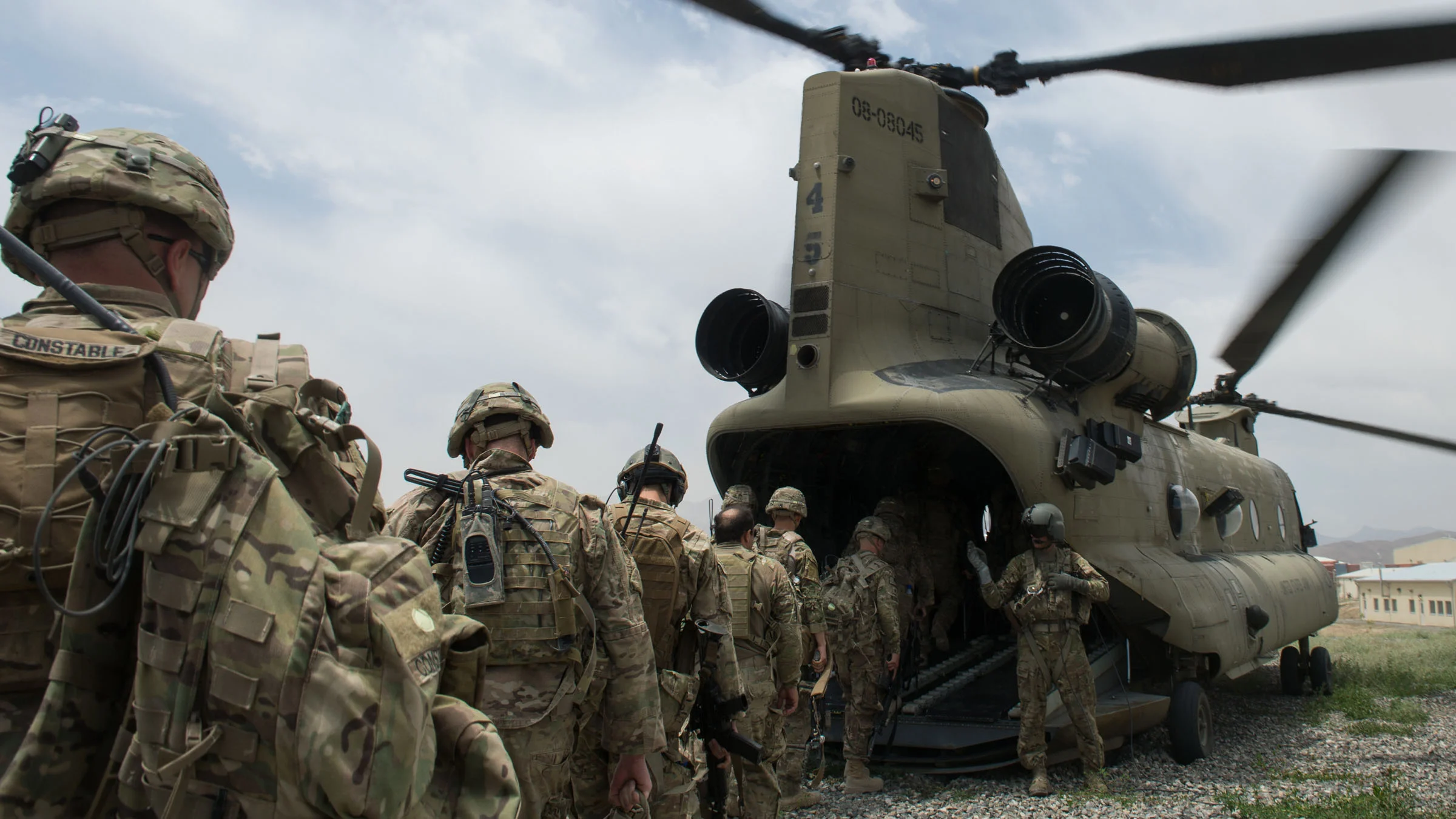
The U.S. Army will not be very successful in the coming operating environment unless it develops a sense of strategic understanding in its officers (and senior non-commissioned officers). For the purposes of this essay, strategic understanding is defined here as: awareness, comprehension, and ability to communicate broad purpose for the use of force and the relationship between tactical action and national policy. Trends tell us two things that demand this characteristic: first, landpower is inherently attributional; second, the Regionally Aligned Forces model ensures that the American Army will go to more places, faster, in smaller numbers, than ever before.

NATO’s Pivot to Russia: Cold War 2.0 at Sea?

NATO’s Pivot to Russia: Cold War 2.0 at Sea?

In response to Putin, NATO-building begins at home. We need NATO’s Public Diplomacy Division, fully focused on the Alliance’s core business, reaching out to the member states’ ordinary taxpayers. The changing European security environment requires an emphasis on the big messages: Defense, deterrence and security. Thus, zeitgeist-motivated campaigns should be stopped. In these times, NATO must tell the people what armies, air forces really are for and how our soldiers serve their countries and our Alliance.

Bioterrorism is Already Here: It Just Doesn't Look Like We Expected

Bioterrorism is Already Here: It Just Doesn't Look Like We Expected

The fact that our “global health security agenda” focuses on future pandemics and deliberate bioterror threats is laughable in the face of reemerging infectious diseases and slaughtered immunization workers. True health insecurity is present globally, and it should not require a mystery test tube and ill intent to be perceived as valid and pressing threat.

To Escalate or Not to Escalate?

To Escalate or Not to Escalate?

Understanding presidential decisions for and against increased force in ongoing conflicts is a significant and important endeavor. The implications include the impact on future decisions to commit troops in the first place—such as in Syria. National security decision making also affects civil-military relations, as well as the balance between executive and congressional powers. Finally, as escalation and de-escalation involves either mission creep or the need to adjust policy aims by taking an appetite suppressant, understanding its dynamics will illuminate leader perceptions, the difference between wartime realities and prewar expectations, and the impact on the U.S. debt and the American public.

Enduring Power: The Army Needs to Focus on What it Does Best

Enduring Power: The Army Needs to Focus on What it Does Best

Once again, the Army is attempting to transform itself. The question the Army can’t seem to answer is, “why?” Yes, the world is becoming more complex and competitive: China’s rise, a resurgent Russia, an unstable Middle East, and the continued threat of the metastasizing cancer of Al Qaeda spanning from North Africa to Central Asia are all challenging America’s global leadership position. However, no single threat has emerged as existential to the U.S. or its vital national interests.

The Curious Phenomenon of Russia: History & Russia’s Female Suicide Bombers

The Curious Phenomenon of Russia: History & Russia’s Female Suicide Bombers

Suicide bombings are nothing new — it is a tactic that been in use since the early 1980s — but it has typically been a man’s game. Until recently, that is. There is no place where female suicide bombers have blossomed more than in the Caucasus region of Russia: Chechnya and Dagestan. The practice of suicide bombings did not originate here but seems to be thriving in the Caucasus.

A Different Sort of Civil-Military Divide

A Different Sort of Civil-Military Divide

The civil-military divide in the 21st century can be described as one between the military and the elites that govern it, and as one between those elites in uniform and those in a regular coat and tie. While increasing the number of elites in uniform will help with the first divide, it does not do much for the second. The military should not abandon its values, and in fact, I believe it should continue to be defined by them. However, if the civil-military divide is to be closed, those in the military need to realize that underneath the uniform of their values lies an occupationally minded American, who is remarkably similar to every other citizen of our great Nation.

Rise of the JO

Rise of the JO

Where are the “generation of military reformers” that some despair will ever arise from the ashes of Iraq and Afghanistan? Coming into their own. Over the last month, I’ve observed an encouraging sign for our military profession. Several junior officers have used the power of the pen to reach outside of their foxholes, moving well beyond the typical sphere of influence of a newly commissioned lieutenant. Through their words, they have helped bring about the change of existing policies, shared lessons on leadership, and sparked multiple professional conversations.

Strategy by Audit: The Cost of Accountability in Afghanistan

Strategy by Audit: The Cost of Accountability in Afghanistan

Established by the US Congress in 2008, the Office of the Special Inspector General for Afghanistan Reconstruction (SIGAR) has drawn attention over the past couple of years for its aggressive pursuit of development project mismanagement by US and Afghan organizations. John Sopko, who became the SIGAR in 2012, struck the drum again this past month. Speaking at the Atlantic Council, a Washington-based think tank, Sopko reminded his audience that Afghan corruption could undo all that has been accomplished in Afghanistan since the fall of the Taliban unless the US implemented a comprehensive anti-corruption strategy. The prognosis from his office remains a compelling indictment of what has not been accomplished in that country over the past twelve years.

The Myth of Mission Command

The Myth of Mission Command

To create decisiveness in leaders—and to increase tempo—the Army should decrease leaders’ reliance on thick doctrinal manual, reinforced by top-down demands for every detail, through training that remains out of touch with the latest progression in learning. It cannot rely on checklists or computer-generated orders to put in place the mind and voice of an experienced, imaginative commander. The importance of a calm commander talking to his subordinates cannot be stressed enough. A mutual understanding will come from well-written yet brief doctrinal manuals, enhanced with the use of radios and other digital technology. So-called secure radios with inexperienced officers at both ends resemble talk radio shows. The computer cannot replace essential voice communications, while technology cannot replace the well developed and prepared mind.

Russophobia

Russophobia

While the argument against Russian violations of Ukrainian territorial sovereignty is a valid one, those making this argument may not be doing so based on their expressed concern for that sovereignty, but rather because it offers the most legitimate challenge to Russian action. The inconsistency of the Wests past behavior with this argument implies the real logic behind the Western position may not about sovereignty but simply about opposing Russia.