"Monday Musings” are designed to get quick, insightful thoughts based around three questions from those interested in strategy, from the most experienced and lauded, to our newest thinkers/writers.

President Putin made three foundational assumptions in launching his war against Ukraine that should have been correct but were not. First, Putin assumed the invasion of Ukraine would be a quick and easy fight. Second, he assumed the world would denounce the invasion but tacitly allow it. Third, Putin assumed the war would deter NATO expansion.
To achieve unity of effort among joint forces in the land domain, U.S. Pacific Command directed U.S. Army Pacific to establish a Theater JFLCC, with support from Marine Forces Pacific and Special Operations Command Pacific. In many ways this organizational structure formalizes what service components have been doing in the U.S. Pacific Command area of responsibility for 70 years—coordinating with one another and synchronizing the application of landpower.
Mission command has some real problems. Of course, the concept sounds great, or at least General Patton seemed to think so: “Never tell people how to do things. Tell them what to do and they will surprise you with their ingenuity.” As you might expect, the US Army Command and General Staff College supports this belief, devoting hours to discussing the logic of empowering junior leaders. However...the military rarely practices this. This article attempts to answer why... there are serious risks inherent within the philosophy of mission command that cause many people to reject it, if not in word then in deed. Three of these risks are the fear of subordinates making mistakes, the discomfort of superiors feeling out of control, and the angst of leaders chancing their careers on others’ mistakes.
Strategy: Context and Adaptation is definitely a book about strategy, offering many useful insights and practical takeaways for anyone interested in the field...But its greatest value is its function as a time capsule for the SAASS method of teaching timeless ideas, providing a method for the exploration of a subject area that by its very nature can never be formally captured or simply defined. In its essence, SAASS is not about hard-to-find classrooms,or groups of instructors and students stretching from the past and present. Like the classical methods that inspired it, SAASS in its essence is not the physical location where it resides...but rather the living method by which its graduates collaborate to view, investigate, question, shape, and ultimately act in ways that create continuing strategic advantage and serve the vital interests of our nation and its allies.
The attack on Istanbul’s Ataturk airport on 28 June was the latest incident over the last year to highlight the terrorist threat to civil aviation. The requirement to prevent such attacks in the future will place a growing premium on security cooperation between the public and private sector, particularly in light of the range of options available to those intent on targeting aviation interests and the expected growth in passenger numbers. Incidents over the last year also serve as a reminder of the principle of proportionality; whatever the extent of security cooperation or the countermeasures adopted, nothing is capable of delivering perfect protection.
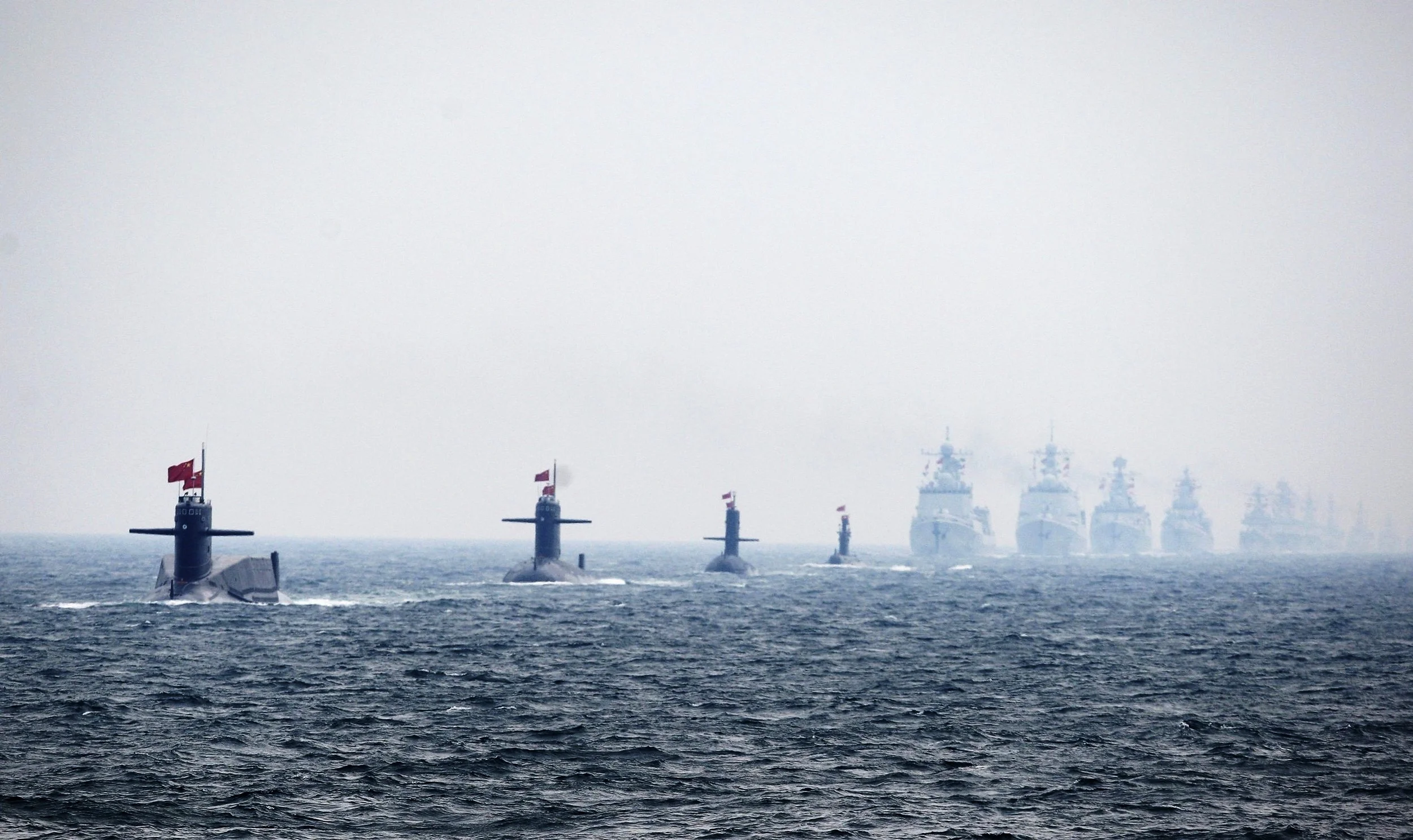
In recent years, a major focus of China’s military has been the development of an operational concept to deny or make costly access to areas of the Western Pacific for potential adversaries. This concept is commonly referred to in the United States defense planning community as anti-access/area denial (A2/AD). It emphasizes the use of long range striking power aided by sensors, largely in the form of ballistic and cruise missiles, to hit naval surface forces and fixed targets on land. Surface-to-air-missiles and fighter planes guard these weapons from enemy air strikes while stealthy diesel submarines and missile-equipped surface ships pose an additional threat to naval forces operating in the area. The A2/AD concept also envisions strikes on enemy space-based sensors and communications. This system is designed to destroy or prevent enemy forces entering a given sea or air space.
The pieces in this volume are staccato in pace, including powerful imagery and flashbacks, and representing a fleeting moment in time, a feeling, a picture, or an idea, rather than a traditional narrative arc that we have come to expect in war writing. Incoming is a volume about individual moments and battles rather than war. In this lies its power and impact.
Great theories stand the test of time—shedding light on their subject’s essence despite varying contexts, technological upheavals or mutable human relations. One such work is Carl von Clausewitz’s On War. That said, with the detonation of the atomic bomb and the proliferation of nuclear weapons, many find Clausewitz wanting. How can there be a decisive battle without nuclear annihilation? Nuclear weapons seem to breach our understanding of force, suggesting the need for radically different conceptions of war. Enter Thomas C. Schelling and his work on The Strategy of Conflict
Bloodying the enemy at Cung Son occurred at the cost of advancing pacification. Instead of focusing resources on intensifying the Saigon government’s control in Son Hoa District, efforts were directed towards rebuilding the hamlets and the people’s trust in the GVN to protect them. For the aforementioned reasons, what transpired at Cung Son functions as lesson that battlefield triumphs do not always equate to winning a war.
How Everything Became War and the Military Became Everything is an important addition to the professional body of literature on the evolution of warfare, providing readers with ideas on the future of warfare and the required institutions, legal frameworks, and strategies that need to be in place to maintain stability against an increasing number of threats to the post World War II order. While the nature of war has remained unchanged, the character of warfare is continuing to evolve and as Brooks points out, if we fail to act, we run the risk of unraveling the very fragile norms of warfare and human rights developed in that momentous summer of 1945.
There isn’t much grand about America’s post-Cold War grand strategy. Such is the consensus among the academic scholars, think-tankers, pundits, and many former national security officials who have chastised U.S. foreign policymakers for lacking strategic sophistication, or worse, failing to craft a coherent grand strategy at all...In their well-crafted and important new book, War by Other Means: Geoeconomics and Statecraft, Robert Blackwill and Jennifer Harris join this discussion orthogonally, arguing that the United States has altogether abandoned the economic dimension of grand strategy.
This approach takes the traditional ends/ways/means strategy of the industrial era and attempts to contend with the modern environment by obtaining information dominance through understanding an ill-structured problem. But as good as your intelligence might be, if you receive an assessment that predicts the unpredictable, you would be wise to question the sourcing. While one might sympathize with Eisenhower's notion that planning has its own virtues divorced of the result, the reliance on the predictability of inputs and outputs of a linear equation are erroneous. With complexity, outcomes become disproportionate and hence non-linear approaches are required.
Leadership has close cousins in management and supervision and at different times includes activities as diverse as communication, motivation, coaching, discipline and planning, to name but a small sample. A leader the is calm voice giving commands on a chaotic bridge, a general devising a brilliant invasion plan, a field grade officer making sure his soldiers are properly prepared for an upcoming deployment, a program manager helping to sharpen the thinking of a design engineer, or a Service Secretary persuading Congress and the public on the value of his service’s capability to the nation. Perhaps the only thing one can say about good leadership that applies universally is that to be effective, it must be tailored to fit.
Perhaps no one expects the oratory of Franklin Roosevelt, John Kennedy, or Ronald Reagan, but Americans should expect a reasonable amount of substance regardless of political optics. Such efforts can bridge the discussion of strategy and force the next president to think harder, deeper, and chart a clear course for America in a changing world.
As the United States finds itself once again providing special operations and fire support to a host nation fighting an enemy bent on its destruction, the same psychological pressures and realities faced by Reeder are being confronted by both coalition personnel as well as all manner of people either captured or occupied by the Islamic State. New craters. Old volcanos. And as we continue to pour support into this fight, there comes with it the same human costs that responsible decision makers and leaders would do well to understand.
A liberal education is only one aid to making the military more adaptable for the innovation age. Many other implements will be possible, as long as they fit the general criterion of building common ground between military and innovative minds. A liberal education is a fundamental solution, though, in that it can endure this generation of technological change and the many others that will follow.