The Army #Operating Concept and Allies

The Army #Operating Concept and Allies

Since getting to the strategic win is our goal, allies and partners can bring international legitimacy, basing and access, and the intangible aspect of their own political and strategic influence. This last element derives from any number of sources — history, culture, religion, economy — that might be what we need to achieve our strategic aims. Before now, I would have thought such factors were outside of the purview of the Army Operating Concept.

The Army #Operating Concept: An Insider’s Perspective

The Army #Operating Concept: An Insider’s Perspective

The recently published 2014 Army Operating Concept (AOC) broadly defines how the Army will operate in the near, mid, and far terms. In a bureaucratic sense, the AOC defines capabilities that are required of an Army that will one day make its way through the JCIDS process. However, from a personal perspective, the AOC represents a challenge. It is a challenge to the warfighters and leaders who have been a part of an Army at war for the past thirteen years. To me, the AOC is a challenge to shape and form the Army and its future leaders and build the foundations of its success in the years to come.

#Operating: Beginning a Discussion on the Army Operating Concept

#Operating: Beginning a Discussion on the Army Operating Concept

The new Army Operating Concept (AOC) posted earlier this week received a lot of feedback on social media and in the halls of military installations – which ultimately led to this series, titled “#Operating: A Personal Reflection on the Army Operating Concept,” on The Bridge. This post will kick things off by taking a holistic look at the document; later posts will focus on personal reactions to the document – what it says, what it fails to say, or even particular elements from it that resonate.

An Obligation to Those Who Serve: Criticisms of #Talent Management

This post is another in the #Talent: Thoughts on Talent Management in the Military series.


Previously, I argued that the Army could both get more from the force and improve its position in the labor market by adopting talent management, a human resource system that is premised upon the knowledge, skills and behaviors that make everyone unique. This post examines two common critiques of talent management’s value for the military. However, instead of invalidating talent management, critics’ arguments suggest two important principles for its application: first, the Army must not forget its obligation to the soldier and, second, it must proceed cautiously, carefully considering reform’s impact on the selflessness that characterizes our profession.

In the first critique, critics rightly point out that the obligation between employer and employee is fundamentally different in the civilian job market. For example, private employees need not serve in “bad” jobs and private employers need not develop their employees for better jobs. Talent management, by increasing the information available to employers and employees, could enable employers to hire talent instead of develop talent and employees to look for a different job instead of taking the “bad” job. If talent management necessarily diminished obligation, then adopting it in the military would lead to a force that is less willing to do “bad” jobs and an Army less willing to invest in its force.

In fact, with the right focus, the Army can use talent management to strengthen obligation. For example, since talent management tells members much more information about available jobs, they can see beyond a “bad” location to the benefits of the job itself. Likewise, with more information about the force, assignment officers can facilitate both better training and better assignments. When the Army assigned officers using a talent management tool called Green Pages, officers were 34% more likely to receive their top choice, not because the Army suddenly got rid of “bad” assignments but because, with more information, officers’ choices changed. Therefore, rather than suggest that talent management cannot work in the military, this critique emphasizes that, as it reforms the system, the Army must not forget its obligation to its people.

The second critique directly indicts the emphasis upon uniqueness and individuality that distinguishes talent management from current Army practice. While uniqueness and individuality might fuel success in business, it is fair to be skeptical about their application to a profession with a tradition of selfless service. How, the critic asks, can the Army build a personnel system premised upon individuality when the heroes of Army myth sacrificed without thought for themselves?

To this criticism, there are two responses. First, while myth plays an important role in inspiring the troops, it can also cloud judgment. It does not diminish the sacrifice of Eisenhower/Marshall/Patton to acknowledge that they each had unique contributions to the fight that differed from everyone else. Unless the Army desires a system without difference at all, then it must acknowledge that the goal must not be perfect selflessness, but some selflessness. Talent management simply moves the boundary closer to individuality than its current place in myth.

Still, recognizing that talent management involves adjusting an important boundary suggests a second response; careful calibration and study while applying talent management to the force. In this spirit, the Army has carefully implemented three trials: the Army Green Pages, a new branching model at West Point and the Career Satisfaction Program. All three efforts show no discernible impact on soldiers’ sense of selflessness or obligation.

While critics are right to urge caution in adopting a change of this magnitude, the response to these two concerns suggests that the Army can move towards talent management as long as it remembers its obligations to the soldier and remains conscious of the importance of selflessness to our profession. While further concerns will inevitably manifest, this reform can both unleash an array of productive capabilities and improve the Army’s competitive position against the private sector for America’s best. Most importantly, in an uncertain future, talent management will help the Army get the right person in the right place at the right time.


John Childress is a U.S. Army Strategist. The views expressed belong to the author alone and do not represent the official position of the U.S. Army, the Department of Defense, or the U.S. Government.


Have a response or an idea for your own article? Follow the logo below, and you too can contribute to The Bridge:

Enjoy what you just read? Please help spread the word to new readers by sharing it on social media.

Anatomy of an “Intelligence Failure”

Anatomy of an “Intelligence Failure”

Listen closely and you can hear it. Far off in the distance an angry mob has formed and wants the heads of every intelligence organization across the United States Government on pikes. The stale mantra of “intelligence failure” and “strategic surprise” has returned. This time, the stimulus is the rise of the Islamic State of Iraq and the Levant (ISIL) which then became the Islamic State of Iraq and Syria (ISIS) and is presently called the Islamic State (IS).

Unconventional Warfare and Strategic Optionality

Unconventional Warfare and Strategic Optionality

The recent debate over coalition strategy against ISIL has reawakened a related question: whether to support rebel groups in Syria in their fight against ISIL and Bashar al-Assad, and if so how? Even former US Defense Secretary Leon Panetta is now expressing regret at not having armed certain Syrian rebel groups earlier. It seems the US will train and arm some rebels but not send Special Forces to embed with and advise them. Two important concepts appear to be absent from the strategic culture of the US and most Western countries: unconventional warfare and strategic optionality.

The Instrumentalisation of History

The Instrumentalisation of History

History is a dangerous thing. Parallels between contemporary events and history are all too easy to arrive at. In unskilled hands, historical events can be manhandled to seemingly deliver lessons and solutions to apparently intractable contemporary problems. This is ‘instrumentalising’ history. In reality, history can be misleading, its so-called ‘lessons’ proving counter-productive if their context is not properly understood.

Islamic State on the Road to Waterloo

Islamic State on the Road to Waterloo

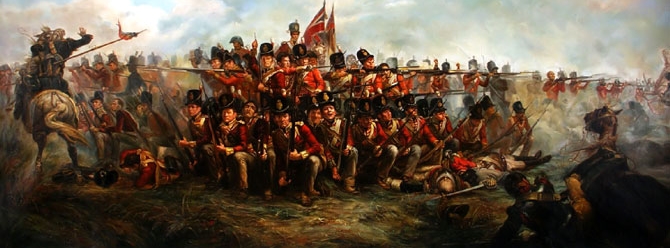
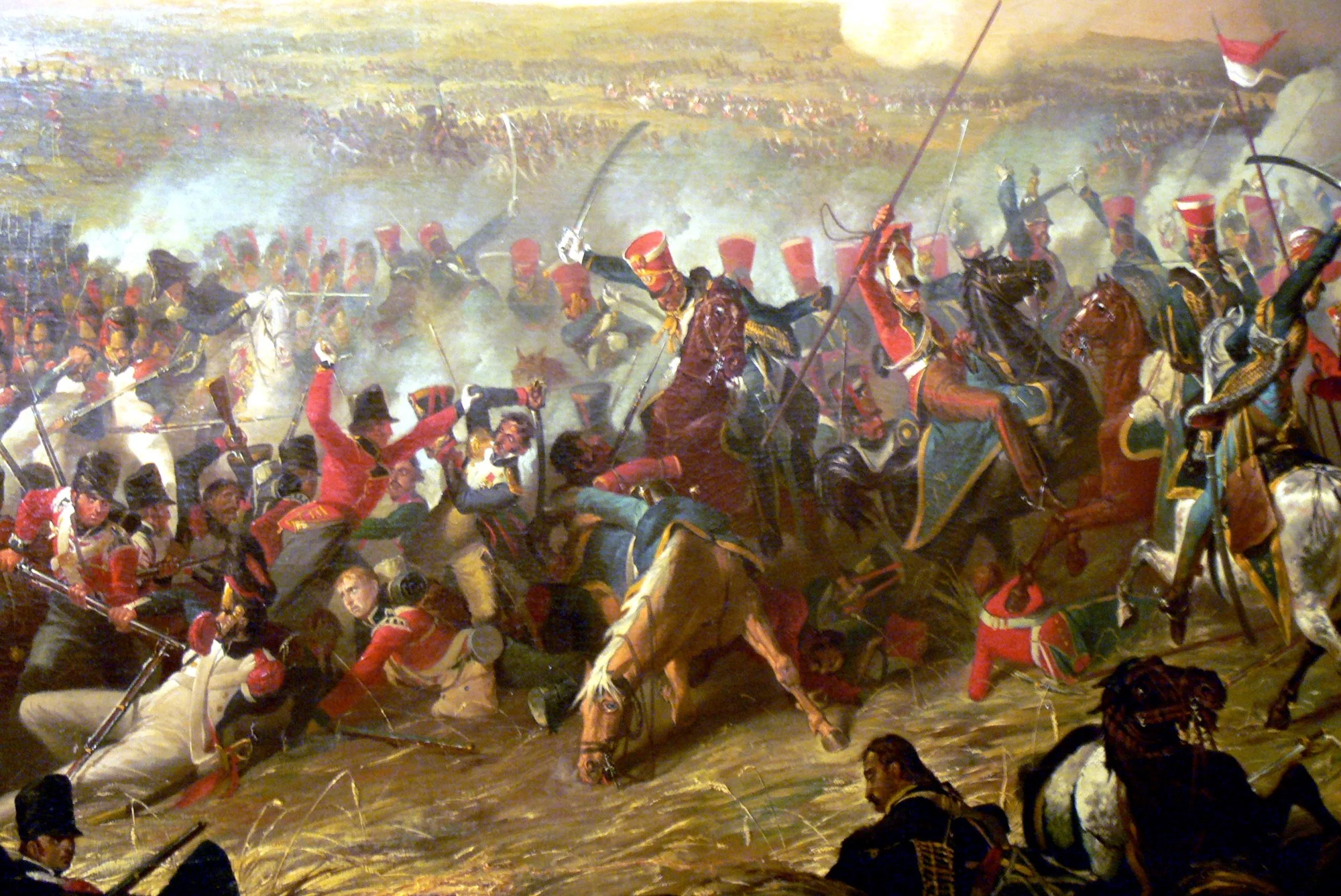
In the late 18th Century, leaders across Europe wrestled with how to handle the upheaval that was taking place in neighboring France. The political environment in France was characterized by chaos, panic, and extremism, and it gave birth to a military leader that would revolutionize warfare and change the geopolitical landscape of the continent. While using the wrong analogy can be dangerous, one can’t help but see comparisons to the situation today in the Middle East.

The Emergence of India as a Space-Faring Nation: Implications on the Developing Conflict in the South China Sea

The Emergence of India as a Space-Faring Nation: Implications on the Developing Conflict in the South China Sea

Growing concern over China’s burgeoning military might and seeming willingness to use it has caused many to re-evaluate U.S. Army doctrine and training. Counterinsurgency and asymmetric warfare have dominated Western military thought over the past decade of fighting. However, the escalating conflict in the South China Sea has many strategic thinkers considering how to fight a large-scale war once again. One nation often overlooked in the Pacific equation, though, is India and their emerging capabilities in space, and how those emerging capabilities may impact an armed conflict.

Women and the Islamic State

Women and the Islamic State

ISIL, once affiliated with Al Qaeda, has used horrific violence to gain followers and territory. They have even been so bold as to declare a Caliphate and rename themselves the Islamic State (IS).The level of violence, tactical advances and media savvy of IS dominates the headlines. What is not as widely reported is the role women play in IS.

Clausewitz Turned On His Head

Clausewitz Turned On His Head

War, we are told by a wise elder, is the “pursuit of policy by other means.” In fact, this famous statement was perhaps more an aspiration on Carl Von Clausewitz’ part than a statement of metaphysical truth. It is often observed that German generals in the succeeding generations completely forgot this famous dictum, which demoted them relative to civilian leaders they often held in contempt. But American generals do not seem to be immune, either.

ISIS. DAM. TOXIC.

ISIS. DAM. TOXIC.

I have heard quite a bit of talk about the proposal of using airpower to disrupt and destroy ISIL and it usually points out how airpower has failed to meet ambitious policy goals in the past. So has landpower. I’ve read articles with people coming out of the woodwork to say what the “limits of airpower” are and I would ask them to consider that they’re really talking about the limits of war. Especially war as we like to think of it.

Fighting the Narrative: The First Step in Defeating ISIL is to Deny it Statehood

Fighting the Narrative: The First Step in Defeating ISIL is to Deny it Statehood

Before the physical battle to defeat ISIL begins, the narrative surrounding that fight must be clearly delineated and thoughtfully parsed. The first step in defeating ISIL is to deny it statehood. The second step in defeating ISIL is to ensure that the states of Iraq and Syria have strong, legitimate, and sovereign governments — whether we like them or not.

The Solution to Jihad: Kill and Contain Our Foes. Give War Another Chance!

The Solution to Jihad: Kill and Contain Our Foes. Give War Another Chance!

oday we have an article from the dark side of America’s soul (with deep roots in our history) enticing us into evil. War erodes our strength, and after 13 years of the War on Terror our defenses against evil are quite thin. Voices like this, although seldom so vivid, probably will dominate debate among the presidential candidates of both parties during the next two years.