Drones and Complement

Drones and Complement

Whether you call them drones, remotely piloted vehicles, or unmanned vehicles, they’re all just tools of warfare. And forgive the banality of the point, but tools of warfare are used by humans who seek to maximize violence against their adversary, and that requires complement rather than replacement. Most importantly, we should also recall that in non-linear positive-sum games, as combat is exhibited as, the interaction of people and weaponry leads to a cumulative advantage if used asymmetrically. As such, the vast balance of history teaches us that we will continue to perceive technological/tactical cycles as something of a progression of coordination (synchronization), to cooperation (integration), and then ultimately, to a combination for strategic effect (convergence). We’ve only just begun to conceive of drones in the proper terms of complement, and it is past time to do so.


Anti-Intellectualism and the Army: The Sky isn’t falling…yet

Anti-Intellectualism and the Army: The Sky isn’t falling…yet

Anti-intellectualism exists, as it always has in militaries since the rise of standing armies; so instead of focusing on the bureaucratic nature of military culture, we should be determining how to refocus seasoned troops on education so that we may hone our judgment in garrison as we prepare to meet the challenges of future battlefields. The issue is not one of merely having an intellect, but how an intellect is both grown and employed.

Putting “Anti-Intellectualism” in Context: Intellectualism, Misology, and the Army

Putting “Anti-Intellectualism” in Context: Intellectualism, Misology, and the Army

Trying to define “intellectual” is like walking in the world of Zoolander, a movie about a male model (Ben Stiller) who describes himself as “really, really, ridiculously good looking.” Academic definitions of “intellectual” (often themselves it would seem) paint a similar gushing picture about a “life of the mind” that values education, and appreciates critical thinking, history, philosophy, and science. After Matt Cavanaugh and Andy Rohrer’s recent blog exchange, I was left wondering how could anyone be against all these wonderful things?

In Response to Anti-intellectualism in the Army: Knowledge, Judgement and Strategic Thinking

In Response to Anti-intellectualism in the Army: Knowledge, Judgement and Strategic Thinking

If we desire to maintain our advantage over machines and drones, then this example from Libya is precisely what we do not want. The members of the Profession of Arms don’t simply “service targets,” just as they shouldn’t automatically put on a reflective belt. We ought to continually strive to be skilled and discriminate conductors of the symphony of violence — that also know why the orchestra has assembled for the performance. If we don’t live up to this ideal, then maybe it is time to start sending in the drones.

Saving the Army from Unfair Bias: Anti-intellectualism, Bureaucracy, Marketing, and Society

Saving the Army from Unfair Bias: Anti-intellectualism, Bureaucracy, Marketing, and Society

The Army may have an “anti-intellectual” bias, but the arguments set forth to support this claim are incomplete. These issues cannot be taken lightly. Anti-intellectualism is a serious issue and a heavy accusation. The causes cited for it are perhaps more frightening than the problem itself. The assertion may be true, but it requires much more analysis to confirm.

Anti-intellectualism In the Army: The bureaucracy or the people?

Anti-intellectualism In the Army: The bureaucracy or the people?

Bureaucracy creates incentives that perpetuate an existing bias toward anti-intellectualism among the people that are the institution. This is an important discussion to have, especially as the Army is now going to reduce its size to 420,000 soldiers on active duty, it is vitally important that intellectualism is reintroduced to the force. But, maintaining the status quo will not achieve this; the bureaucracy will need to be changed and will require bold leaders unafraid to take risks to make that happen.

Strategy as Fiction

Strategy as Fiction

No doubt there will be many executive functions in war, but wars are not over just because one side decides to capitulate, they are over when one side understands that it has lost and the other has won. The role of narrative is to develop that understanding. To that end, the narrative doesn’t have to appeal to our conscious, executive mind — it has to work on our unconscious learning mind. People who poo-poo narrative for want of something a little more calculable have deprived themselves of a powerful tool.

Renken on Carl von Clausewitz's Subjective, Objective, and Trinity

Renken on Carl von Clausewitz's Subjective, Objective, and Trinity

Clausewitz’s great contribution was to “build a snowmobile.” He took the philosophical epistemology of his era, which gave him a means of refining “truth.” He then directed that system to a study of war and availed himself of a Newtonian system to look at cause, effect and engagement. He further located war as a nexus between multiple independent but fused factions. I hope that this is a useful addition to your conception of CvC’s subjective, objective, and trinity.

Renken on Ganske on Wylie

Renken on Ganske on Wylie

Carl von Clausewitz defines what’s in the “box” of war very well, but Wylie does something truly great by defining the boundaries of the box. When your control crisis reaches a certain point, you go to war. When the control achieved is sufficient, you attempt to end war. In between those two points, with the exception of offering clarifying cumulative versus sequential pathologies, Clausewitz still reigns supreme. It is perhaps fitting that a Sailor defines the fringe while a Continentalist fills in the content.

Strategic Reform: Strategy in a time of more uncertainty or less?

Strategic Reform: Strategy in a time of more uncertainty or less?

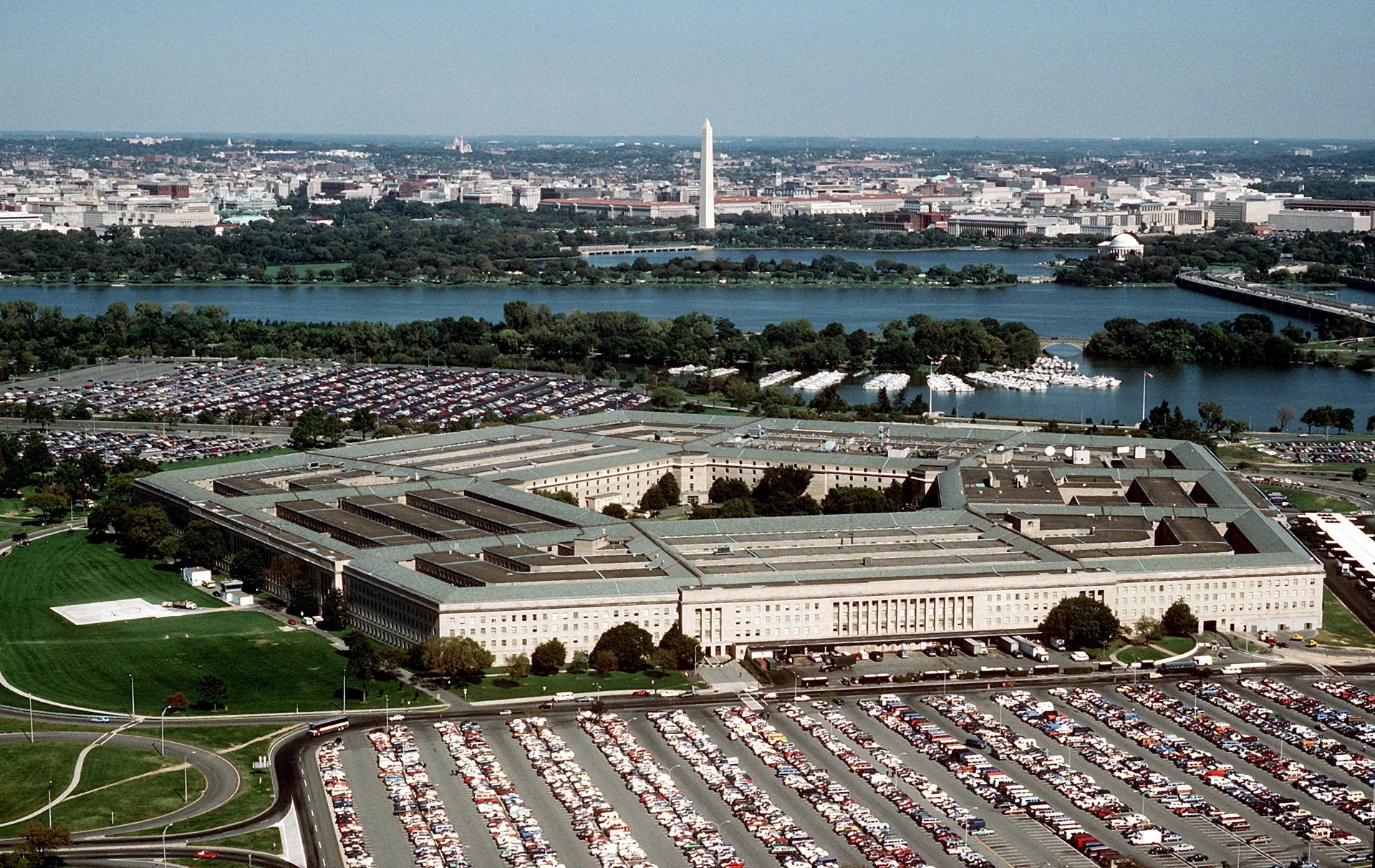
Three fundamentally flawed assumptions dominate the Pentagon’s current “strategy.” The first is that uncertainty in our security environment is growing, requiring us to spend ever more to secure general readiness for a dizzying array of contingencies. The second is that our only reliable guide star is a need to pace China with high-end forces optimized for an eventual force-on-force clash close to their coast. The third is that all other potential adversaries constitute “lesser included” cases, requiring merely diminished application of high-end U.S. strength. All are wrong.

Right Reason, Right Season

Right Reason, Right Season

Transformation is hard because organizations exist within a market place which is never truly static, yet changes at a pace which usually favors refinement over renewal. Narrow focus on efficiency creates real perceptive and cultural barriers to recognizing the need to transform. Successful transformation requires leaders who can articulate both why and when transformation is necessary—the right reason and right season.

Strategy as Narrative

Strategy as Narrative

Strategy is a form of communication; a message that you have the intentions and capabilities to impose your will, and the enemy cannot impose theirs. As war can be likened to two combatants trying to impose their will on the other, they must communicate their will and their intention not to abide by the will of the opponent. Since war is a human endeavor, this communication occurs in the same manner as other forms of communications. 

Military as Seminal Agent: Violence as a Vehicle for Destruction and Creation

Military as Seminal Agent: Violence as a Vehicle for Destruction and Creation

Ultimately, management of violence is an instrumentality for the military. The end sought is a new reality. The military destroys to create. No serious student of military history misses this point, but too often the focus on destruction blinds us to our responsibility for acts of creation that inevitably ensue.Ultimately, management of violence is an instrumentality for the military. The end sought is a new reality. The military destroys to create. No serious student of military history misses this point, but too often the focus on destruction blinds us to our responsibility for acts of creation that inevitably ensue.

Addendum to “Learning For the Next War”

Addendum to “Learning For the Next War”

If nothing else, what our operations in Afghanistan and Iraq have taught us is that our politico-military strategies need a corresponding, overarching, dare I say, “grand” strategy. Not just guidance. Perhaps, while we are writing the immediate history of our operations in Afghanistan and Iraq, and, presumably a fresher FM 3-24, we can also include a comprehensive strategy that guides the country’s subordinate departments and agencies.

On “No More Easy Wars”

On “No More Easy Wars”

In Foreign Policy’s National Security Blog, Colonel Scott Gerber (USA) recently attempted to make out the Air Sea Battle (ASB) Concept as foolishness. Personally, I am extremely concerned about building an operational concept around a policy shift known as the “Asia Pivot.” My greatest concern is that the United States has not sufficiently fleshed out the strategic underpinnings of translating the Asia Pivot policy into action, however setting that aside for now, I will revisit that in a follow-on post. What I find striking about Gerber’s offering here is how he insists on building a straw man of mythological proportions in order to knock over the ASB Concept.

The Failure of the Current DoD Budget Debates

The Failure of the Current DoD Budget Debates

The current debates emanating among policy circles within the Department of Defense and Congress have predominately focused on the scale of budget cuts imposed by sequestration and how it will be implemented to achieve the President’s defense policy guidance. As resources decrease, each service is maneuvering themselves within the budgetary-policy debates to ensure they receive both an adequate role in shaping the future security environment and the resources commensurate with such a role.