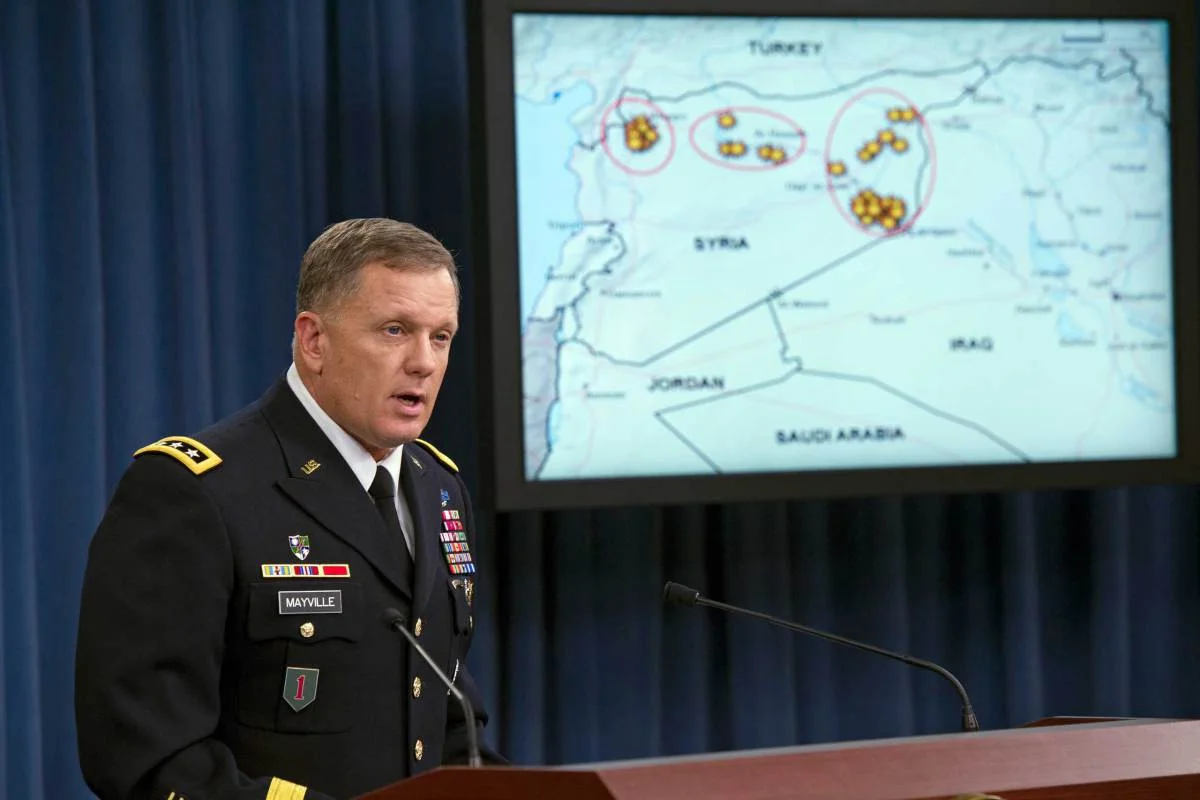
As a military, we do not have the luxury of planning and practicing for a season that begins on a predetermined date; we do not even know the field we will fight on for our next “any given Sunday.” We do, however, know we will need prepared leaders and cohesive teams for when that day comes. Whether you agree or not with the proposals in this white paper, we cannot afford to be indifferent, because on any given Sunday, leaders will lead their teams to either victory or defeat with millions watching.
The #Human Project: Professional Views on the Army’s Human Dimension White Paper
This series—which will include posts by soldiers, airmen, defense professionals, and other stakeholders in how we develop and manage the people in our military—will address the specifics of the document, as well as tangential topics in the white paper that the authors found pertinent and expanded upon.
Winning the Battle of Legitimacy
In many ways, today’s fight against ISIL is another chapter in the fight that we had against AQ and ISI in 2006–2007. ISIL’s success today is based on a combination of factors that includes ineffective governance, success on the ground, and sophisticated propaganda. Although it does not seem likely that U.S. and its allies will commit ground combat troops to fight ISIL in Iraq, there are things that can be done to help Iraqis defeat ISIL.
Guard #Operating: How the Army National Guard Fits with the AOC
The ARNG is tied to the active force more than any time since the World Wars, and the total force continues to depend on an operational reserve component. ARNG units are embedded with active forces, have commanded active forces, and provide force depth. Most recently, National Guard units were tapped via executive order to participate in supporting operations in West Africa as part of the Ebola response. The ability for the reserve force to relegate readiness to previously acceptable standards is no longer a smart option.
Why ISIS’ Forerunners Lost
Whatever the claims of certain media outlets, the organisation referred to variously as ‘Islamic State in Syria’ (ISIS), or simply ‘Islamic State’ is hardly a new phenomenon in Middle Eastern history. Islam has been beset by violent schismatic and revivalist movements before, some conquering large territories and proclaiming ‘states,’ only to implode under their own internal contradictions or be crushed militarily by more established Muslim rulers. Perhaps the starkest example of this was the very entity originating the uncompromising brand of Sunni fundamentalism espoused by al Qaeda and ISIS, the Wahhabi-Saudi emirate of the eighteenth and early nineteenth centuries, which engaged the established powers in the Middle East in just the kind of ‘generational struggle’ today’s biens pensants say will be needed to defeat ISIS, a struggle having repercussions for the region today. It lost, and many of the reasons why suggest ISIS will lose too.
Ghost in the (#War) Machine
“The dogmas of the quiet past are inadequate to the stormy present. The occasion is piled high with difficulty, and we must rise with the occasion. As our case is new, so we must think anew and act anew.” In 1862, Abraham Lincoln spoke these words to Congress just before issuing the Emancipation Proclamation, which changed the terms of the Civil War and the course of American history. In 2014, similarly inspiring and memorable words have not come from the top, but the war is equally new and difficult in nature, and it demands equally new thinking.
#Talent and Assignments: The Army’s Pentagon Problem
#Operating in a (Fiscally) Constrained Environment: Where the Army Operating Concept Misses the Mark
If Air-Land Battle focused on employment of weapons systems (the “Big Five”) to fight and win outnumbered, the current construct, which recently replaced Unified Land Operations, focuses on soldier, leader, and organizational adaptability to win in a complex world. The document in my mind departs from what this concept should do: describe how the army fights in the future.
The Value in Historical Lessons: Continuing the Discussion on the Value of History in War
History is not just for historians. We cannot reserve the use and evaluation of history as a sacred cow only for the academics. Using history as a lens to evaluate our current and future conflicts provides a construct for analysis; as Dr. Davies artfully argued, history provides “valuable context.” More importantly, history illustrates a series of actions and consequences that contemporary planners can utilize to mitigate potential risks to an operation. Based on the historical examples of operations in a given area, the variables of potential courses of action may change. These historical vignettes are valuable at the tactical and strategic levels.
Operationally Effective Talent Management
At the end of the day, we are called to win our nation’s wars, whatever those wars may be – fighting pandemic, halting radical remit, or protecting the homeland. When resources get tighter and organizations get smaller, managing our human capital becomes a critical component of operational effectiveness. It is encouraging to hear Army senior leaders talk about talent management, DOPMA reform, and the human dimension
Already #Operating: The Army #Operating Concept Describes Today, Not Tomorrow
There has been much criticism that there is nothing new in the Army Operating Concept. That is certainly not true, but it is a concern if one sees concepts as oriented on future innovation. I think the Army Operating Concept is more about deliberate adaptation than it is about innovation — that is not necessarily a bad thing, so long as someone is in fact looking beyond 2025 to the force we will need in the future.
Guardians of the Machine: #DEF2014 and the “Machinery of Government”
Richard Burdon Haldane, who chaired the committee that authored the “Machinery of Government,” knew that any initiative cannot be effective if it’s scripted and formulaic. In fact, he suggested that “practical efficacy will depend upon the zeal and discretion… the living forces whose spirit is essential to any form of government that is more than a machine.” For the second year in a row, DEF has proven that it has limitless zeal and discretion, or in this year’s lingua DEF, conviction.
#Operating in Confusion: A Reflection on the Army #Operating Concept
Army #Operating Concept: The Promise and Pitfalls of Partners
In military circles, it’s “building partner capacity”. Inside the DC Beltway, it’s “lead from behind”. But whatever buzz word du jour you use, it’s inevitable that the US Army will rely more on its global partners as Soldiers trickle home after thirteen years of war. It’s one of the key themes in the Army Operating Concept.
Training Soldiers for #Operating: The Army #Operating Concept & Basic Training
#Operating Above & Beyond the Concept: An Email Response
Reflections on the new U.S. Army #Operating Concept: What’s in a Name?
When critiquing high level conceptual documents like the U.S. Army Operating Concept, it’s important to remember what they are and what they are not. They are an attempt to steer already ongoing group conversations into specific directions that the leadership feels are needed to prepare the group for future success. They seek to reinforce or clarify some ideas, discount or refute others, and, most importantly, provide direction on how the organization will address both new challenges and existing unresolved problems. They seek to provide common starting points for the discussion and set the parameters for future debate and exploration.
Finding our Voice: The Narrative in the Army #Operating Concept
Undue Emphasis of the Army #Operating Concept
As part of a joint force, the Army is the singular service that needs the man more than the machine. Had the Army Operating Concept ended with using technology to enhance superior training, it may have been on the mark. But by setting the stage to maintain budgetary pace with the other services, the Army may find itself in 2020 with rooms of gear and no one to use it.