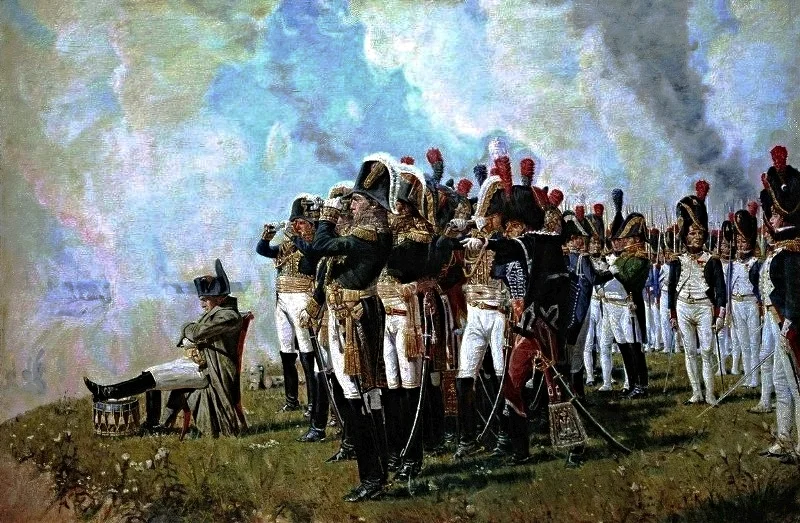
If war is an inherently human phenomenon, then discussion of the human aspects of war is as timeless as the discussion of war itself. One prudent start point for any discussion on military matters is the philosophy of war described by the 19th century theorist Carl Von Clausewitz. In one of the lesser read sections of On War, he described what comprised the penultimate military genius. This article explores Clausewitz’s description of military genius as a point of discussion in the ongoing human dimension dialogue. In Clausewitz, we have a life-long soldier describing what it takes to reach the highest strata of the profession of arms; we would be wise to listen to what he has to say.
Reversibility in the Army: More Than Industrial Age Conscription
Reversibility should not be seen as a one-way pipeline to getting larger quickly in an emergency. It is an integrated process of policy and structural levers that maximizes our access to human capital, trained or otherwise. It maintains the capacity to meet our national policy objectives. To effectively incorporate reversibility as part of an institutional strategy, we must first admit that there is no constituency for conscription. Second, we must resolve that the All-Volunteer Force (AVF), from force structure to personnel management, inter alia, has fundamentally optimized beyond conscription.
What If? Strategic Techniques in a Decade of Conflict
While learning by trial-and-error is part of adapting to the conditions of war, coalition military doctrine, and in particular that of the US military, missed an ideal opportunity in the 1990’s to help practitioners expedite that process. By the beginning of that decade, the Cold War had ended and Western militaries were in what some analysts referred to at the time as a ‘strategic pause,’ meaning there was time to conduct seminars and ‘war games’ to forecast and prepare for the new future security environment. These efforts had their problems, but the deductions and insights drawn from them were not ‘so far wrong’ (to borrow from Sir Michael Howard’s famous advice) as to leave doctrine writers off the hook.
Division Commander-Based Design: Why the Army Should Return to the Division as the Focal Point for Future Force Design Efforts
On 11 September 2001, what had been academic debates became all too real. The Army took what it learned from those debates, adapted its concept development and combat developments work, and moved to a Brigade based design that served us well enough to rotate forces in and out of two wars for over 10 years. Now, the Army is winding down from fighting its first major wars of the digital age. To some, “The Narrative” has replaced “COFM” as the principal dynamic that determines victory. The nexus of policy objectives and military action is more transparent and more complex than ever in history. Now is the time once more to open the debates that began at the dawn of the digital age and adjust our theories to our lessons and our new conditions. What have we learned? Where should we focus that learning? A good place to start is at the Division.
Two More Fallacies of Future War: Adding to the ARCIC Narrative
While the U.S. still remains the world’s most powerful nation, it faces a more multipolar world where its strengths and influence are being challenged by other global players to include Russia and China. In order to maintain its position moving forward, it needs to confront LTG McMaster’s four fallacies and the two I have offered.
The Oman Djebel War, 1957–59
[T]actics matter, so geography matters. Strategy is not a branch of philosophy, but a practical activity hinging on securing ground of political importance, hinging in turn on your forces beating your enemy in the physical environment concerned...Reading Seven Pillars of Wisdom will not help you in northern Oman; these are people of mountain villages, not nomads of the desert. Anyone wishing to control inner Oman from Muscat on the coast must secure these wadis, which means controlling the towns and villages along them, no mean task given the climate, their distance from the coast and that most will be fortified and held by men with local knowledge and a stake in the outcome.
Roots of the #Human Dimension: Understanding Historical Grievances as Context for Conflict
#Human Capital Management: The Importance of Evaluations and Assignments
The Human Dimension (HD) White Paper, recently published by the Combined Arms Center, provides a framework for optimizing human performance that broadly outlines three lines of effort (ways) and six means for improving the Army’s Human Capital. Successfully implementing this framework, like any organizational change effort, will require getting one or two “big things” right. For the Human Dimension, the “big things” are evaluations and assignments. These issues affect behavior both consciously and unconsciously, and together provide the greatest influence on talent development and management.
The Learning Process of #Humans
The Human Dimension White Paper has continued a much needed discussion about how the military should respond to its experiences in Iraq and Afghanistan. While our military has learned a great deal in more than a decade of fighting, we must understand that “lessons learned” take us only so far, unless we are willing to improve the learning process itself.
#Human Storytelling, Conversational Learning, and Mission Command
Using storytelling and conversational learning to conduct professional discussions are not new ideas but they are ideas that need to be taught and reinforced in the Army PME courses and by leaders throughout the operational force. Mission command is based on trust, which requires understanding. One of the most effective ways to gain understanding of the capability and competence of one peers, superiors and subordinates is through professional discussion in a learning environment.
Welcome to the Post-Precision World
Landpower is the central element of military power. While other forms of military power — naval, air, space, and cyber — are vital to national security, land is where people live and where decisions happen. Technology has advanced so much and is more lethal than ever, but if we lose sight of the importance of the soldier, or marine, on the ground, we do so at our own risk. Capable land forces never lose sight of the importance of the soldier, and sound strategy never loses sight of the importance of landpower.
#Human: “It’s the Who”
The next major evolution in warfare will not be in the way we fight, nor will it be what war is fought with, rather it will be who is fighting our wars. This evolution in warfare began in World War II when the United States began accepting African Americans into the Army, continued with the acceptance of women into the armed forces, expanded with the highest levels of leadership, and continues today with women in combat units and the end of don’t ask don’t tell. The Army is now presented with the opportunity to make the most of human capital.
The #Human Dimension Paradigm
The Human Dimension White Paper does not represent a paradigm shift, and that is not a bad thing. There are those research papers that propose an answer (argumentative), and those that provide new way to think about a particular problem (analytical). The white paper is the latter, and that has disappointed people. The effort however, is not a failure.
The #Human Dimension White Paper: An Analysis
Army University: The Educational Component of the #Human Dimension
Optimizing the #Human Dimension through Education within the Operational Army
The operational force and its commanders must deliberately integrate education into their leader development programs, complementing the efforts of the institutional Army. To enable this, we must increase our awareness of the existing educational resources, maximize our use of these resources and identify shortcomings to assist our leaders in their efforts. The Human Dimension and human performance will be more important in future operational environments than ever before and education is the key to our success.
The Narrative Dimension of #Humans
The power of the narrative dimension is found in the sense of coherence they provide of how the world is, how people are, and how to respond to disruptions of that worldview. The Human Dimension fails to account for their organizing functions to elicit support for a vision of the future, promote clarity of the discourse between people of different social groupings, or unpack the factors influencing human behavior.
Senior Leadership & the #Human Dimension The Importance of Trust
There are two calls to action in the Human Dimension White Paper. The first is to senior leaders to provide resources for developing our junior leaders. The second is to junior leaders to begin developing their peers and subordinates. These two must happen in conjunction with each other. And that can only occur through clear and open dialogue between all ranks.
Re-grading the Army’s #Human Dimension White Paper
A #Human Response
As the Army looks at itself and asks if it is sufficiently organized and trained to address today’s threats, so too should Congress ask itself whether the laws that define the Department of Defense and its subordinate components are sufficient, as should the White House ensure its foreign policy decisions do not violate the Ranger Handbook’s leadership principle of “Know your unit’s capabilities and limitations, and employ them accordingly.”