What Successful Strategists Read

What Successful Strategists Read

The bottom-line is that there already exists a long list of lists advising strategists on what they should read. At best, the analysis presented here provides one more list to consider. To remain open-minded, hopefully a strategic thinker would never limitthemselves to any list. Nevertheless, the hope is that individuals find the results of this survey valuable as they chart their course of self-study and reflection, wherever that may take them.

Fishing on the Narrative River

Fishing on the Narrative River

Recently, Jason Logue spent some time on the Bridge looking over the river “Narrative.” Jason cast a line into the rushing current catching a basket full of tasty ideas that he shares with anyone who stops at his campfire. If Jason will allow, I’d like to join him by casting my own line into teeming waters with hopes of reeling in a catch worthy of a campfire fish tale.

#Reviewing Lessons from the Gun Doctor

#Reviewing Lessons from the Gun Doctor

Armstrong is able to return a spotlight on Admiral William Sims, an innovative naval leader often overshadowed by the subject of Armstrong’s first book, Alfred Thayer Mahan. Armstrong shares the story of how a young Lieutenant redefined the Navy’s approach to warfare by applying lessons learned from others to his own crew and reporting the improved results up his chain of command and to anyone who would listen, including the President of the United States and naval enthusiast, Theodore Roosevelt.

Lines in Shifting Sand

Lines in Shifting Sand

The scars of the Arab Spring, the fall of several dictators, and renewed western relations with Iran have widened the eyes of the traditional monarchies in the Middle East, and they are taking calculated steps to ensure that their economic and power systems are secure from any future threats. As the U.S. invites the GCC members to participate in the gathering at Camp David, and as new Middle East strategy recommendations call for a more “management” focused approach, an opportunity to refine our interactions has appeared on the horizon.

Unfinished Business

Unfinished Business

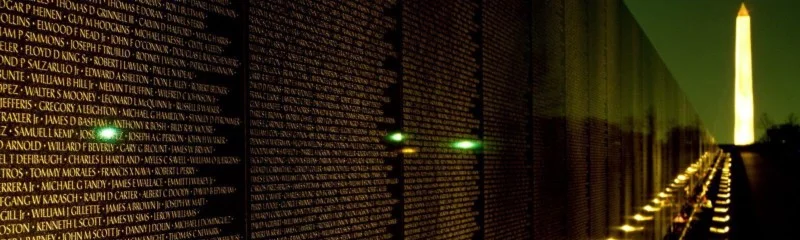
On the heels of the 40th anniversary of America’s departure from Vietnam, a reflection on the past is appropriate. In honor of this occasion I found myself revisiting David Halberstam’s Best and the Brightest. Multiple dissertations could be written over individual components of the book, including Halberstam’s detailed portraits and backgrounds of the key decision-makers involved in run-up and execution of the Vietnam War. For the purposes of brevity and clarity, this paper focuses on two related problems noted throughout the book: the inherent limitations of foreign militaries in counter-insurgencies, and the challenges associated with selecting and training local security forces.

In Defense of Programs: Surviving The Drawdown

In Defense of Programs: Surviving The Drawdown

The drawdown is upon us. Both the base budget and the overseas contingency operation funding lines are getting smaller. This is forcing Department of Defense (DoD) components to make hard decisions on which programs they want to fund. These hard decisions are informed and influenced by the efforts of strategists, cost assessors, budgeters, congressional affairs personnel, program evaluators, and others who do similar work. If DoD components want to survive, and possibly thrive during a drawdown, they need to invest in and reward the work of strategists, cost assessors, budgeters, congressional affairs personnel, and program evaluators as they are DoD’s Program Defenders.

#Reviewing “U.S. Naval Institute On Naval Command”

#Reviewing “U.S. Naval Institute On Naval Command”

Naval Command is clearly aimed at officers who aspire to or are preparing to assume command. However, it can also serve as a valuable resource for junior officers who wish to better understand the lens through which their commanding officers view their own responsibilities. In several instances, Cutler distilled lengthy contributions down to tightly presented summaries of the salient details. This skillful editing yields a 194-page book that is neither intimidating in scope nor size. While Naval Command can be read cover to cover, it may be best used in the traditional “wheel book” sense — a professional reference manual that an officer can return to time and again for insight and guidance.

Taking Writing on to Real Pages

Taking Writing on to Real Pages

If you follow The Bridge, you've probably read essays such as Williamson Murray’s views on Mission Command, or something more academically focused such as the strategy tome, Makers of Modern Strategy. A tough fundamental question for me to answer, is “How the hell do I still make this interesting?” Audiences are interested in blog posts, they are quick reads, they can spread via email and social media like wildfire. The rare whitepaper or essay that makes the rounds to the force really needs the right stuff.

John Boyd’s Revenge: How ISIS Got Inside Our OODA Loop

John Boyd’s Revenge: How ISIS Got Inside Our OODA Loop

One of the most influential names in strategic studies is that of Colin S. Gray. He is not only an authority in the field, but a prolific writer. His book The Strategy Bridge — the one that gives this blog a name — is no less than a theoretical system which organizes the entire field, including the ranking of major theorists into tiers. Gray is no fan of John Boyd, the irascible Air Force Colonel who invented the well-known “OODA loop” but wrote nothing, preferring instead to communicate with his audience through grueling presentations rather than written works. The slides can be confusing, and the only academic treatment is Science, Strategy and War by Frans P.B. Osinga, so it is understandable that Boyd’s ideas haven’t achieved much purchase in academic strategic studies. Gray is emblematic of most authorities even though Boyd has a devoted following amongst practitioners and an annual conference devoted to his ideas. Increasingly it seems like Boyd’s ideas were quickly dismissed by strategic theory and then left behind.

#Reviewing Buzzell

#Reviewing Buzzell

Now comes Thank You for Being Expendable: And Other Experiences, a collection of occasional essays that date back as far as 9/11 — Buzzell was on the ground in New York City to watch the Twin Towers fall — and as recent as a 2015 review of American Sniper. Many chapters date from the years Buzzell bounced around the country researching Lost in America. Once more we see Buzzell enchanted by aspects of American culture untouched by prosperity and respectability. 

Anti-Hero Narration of War: #Reviewing “Thank You for Being Expendable”

Anti-Hero Narration of War: #Reviewing “Thank You for Being Expendable”

Colby Buzzell’s anthology of short stories, Thank You For Being Expendable, is the punk rock alternative to Service Academy and/or Ivy League-educated military officer GWOT-memoirs. Buzzell is a hard drinking, chain smoking, enlisted Stryker Combat Brigade infantryman who not only fought in Mosul during one the deadliest years of Operation Iraqi Freedom but also witnessed firsthand the events of 9/11 in New York City.

Broadening Remembrance on Memorial Day

Broadening Remembrance on Memorial Day

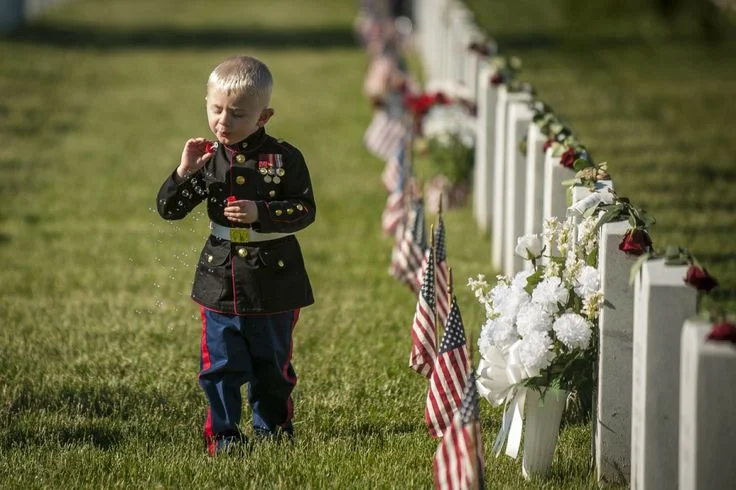
As Americans get ready to honor the sacrifices of the nation’s military this Memorial Day, is it time to consider broadening the spirit of this U.S. holiday beyond the ‘Armed Forces’? Originally called Decoration Day, since the Civil War Americans have honored their fallen warriors. Even today when fewer Americans serve in the all-volunteer force, Memorial Day holds a sacred place in the United States. Millions of Americans visit graves and honor the fallen with flags and wreaths. Millions more commemorate their actions in small town ceremonies across America and thousands will even visit overseas cemeteries in Europe, Africa, and Asia. Others attend silent drills, parades or ocean-side fly-bys, fireworks displays or simply spend time with family and friends. All of these commemorations, tombstone decorations and prayerful reflections are ways of remembering America’s brave military men and women who gave their lives so that others might be free.

They Were Better Than That…So Are You

They Were Better Than That…So Are You

So there I was, a fairly familiar platoon leader, having spent the last eight months training with my platoon from individual skills and Expert Infantry Badge testing through our Mission Readiness Exercise at the National Training Center. It was early-2011, and in a little over a month we would board flights for Afghanistan, headed for a remote outpost in the northern part of Kunar province. We were ready. Our leadership was a cohesive team. The soldiers knew their jobs. I was a bit nervous about how I would perform in combat, but I was confident that my training would see me through successfully.

A Fragile Peace

A Fragile Peace

This weekend will mark the celebration of Memorial Day in the United States. It’s a time to remember veterans who died for their country, but it should also be a time to ask what their service accomplished. War, with all of its horror, must have a compelling purpose, and the only worthwhile intent is to create a better peace. Unfortunately, the peace generations of veterans fought for is fragile, and must be carefully preserved.

The True Meaning of Memorial Day

The True Meaning of Memorial Day

Most vets appreciate being thanked for their service, but if it happens on Memorial Day, there are many that will tell you to be thankful instead for those that never made it home. Memorial Day, celebrated at the end of May every year, is meant to remember them, our comrades-in-arms, that gave the ultimate sacrifice. After 20 years in uniform, Memorial Day means more to me (and many veterans like me) than it might to other Americans.

Scarcity as a Source of Violent Conflict

Scarcity as a Source of Violent Conflict

Scarcity should both interest and scare strategists and policy makers. It refers to a mismatch between the demand for and availability of a commodity. It helps drive free markets, and informs value. But strategists and policy makers should contemplate it because scarcity, both real and perceived, drives much of human conflict, and it has reared its head again, this time in Yemen.

Army-Air Force Talks

Army-Air Force Talks

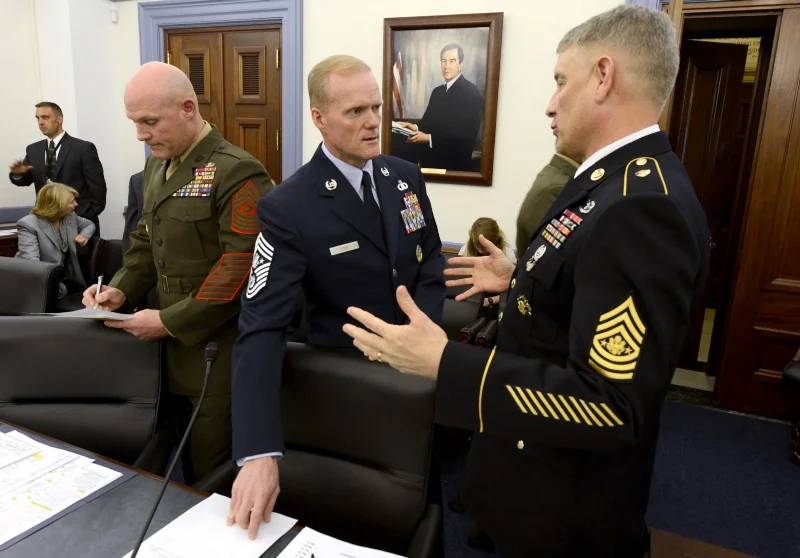
 Dan and Dave, no relation to the famous Olympic decathletes, began a dialogue following a workshop on the development of an Air Force Operating Concept. At the conclusion of day 1 of the workshop, Dan and Dave had a discussion on the future of the military; to include the direction our respective services are headed. The idea popped up that these deep discussions should be published, for others to read and debate. The richness and value of discussions on the future of warfare is worthless if left between two people.

We know how to strike, but can we achieve victory?

We know how to strike, but can we achieve victory?

The U.S. military has been, without a doubt, innovative during the past century of warfare. Advances in technology have allowed the U.S. armed forces to become the most expeditionary, precise, and lethal force in the world. During the Cold War, the bulk of defense spending went towards countering the Soviet threat. In the end, the strategy was a success; the Soviet Union fell without direct confrontation. In the meantime, the U.S. military’s culture adapted to the political and economic realities of the Cold War. Although the Cold War has technically been over for 25 years, elements of that era’s defense culture have proven extremely resistant to change.