Combatant Commander-Based Design: The Modular Army in Context

Combatant Commander-Based Design: The Modular Army in Context

A strong argument can be made that the modular Army design got it right because it focused on the application of strategic landpower, i.e., the Combatant Commander’s problem. Rather than focusing on tactical echelons (whether brigade or division), the modular design focused on the relationships between the levels of war and subordinated the tactical and operational levels to the strategic level.

Land Power’s Exceptionalism

Land Power’s Exceptionalism

The case for land power rests on the warning that in war, technology supports, not augments, people. Current events make the case for land power. The nature of land power provide a reassurance to allies and can effectively deter aggression. If called upon, land power can also compel decisions, all as part of an interservice effort. The dazzle of new technology can be blinding for some people, and that may discount the importance of the soldier in strategy development.

Democracy: The Key to Avoiding Future Wars? (1)

Democracy: The Key to Avoiding Future Wars? (1)

It is useful—and necessary—to stop, think and reflect on the idea of democracy and its relationship to violence and ultimately war. What is a democracy? What does it mean to behave and act according to its principles? What does it mean for a citizen and what does it mean for a state? Are democracies more peaceful than other regimes? How should democracies act and react in the international world?

The Meme of Land Power’s Exceptional Discrimination

The Meme of Land Power’s Exceptional Discrimination

Swiping at other forms of warfare is still not a positive argument for land power, what it does, and why it is important. To suggest land power as the pinnacle of military force discards joint complement, which empirical examination of warfare does not confirm. Ultimately, the contribution of land power to net strategic effect is just as subject to friction as every other blunt instrument of military might — to suggest otherwise is dangerous.

Effective Communication in “The Non-Expert Zone”

You are a subject matter expert within an organization. You have identified a problem. You have a plan to remedy it. Your plan requires additional funding, equipment, or authority; a waiver, change, or addition to an existing policy; or change or addition to law. As you brief your plan to higher levels within your organization on your way to the person with approval authority, it is likely that your audience does not share your knowledge, experience, or subject matter expertise.

You have now entered the Non-Expert Zone.

In most organizations, when leaders get promoted, their responsibility increases. This increased responsibility often forces that leader to shift from focusing on a few problems in depth to the wave tops of many problems. S/he now depends upon his subordinates to go in depth on a subject, handle problems at the lowest possible level, and only bring forward problems that demand the promoted leader’s time and attention. As the subject matter expert with a problem to solve, you not only need to have a solid plan, but also know the best way to present that plan to each unique audience on the way to its approval.

Here are some considerations for tackling this problem:

Identify the stimulus for the problem.

To fully understand the stimulus, trace it as far back as you possibly can. In my experience, and to make an Army-centric example, the content of a Field Manual can sometimes be traced to a Department of Defense Directive, to an Executive Order, to a Law, and then to an event of some kind that caused Congress to act. Additionally, this tracing may lead to the discovery that the stimulus is actually caused by a narrow view of a policy or law and you can remedy the problem at a lower level.

Make your short- and long-term plans to remedy the problem.

If your plan requires additional funding, ensure you take the fiscal year budget cycle, unfunded requirements process, and future years defense program into account. If your plan requires additional equipment, identify the source as specifically as possible; examples would include where to purchase a piece of equipment, or from what organization you can take to meet your shortfalls. If your plan requires additional authority, a waiver, change, or addition to an existing policy, find out who can make that decision. If your plan requires a change or addition to law, meet with your Congressional Affairs/Legislative Affairs personnel and find out the best way forward.

Determine risk versus gain.

If the current situation remains, what is the risk? If those risks are fully or partially realized, what is the consequence? If the consequence occurs, how much time and money will be spent fixing the problem after the fact? What is the gain if the problem is fixed?

Determine your audience.

Determine who you need to brief and at what level they sit. Find out how each of those people prefers to be briefed. My first line supervisor learns best via auditory stimulus, so I use text or slides sparingly and talk a lot. My next supervisor is visual, but prefers text over graphics. Above him is a supervisor who is visual, but leans towards graphics vice text. Next up from him is a supervisor who does auditory first and then likes to see the words on paper, so I brief him verbally then hand him paperwork to review. With each of these supervisors, my use of doctrinal terms and shorthand ebbs and flows due to some of them having a military background and some not.

You should also find out what each audience values. When addressing intelligence organizations at DoD, I often tie my message to the intelligence requirements process. When working with operational organizations at DoD, I speak to the various orders and plans that drive their efforts. When speaking to foreign policy organizations, I tie my message to the National Security Strategy, National Defense Strategy, or similar documents. When dealing with Congress, I know that the Intelligence Committees value the Intelligence Community (IC) and that I need to use IC-centric terminology when briefing them. The Armed Services Committees value the Military Departments and Combatant Commands, so I speak to supporting the warfighter when briefing them. The Appropriations Committees value how money is expended, so I use language from the Government Performance Results Act when briefing them.

Tailor your brief and rehearse.

You will now need to build different versions of your brief based upon who you are briefing, how they prefer to be briefed, and what they value. Rehearse! Rehearse! Rehearse! This includes role-playing within your organization, preferably with people that are not familiar with the issue at hand. During rehearsals, read any prepared language out loud — you will be surprised how many errors you find by doing this.

Execute your brief.

Enter the room to brief having left your ego at the door. Present your plan in an objective, dispassionate, professional manner including or discarding doctrinal terminology or shorthand based upon the audience. Answer the question asked. Do not answer the question not asked. Admit when you do not know something. Offer to find out and return with the answer. Returning with the answer gives you an opportunity to demonstrate to the audience that you heard them and took action to meet their requirement. This goes a long way towards building rapport which may contribute to approval of your plan.

When navigating the Non-Expert Zone, always remember that success is possible, but persistence is the key. Some problems take multiple years to solve. Do not give up the fight; do not let the system win. As General “Vinegar” Joe Stillwell said, “Don’t let the bastards grind you down.”


Phil Walter has served in the military, the intelligence community, and the inter-agency. The views expressed here are those of the author alone and do not contain information of an official nature. He tweets @philwalter1058 and blogs at


Have a response or an idea for your own article? Follow the logo below, and you too can contribute to The Bridge:

Enjoy what you just read? Please help spread the word to new readers by sharing it on social media.


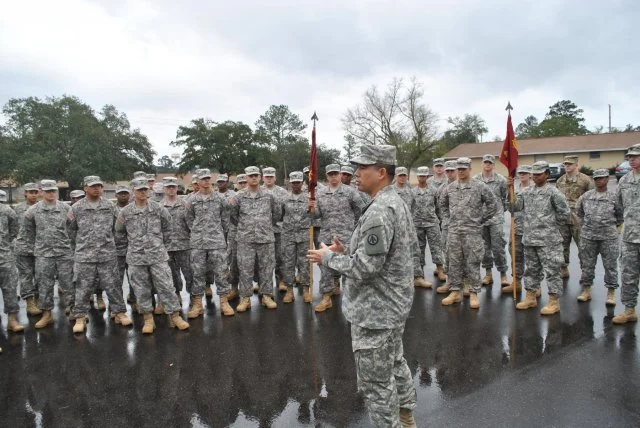
Header image: Major Doland Johnson, 434th Wing Navigator, briefing an Airborne soldier about a jump from 434th C-119's.

Clausewitz’s Military Genius and the #Human Dimension

Clausewitz’s Military Genius and the #Human Dimension

If war is an inherently human phenomenon, then discussion of the human aspects of war is as timeless as the discussion of war itself. One prudent start point for any discussion on military matters is the philosophy of war described by the 19th century theorist Carl Von Clausewitz. In one of the lesser read sections of On War, he described what comprised the penultimate military genius. This article explores Clausewitz’s description of military genius as a point of discussion in the ongoing human dimension dialogue. In Clausewitz, we have a life-long soldier describing what it takes to reach the highest strata of the profession of arms; we would be wise to listen to what he has to say.

Reversibility in the Army: More Than Industrial Age Conscription

Reversibility in the Army: More Than Industrial Age Conscription

Reversibility should not be seen as a one-way pipeline to getting larger quickly in an emergency. It is an integrated process of policy and structural levers that maximizes our access to human capital, trained or otherwise. It maintains the capacity to meet our national policy objectives. To effectively incorporate reversibility as part of an institutional strategy, we must first admit that there is no constituency for conscription. Second, we must resolve that the All-Volunteer Force (AVF), from force structure to personnel management, inter alia, has fundamentally optimized beyond conscription.

What If? Strategic Techniques in a Decade of Conflict

What If? Strategic Techniques in a Decade of Conflict

While learning by trial-and-error is part of adapting to the conditions of war, coalition military doctrine, and in particular that of the US military, missed an ideal opportunity in the 1990’s to help practitioners expedite that process. By the beginning of that decade, the Cold War had ended and Western militaries were in what some analysts referred to at the time as a ‘strategic pause,’ meaning there was time to conduct seminars and ‘war games’ to forecast and prepare for the new future security environment. These efforts had their problems, but the deductions and insights drawn from them were not ‘so far wrong’ (to borrow from Sir Michael Howard’s famous advice) as to leave doctrine writers off the hook.

Division Commander-Based Design: Why the Army Should Return to the Division as the Focal Point for Future Force Design Efforts

 Division Commander-Based Design: Why the Army Should Return to the Division as the Focal Point for Future Force Design Efforts

On 11 September 2001, what had been academic debates became all too real. The Army took what it learned from those debates, adapted its concept development and combat developments work, and moved to a Brigade based design that served us well enough to rotate forces in and out of two wars for over 10 years. Now, the Army is winding down from fighting its first major wars of the digital age. To some, “The Narrative” has replaced “COFM” as the principal dynamic that determines victory. The nexus of policy objectives and military action is more transparent and more complex than ever in history. Now is the time once more to open the debates that began at the dawn of the digital age and adjust our theories to our lessons and our new conditions. What have we learned? Where should we focus that learning? A good place to start is at the Division.

The Oman Djebel War, 1957–59

The Oman Djebel War, 1957–59

[T]actics matter, so geography matters. Strategy is not a branch of philosophy, but a practical activity hinging on securing ground of political importance, hinging in turn on your forces beating your enemy in the physical environment concerned...Reading Seven Pillars of Wisdom will not help you in northern Oman; these are people of mountain villages, not nomads of the desert. Anyone wishing to control inner Oman from Muscat on the coast must secure these wadis, which means controlling the towns and villages along them, no mean task given the climate, their distance from the coast and that most will be fortified and held by men with local knowledge and a stake in the outcome.

#Human Capital Management: The Importance of Evaluations and Assignments

#Human Capital Management: The Importance of Evaluations and Assignments

The Human Dimension (HD) White Paper, recently published by the Combined Arms Center, provides a framework for optimizing human performance that broadly outlines three lines of effort (ways) and six means for improving the Army’s Human Capital. Successfully implementing this framework, like any organizational change effort, will require getting one or two “big things” right. For the Human Dimension, the “big things” are evaluations and assignments. These issues affect behavior both consciously and unconsciously, and together provide the greatest influence on talent development and management.

#Human Storytelling, Conversational Learning, and Mission Command

#Human Storytelling, Conversational Learning, and Mission Command

Using storytelling and conversational learning to conduct professional discussions are not new ideas but they are ideas that need to be taught and reinforced in the Army PME courses and by leaders throughout the operational force. Mission command is based on trust, which requires understanding. One of the most effective ways to gain understanding of the capability and competence of one peers, superiors and subordinates is through professional discussion in a learning environment.

Welcome to the Post-Precision World

Welcome to the Post-Precision World

Landpower is the central element of military power. While other forms of military power — naval, air, space, and cyber — are vital to national security, land is where people live and where decisions happen. Technology has advanced so much and is more lethal than ever, but if we lose sight of the importance of the soldier, or marine, on the ground, we do so at our own risk. Capable land forces never lose sight of the importance of the soldier, and sound strategy never loses sight of the importance of landpower.

#Human: “It’s the Who”

#Human: “It’s the Who”

The next major evolution in warfare will not be in the way we fight, nor will it be what war is fought with, rather it will be who is fighting our wars. This evolution in warfare began in World War II when the United States began accepting African Americans into the Army, continued with the acceptance of women into the armed forces, expanded with the highest levels of leadership, and continues today with women in combat units and the end of don’t ask don’t tell. The Army is now presented with the opportunity to make the most of human capital.