Success will largely hinge on the willingness of the various services (critical thinking is important in all domains) to make significant changes. This is a goal that may be even more elusive than increased funding, however. If that is so, then the product of the U.S. professional military education programs will continue to be largely the result of the quality going in and luck in who facilitates instruction, thus remaining inconsistent.
Kiev Calling
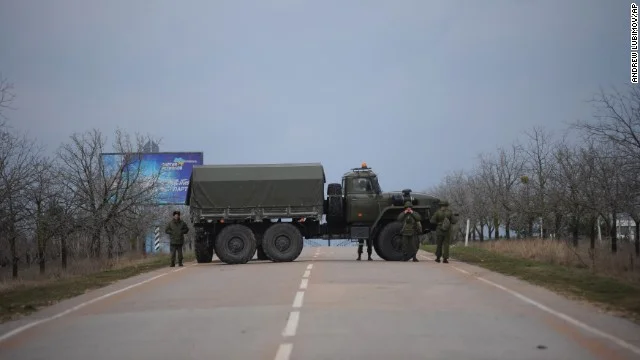
Misguided pride in former glory is a poor reason to start a war, and it is important that as a matter of policy that allowing a war to be fought is the last option. It is also important to prevent Ukrainians from losing the independence they had sought for. The best option is the one where a solution is negotiated.
Crimea: Russia Is Harvesting the Seeds Sown in the 1990s
The way out of the Crimea issue is achievable considering the national interests of both the US and Russia. Negotiations can be made, back doors can be opened, and assurances can be given to Kiev and Europe. What is happening in 2014 does not necessarily entail a Cold War part deux, yet the path our policymakers are on make that more likely; simply because we forego history for expediency and bluster.
Crimea: It’s About U.S. Power
The United States has a choice that the Crimean case illustrates very clearly: the U.S. can help shape this new world, or it can continue to be shaped by it. Based on the debate and news that the White House has not asked for any military options in Crimea, it looks like the latter is coming true (although, it should be said, there are some interesting non-military options, too). In the end, the endless debate about Crimea is truthfully not about its future, but about the decline of U.S. power. The United States only has its postwar self and current self to blame.
Crimea River: Why We Care About Ukraine, and Why it Doesn’t Matter
The Crimean Crisis Isn’t Just About the Crimea
The Crimean situation, or the “Situation Formerly Known as the Ukrainian Situation,” has no good solutions. But there are some worse than others. On one level, it doesn’t matter much to America, nor to Europe, whether Russia or Ukraine (or, if you want to get really old school, the Turks) controls the Crimea. From a popular-sovereignty point of view, the peninsula is largely Russian and so it makes sense that it would wish to be part of Russia. From a force-majeure point of view, Russia has a fleet and forces on the scene, first mover advantage, and plenty of motivation. So there is a powerful case for acceding to the fait accompli, because after all, who wants to be the last man to die for Simferopol?
Talent Management in the Army: Rethinking the Block Check
The problem with the current [OER] system which recognizes up to 49 percent of officers as ‘above average’ is that it obscures the truly exceptional work done by a few individuals. The Army model fails top performers by focusing not on the work that is done, but rather on counting the officers doing the work. In a 49 percent top-block system, above average performance is defined as a function of those who are deemed above average — an officer’s ‘block’ is not a reflection of their individual performance or productivity. The top-performers are not recognized for their true accomplishments and impact.
Peacetime Restrains Strategy: R.B. Haldane and the Shortfalls of His Army Reforms
As the United States begins to formulate a new strategy for a post-Afghanistan era it should look back to this century-old calamity for perspicacity, not for similitude. British pre-war army reforms, implemented by Richard Burdon Haldane — Secretary of State for War (1905-1912) — and subsequently named after him, present another lesson from which strategists could analyze a familiar conundrum. Strategy is as vital in peace as it is in war, but peacetime restrains it. History provides invaluable insights into untangling this contradiction at a time of budgetary and political uncertainty.
Thinking Critically: On “We Were Caught Unprepared”
Need a New Idea, Try An Old One: Revisiting PAC-10 in the Air Sea Battle Concept
The Noise Before Defeat: A Critique of “Seduced by Success”
We're fooling ourselves if we believe our adversaries won't continue to engage us asymmetrically for the foreseeable future. So while we must remain committed to proficiency along the full spectrum of operations, let's not abandon the simple truth that armies fight wars among the people because they have to, instead of the more convenient conception of war against traditional combined arms foes.
Sun-Tzu, Clausewitz, and Thucydides: It’s Only a Lot of Reading If You Do It
What’s a budding young strategist to do? By all means, read the classics. Read them in full, cover-to-cover…or at least the portions written by the original authors. (I skip the hundreds of pages of forewords and afterwards.) Next thing you know, you’ll be far more adept at recognizing the obligatory gratuitous Clausewitz quote. It won’t be long before you find yourself groaning at the inevitable article which begins by invoking politics by other means.
The Importance of Presidential Decision Making
In the Bay of Pigs, Vietnam, and the 2003 Iraq invasion, strategic calculation, systematic probing of assumptions combined with multiple advocacy and creative thinking, and skilled implementation may have led to decisions not to commit U.S. power and prestige in the first place, or have led to better outcomes. There is no shortage of need to apply these lessons with discernment as the U.S. faces contemporary challenges including the Iranians’ suspected nuclear weapons program, North Korea’s nuclear program and periodic provocations, the Arab Spring, a rising China, terrorism and transnational crime, climate change, and potential pandemics. It is possible, by chance, to have a good outcome in these and other challenging situations without a good decision-making process, but those chances are not high. It is incumbent upon the president to lead his national security team wisely to stack the odds as best as possible in the U.S.’ favor.

Much Ado About Nothing: Future of War v. Clausewitz…but not really
In his latest article, Tom Ricks presents an interesting interpretation of a Rosa Brooks piece, describing it as an attempt to “smackdown” 19th century strategic theorist Carl von Clausewitz and his modern disciples. This would be unsurprising as Mrs. Brooks can exhibit a disdain for the old. But the semantic debate is meant to serve a more significant argument about the expanding use of military force to address contemporary threats.
A Crisis in Command and the Roots of the Problem
The U.S. Army currently tries to introduce the German command philosophy of Auftragstaktik — Mission Command — but still fails to understand the essentials of that system. One of them is empowered subordinates whose opinion is valued and who do not have to fear repercussions if they voice criticism against their superiors. The Prussian/German army struggled for 30 years with the introduction of this superior command philosophy and the U.S. Army seems to be determined to make every single mistake the Prussian army made and add some of their own.
Responsibility To Protect: Rhetoric and Reality
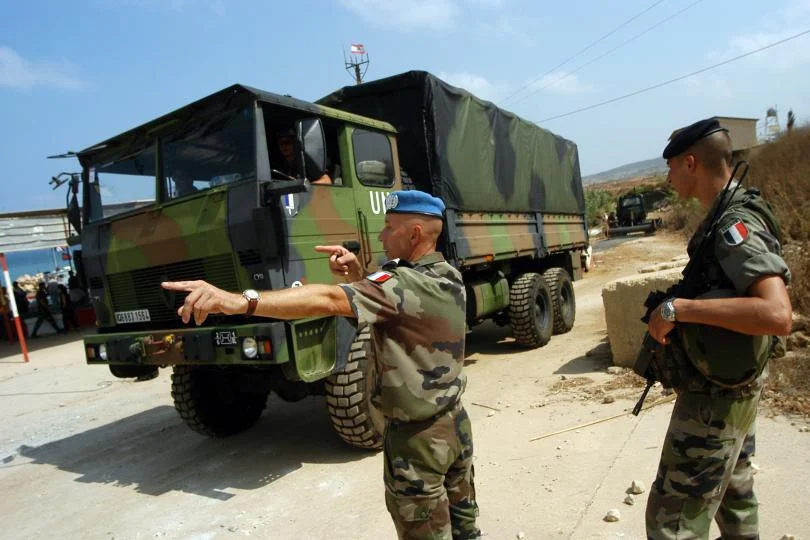
The discussion of R2P thus far has been focused more on a "right" to protect than a "responsibility" to do so. The arguments indicate that a state has a responsibility to protect its people but takes for granted that third parties somehow inherit this responsibility when the state cannot fulfill it. There is a missing explanation here. The need to justify such efforts may seem callous, but a nation’s highest moral order is to serve its own citizens first.
The American Way of War: And Why it Brings so Much Baggage
It is said that Germans after World War II stated that they did not like to fight the Americans, as they never stuck to their own doctrine or tactics. Russian doctrine too stated that U.S. forces were unpredictable because all their plans went to hell once a battle had begun. Perhaps that is why one of the great U.S. Army maxims is “No plan survives first contact.” It is true that we tend to bring some “innovations” to war, intentional or not. This could be termed the “tactical” American Way of War. Scholars have spent a lot of time, ink, and breath arguing what the “American Way of War” is, or even if one exists. Russel Weigley has argued that the American Way of War is to bring overwhelming force to bear on the enemy and crush them in absolute and total victory. For myself, hardly daring to even call myself a scholar, I will leave that argument to others with more money and time, but I do have a theory on what I like to call the “American Penchant of War.”
R2P: A Spectrum Of Responses
The Application of Federalism in Overseas Stability Operations
The conventional thinking regarding counterinsurgencies is that they take 10 years to conclude. The inherent problem with the strategic approach used in Iraq and in Afghanistan is impatience to rebuild their societies by employ the concept of federalism to harness the established forms of political power in each country. Federalism would have placed the responsibility of governance, justice, security, and economic development at the lowest level possible, where it was desired by Iraqi society and had long been established in Afghan society.
Absent Without Leave: The American People and the War in Afghanistan
Americans would make great suicide bombers. Just like young madrassa-educated men who chant Koran verses in a language they don’t even speak, the American public has blindly “supported the troops” without ever thinking critically about the necessity of continued military presence — and casualties — in Afghanistan.